



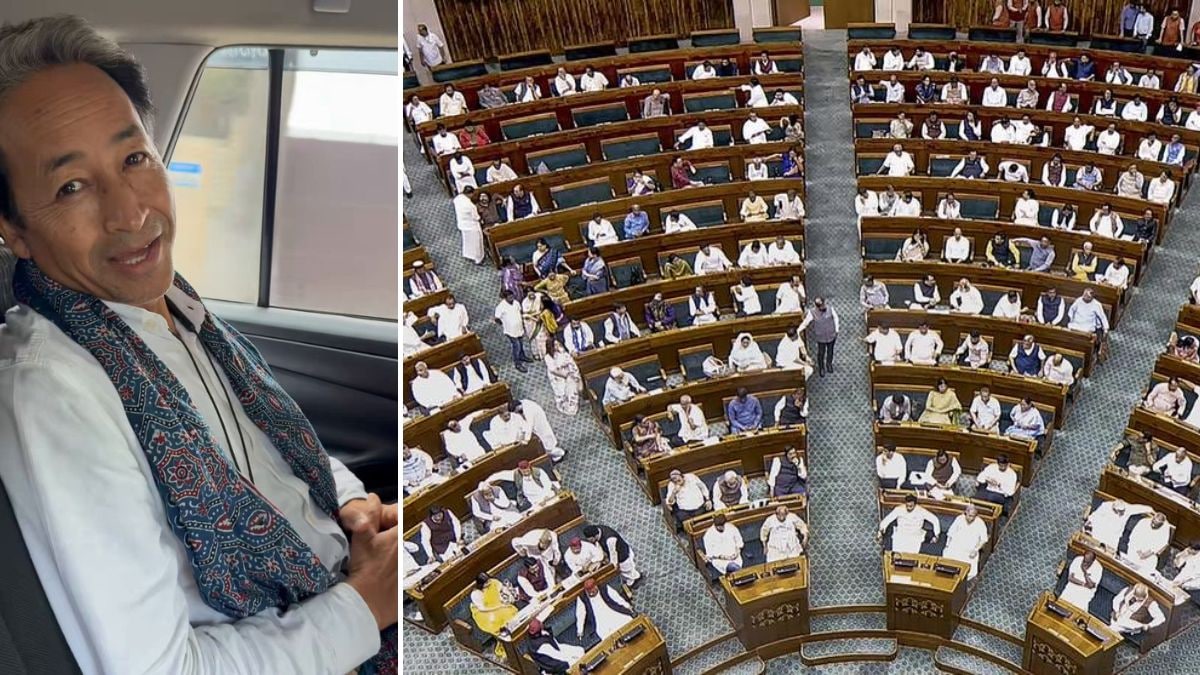
Renowned educationist and activist Sonam Wangchuk on Thursday lauded the Centre after the new anti-paper leak Bill passed the Lok Sabha test.
In a video message about his upcoming train journey to Ladakh, he also mentioned the Public Examinations (Prevention of Unfair Means) Amendment Bill, 2026, saying that it was a positive step towards reforming the education system.
"I am happy that the Bill has been brought to the Parliament ... I hope it will go on to improve India's education system for the better," he said in the video, also urging the Centre to keep its promises and refrain from arresting student protesters and volunteers.
“Do not file FIRs and honour the trust of the youth," said the activist, whose hunger strike became a turning point in the weeks-long protests by the Cockroach Janta Party (CJP) for accountability in education, especially the resignation of ex-Union Education Minister Dharmendra Pradhan.
Notably, this stance on the Bill differs from that of the CJP, which has criticised it for being too limited.
“Applying a bandage after an injury is one thing, but the real question is: what are you doing to prevent the injury from happening in the first place? This Bill did not address that," said CJP spokesperson Ashutosh Ranka, who pointed out that there was no proper discussion on the other aspects of future-proofing exams, such as developing exam infrastructure, reforming the National Testing Agency (NTA), and increasing transparency, among other things.
However, this is not the first time that CJP or Congress leaders have differed in stance from Wangchuk.
In fact, back when the activist ended his hunger strike in the early hours of July 24, Congress MP Imran Masood on the same day accused him of striking a "personal" deal with the government.
"He is Anna (social activist Anna Hazare) part two. For 12 years, Anna has remained silent, and now Sonam Wangchuk will remain silent. You were striking a deal with the government yesterday; at the time, was any student present there? What else is there except your personal deal with the government?" he questioned.
The new legislation, passed in the Lok Sabha on July 29, is aimed at making India’s anti-paper leak law more stringent by introducing faster investigations, fast-track courts, and harsher penalties for offenders.
It remains a fiery topic of discussion the Parliament, which has opened a Pandora's box of related issues, such as Congress' call for Amit Shah's resignation and the strength of the other education reforms.
