



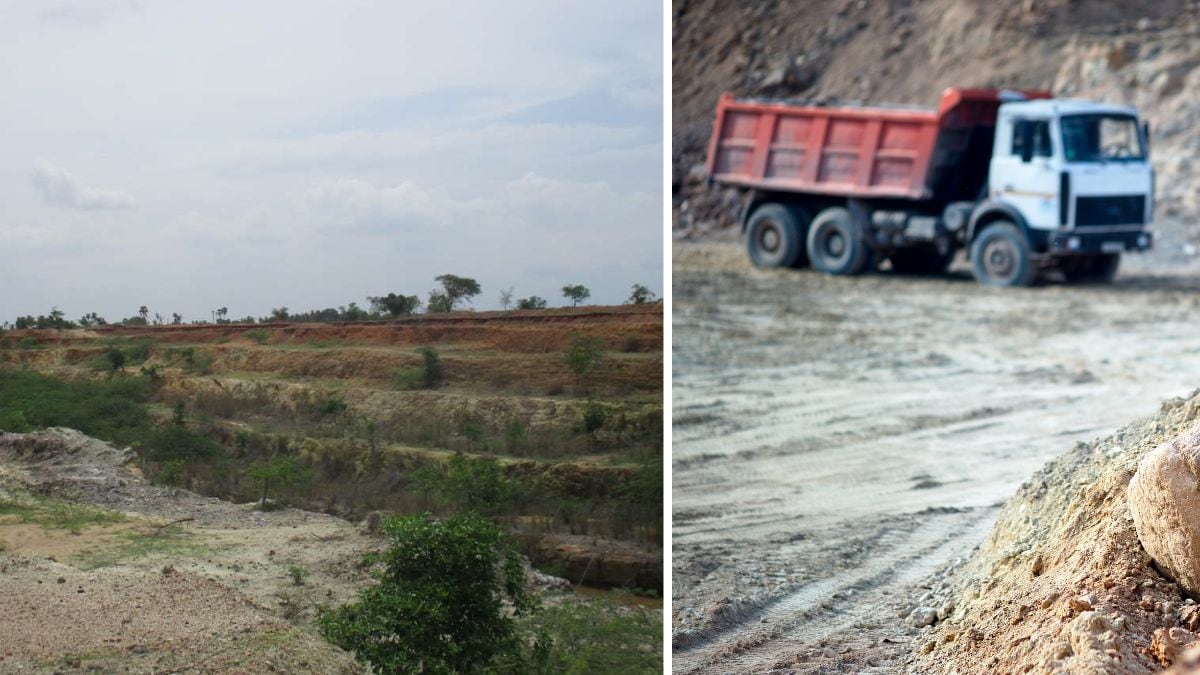
The Tamil Nadu Government has banned the transportation of Gravel, stones, M-sand, metal jelly and other construction materials out of the state, citing a shortage.
The order was issued by Prabhushankar, Director of the Department of Geology and Mining, who said that the decision was made to ensure an uninterrupted supply of essential construction materials for infrastructure and housing projects currently underway in the state.
They cited the rising domestic demand, shortage of the materials, their escalating prices and concerns over illegal mining and road safety to impose the bans.
The ban will apply to all neighbouring states except the Union Territory of Puducherry, the New Indian Express reported.
The government has directed the district administrations and the police to take stringent action against those violating the order.
Prabhushankar said that the current production in the state of rough stones and aggregates from operational quarries was insufficient to meet the growing domestic demands.
“The large-scale transportation of construction aggregates to neighbouring states further constrains the availability of these materials, creating an artificial supply-demand imbalance and driving up prices of construction materials, which ultimately affects public and private development projects within the state,” he said.
He also said that rough stone was not scarce in Karnataka, Kerala and Andhra Pradesh.
“The huge supply-demand gap fuels unscientific and illegal quarrying, storage and transportation of stone and aggregates, leading to excessive mining beyond permitted depths in most cases and posing a serious threat to the state’s environment and ecology,” the director added.
A significant number of the quarries supplying the materials in Kanniyakumari, Tenkasi, Theni, Coimbatore, Tiruppur and Krishnagiri districts are located within the eco-sensitive zones of the Western Ghats, necessitating measures to ensure sustainable resource utilisation.
There are around 3,000 rough stone quarries and more than 400 government-approved M-Sand manufacturing units in the state. Construction material produced in Kanniyakumari, Tirunelveli, Tenkasi, Theni and Coimbatore is transported to Kerala, while supplies from Krishnagiri go to Bengaluru in Karnataka.
The construction industry in Tamil Nadu has also argued that the transport of material to other states resulted in shortages within Tamil Nadu.
They said that it pushed up prices by up to 30 per cent.
The order by the government states that the continuous movement of heavily loaded trucks, including multi-axle vehicles, has been causing extensive damage to local roads.
It also noted that the many routes leading to border check posts are narrow and the existing infrastructure was ot designed to handle the heavy freight traffic.
The large number of truck stalls resulted in severe traffic bottlenecks for local commuters.
Meanwhile, Tamil Nadu and Kerala police jointly lathi-charged and dispersed protesters who marched to get back their parked trucks in the Injivilai area on the Kerala border, Vikatan reported. The Minerals Truck Drivers Association announced yesterday that they would be taking their trucks in a procession from the Tamil Nadu-Kerala border area and holding a protest at the Kanyakumari District Collectorate. They demanded that the trucks be handed over, saying that the restrictions on mineral-carrying trucks were affecting their livelihood and that the ban should be lifted.
