



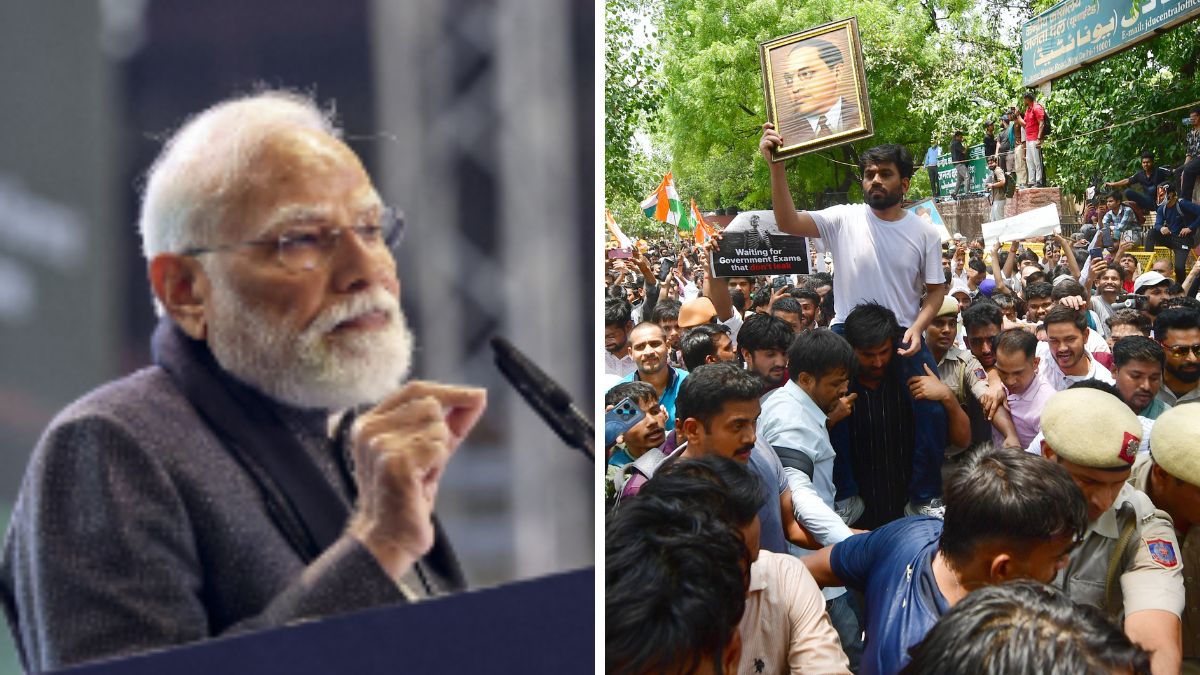
For the first time in its ten-year rule, the Narendra Modi-led NDA government dismissed a minister over policy failure and functioning. Bowing to the Cockroach Janta Party (CJP )'s demand to remove Dharmendra Pradhan for the NEET paper leak was an unprecedented move for the government known for taking a firm stance on public protests, the only exception being the repeal of the three farm laws.
The BJP claims it agreed to Pradhan’s resignation due to prominence it gave to youth and students and their legitimate demands.
But political analysts see the move as a well-thought-out strategy. They believe Prime Minister Narendra Modi felt that the student movement was affecting his personal image and did not want to convey the impression that the central government was insensitive to the concerns of the youth ahead of the upcoming Assembly elections, including in Uttar Pradesh and Punjab. They also didn’t want the students’ anger to be exploited by forces opposing the BJP. Government sources also claim that the Centre was wary of the students being the “soft targets of anti-national forces”.
It was also important for the government to calm the anger of students. Intelligence agencies were receiving input that various anarchist elements and extremist organisations could incite violence in Delhi under the guise of the student movement, according to reports. Besides, the government realised the political momentum behind this student movement and effectively deflated it by forcing the resignation of Pradhan.
The government also faced itself against two fronts- the opposition and the youth. In Parliament, the opposition continued to demand the resignation of the Education Minister since July 20th, disrupting both proceedings, while the anger was palpable in the streets.
It wanted to end the ongoing deadlock in Parliament and restore normal functioning. The deadlock had severely disrupted the government's legislative agenda, preventing the introduction of several key Bills.
The core message the BJP aims to give through the entire episode is that no minister or figure is bigger than PM Narendra Modi's governance agenda and credibility.
Replacing Pradhan with veteran Prahlad Joshi too was a master game. The Parliament session is underway, and the opposition would raise the NEET leak and choosing Joshi, a veteran and former Parliamentary Affairs Minister from 2019 to 2024, to counter the debate was a strategic move. His unmatched prowess in leading debates in both houses will lend the government a strong shield to defend itself.
The Centre is also aware that such a controversy could stall the work in the ministry. PM Modi did not want the NEET controversy to derail the country's new education policy (NEP 2020) and other major higher education projects. Joshi is considered a disciplined administrator, and his job will be to ensure that while the controversy is resolved, routine decisions and reforms related to the country's schools, colleges, and universities remain uninterrupted.
