



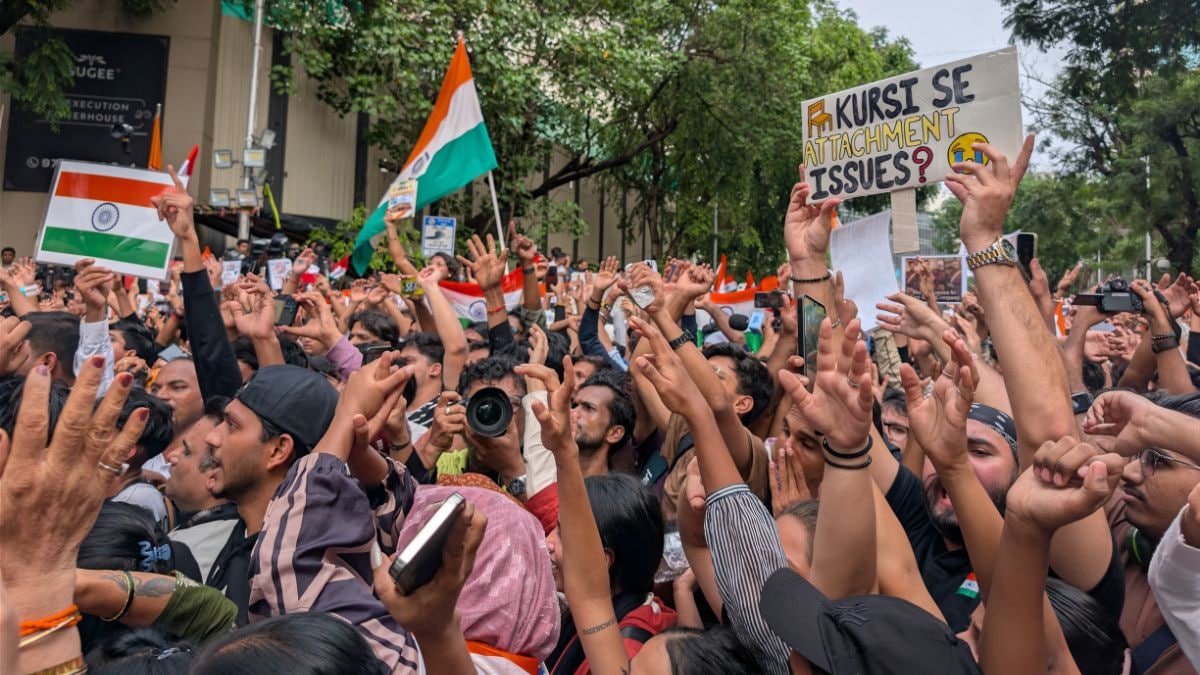
For a party and government that built its political capital by mastering social media, the past two months have delivered an unfamiliar experience: watching that same platform being used against them.
The tone has been irreverent, with memes mirroring the new Gen Z lingo and sensibilities, unlike the placards that had traditionally served as the medium for protest slogans.
A movement that started as a satirical take on an oral observation made by Chief Justice of India Surya Kant has delivered a potent result with remarkable alacrity, unlike previous protests.
The Cockroach Janata Party (CJP) asked for the resignation of Union Education Minister Dharmendra Pradhan over the NEET exam leak, which was followed by the suicides of 20 aspirants.
The idea clicked as it was an emotive issue. Soon, students gathered at Jantar Mantar on its call. Activist Sonam Wangchuk brought further limelight to the issue with his hunger strike. Finally, the protest delivered.
Pradhan resigned within less than a week of the protest march to Parliament, which saw a brutal police crackdown that, in fact, escalated the agitation.
In his resignation letter to the Prime Minister, Pradhan said he deeply respected the aspirations, feelings and legitimate expectations of the country's youth. He said he did not want tens of thousands of students calling for his resignation to be exploited by "anti-national forces", and did not want pupils entangled in legal complexities instead of studying and building their careers.
At the protest site, the mood was one of vindication.
Abhijeet Dipke, the founder of the CJP, told cheering supporters that they had done it. In a joint press conference, senior government ministers and CJP spokespersons announced that the remaining two demands would also be considered and that the protest would be withdrawn immediately.
The march that changed the government's calculations
The agitation had simmered for weeks through sit-ins before the government's position became genuinely precarious.
Anger boiled over after police, on July 20, injured a number of students during baton charges, tear-gassing and, by some accounts, the use of pellet guns to break up a march to Parliament—actions that also saw authorities restrict internet access and shut 17 metro stations around the protest site.
The optics were bad, as most of the protesters were youngsters just entering college and many were first-time voters.
As unease grew within the party, the government, and its allies, it became clear that the issue had to be addressed quickly. Murli Manohar Joshi, who had served as education minister in the Vajpayee government, broke ranks to back the protesters, calling their anxieties over the examination system genuine and describing the police action as one that would alienate large sections of society from the government's own Viksit Bharat goal.
Joshi specifically condemned the crackdown as merciless and said it was particularly painful to see young women mishandled during the operation.
Interestingly, Dipke's CJP was also joined by other student organisations, including Left groups, which provided structure to what had been an unorganised gathering.
Dipke, who had trained with the AAP, apparently drew counsel from its leaders, who had organised a similar protest during the 2011 Anna Hazare movement, and made few, if any, mistakes. The slogans permitted from the stage and the broader messaging remained focused on the main theme, rather than allowing the movement to be hijacked by competing interests with varied grievances.
Why the government blinked
Unlike the farm laws or the anti-CAA protests, this was not, at its root, a fight over government policy.
It was an expression of outrage following the exam leak. The students at the heart of the protest also belonged disproportionately to the party's own middle-class, aspirational base—precisely the constituency the BJP has spent a decade cultivating and one it could ill-afford to alienate on the eve of Assembly elections in Uttar Pradesh, Punjab and Uttarakhand.
The political costs of holding firm were also mounting by the day. The Congress, led by Leader of the Opposition Rahul Gandhi, had thrown its weight behind the students, and the Opposition claimed the resignation as its own victory.
Congress president Mallikarjun Kharge said the Prime Minister should apologise to the country's youth and take strict action against those responsible for unleashing lathis and pellet guns. NCP (SP) chief Sharad Pawar hailed the 28 days of sustained protest at Jantar Mantar as a triumph of democracy and thanked Opposition MPs for the parliamentary and moral support they had extended to the students.
The parliamentary session, which was supposed to demonstrate the government's strength after a series of defections from the Opposition ranks, was completely overtaken by the scenes unfolding on the streets as students were lathi-charged.
Had the protests been allowed to linger, the larger public sentiment in the country could have been exploited by Opposition parties.
The approaching Independence Day celebrations on August 15 would have provided an awkward backdrop for the Prime Minister's speech if the protests had continued for another two weeks.
What it exposed
Pradhan's exit is being read in Delhi as the first real concession this government has made to street pressure in years, and a reminder of how quickly a viral remark can outrun the institution that made it.
It has also exposed the extent to which the BJP misjudged its own core constituency.
The larger story may be generational rather than political.
This was a protest organised less through party structures than through Instagram reels and satirical memes, led by a movement that took its name from an insult and turned it into a rallying cry.
Whatever the government's Cabinet reshuffle brings next, and whatever line the CJP's Abhijeet Dipke takes from here, the events of the past month have shown India's political class, across parties, how unfamiliar the language of its newest voters has become.
