



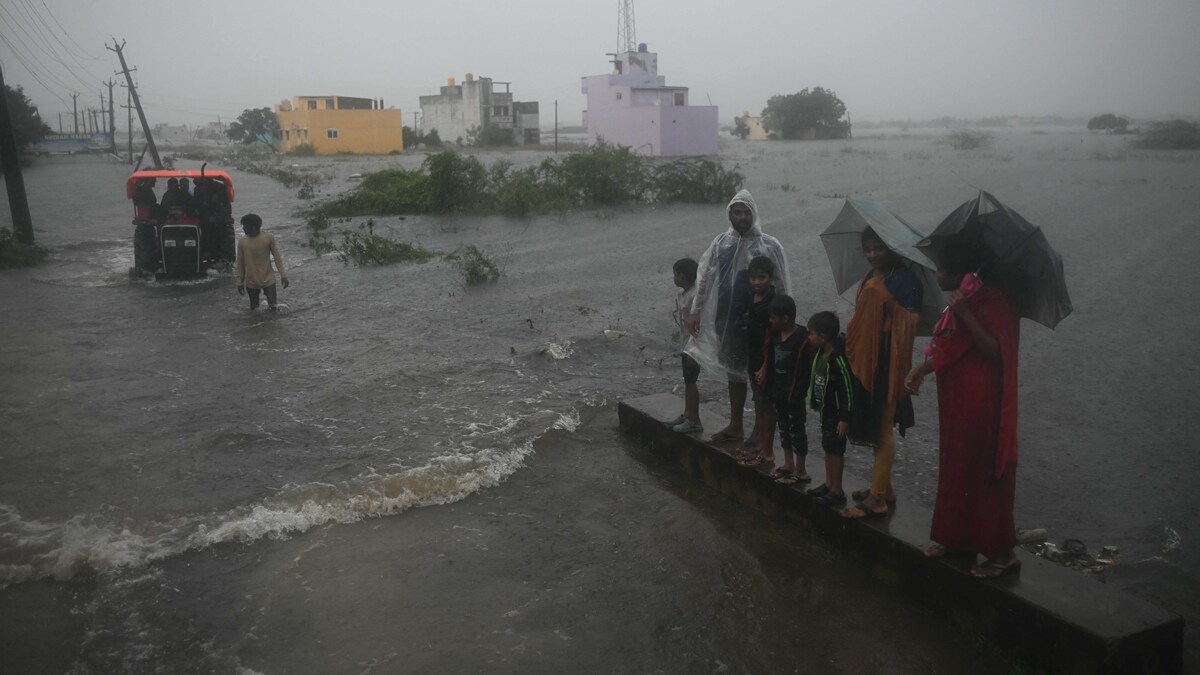
Every summer, district officials across India's heat-stressed states quietly revise their protocols. Every monsoon, flood-prone administrations activate warning systems refined over years of lived exposure. Every crop failure, self-help group networks absorb the shock before formal relief structures arrive.
None of this is called climate leadership.
It is called implementation.
That distinction—between leadership and implementation, between expertise and execution—is at the heart of what global climate storytelling continues to get wrong. And India, more than almost anywhere, makes the problem impossible to ignore.
The familiar script
Climate stories run on two characters. There are vulnerable communities: affected, resilient, deserving of support. And there are institutions: funders, governments, international bodies, providing that support. The narrative flows in one direction: expertise from the top, impact at the bottom.
This structure is emotionally legible. It is also incomplete.
Because most climate action in India doesn't sit at either end. It sits in the middle. In district administrations adapting heat protocols year on year. In SEWA's networks stabilising livelihoods in climate-exposed economies. In urban waste workers managing extreme heat exposure without anyone framing what they do as climate response. These actors are not implementing someone else's solution. They are building the system itself.
But they rarely appear in climate narratives as anything other than background.
Why India refuses simplification
India is not an edge case. It is a clarifying one.
Here, climate is not episodic. Heat is a seasonal labour market condition. Flooding is administrative recurrence. Water stress is governance terrain. And because of this, climate response is not concentrated in flagship programmes. It is distributed across institutions, sectors, and informal systems that have been adapting for decades.
Odisha's cyclone preparedness architecture, developed through repeated, devastating exposure, is now studied globally. But it is rarely told as a story of knowledge production. It is told as a story of disaster management. The difference matters enormously because one positions local actors as experts, and the other positions them as recipients of better systems from elsewhere.
This is not just a storytelling failure. It is a structural misunderstanding of where climate intelligence actually lives.
The same story, a continent away
India is not alone in this misreading. Bangladesh's Cyclone Preparedness Programme, built over 50 years through community-level learning, protects millions through a volunteer network that is almost entirely local in design and leadership. Across East Africa, smallholder farmers are making real-time adaptation decisions—shifting crops, adjusting planting calendars, managing water—that no external programme designed for them.
The Global South is not waiting for the climate solution to arrive. It is already building it in ways that the dominant narrative is simply not equipped to see.
And this has consequences that go beyond journalism. Funding follows visibility. When systems-level work remains invisible, it gets fragmented into time-bound projects. When local innovation goes unrecognised, it gets rediscovered elsewhere and credited to someone else. When implementation is stripped of epistemic value, practitioners in one region never learn from what is working in another because it was never told as a story worth learning from.
What needs to change
Climate practice has already moved ahead of climate storytelling.
Decision-making is decentralised. Adaptation is iterative. Solutions are assembled locally, under constraint, in real time. But narratives have not caught up. We continue to describe climate action as a flow from global expertise to local execution. Even in well-intentioned storytelling that means to do the opposite.
The shift required is not complicated, but it is deliberate. It means treating a district official who adjusts flood response protocols after each monsoon as a climate expert. It means recognising a women's cooperative that rebuilds informal credit systems after crop loss as climate infrastructure. It means understanding that a rural health worker tracking seasonal disease patterns that correlate with climate stress is producing knowledge—not just delivering services.
The Global South does not lack climate stories.
It lacks recognition of what qualifies as one.
Until the middle layer—the unglamorous, distributed, iterative work of people who have been adapting for decades—is seen as the site where climate action actually lives, we will keep telling stories that are compelling, widely shared, and structurally wrong.
The opinions expressed in this article are those of the author and do not purport to reflect the opinions or views of THE WEEK.
