



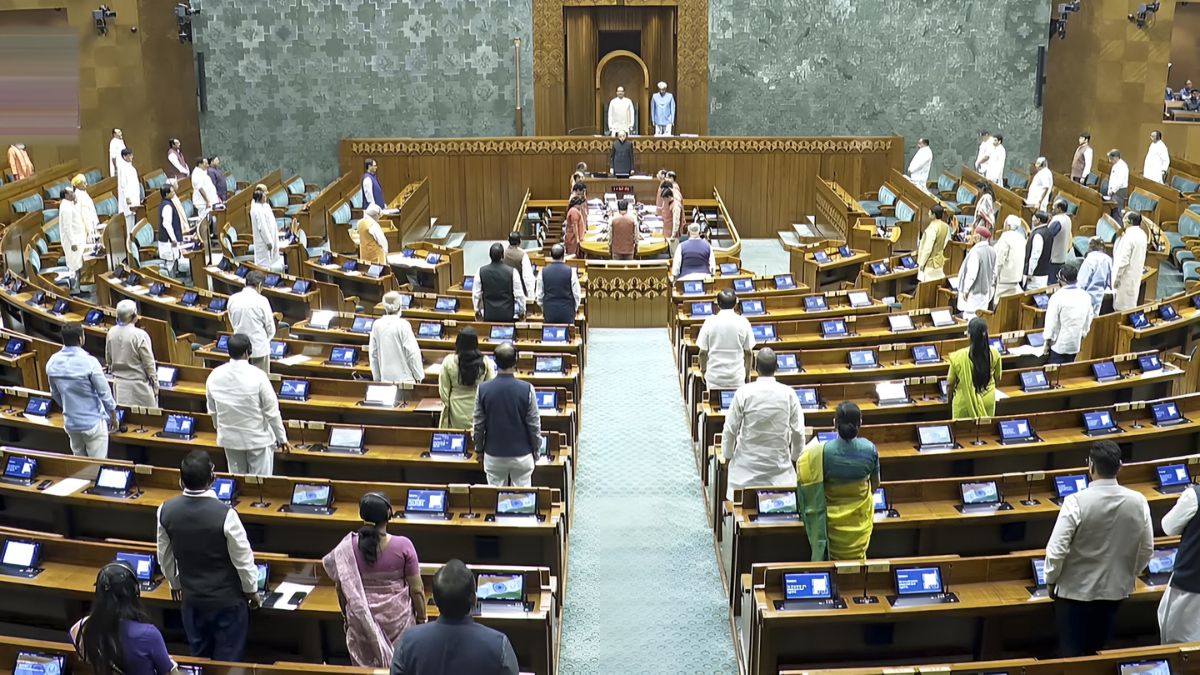
The Parliament is all set to open its doors for the start of the monsoon session on Monday, which will be the first time that fresh issues before the ruling NDA alliance, such as the NEET paper leak row, Sonam Wangchuk's hunger strike, the alleged donation theft at Ayodhya's Ram Temple, and the ethanol mandate, will emerge on the House floor.
The Opposition may also have to face-off against the NDA's flagship delimitation bill linked to the women's reservation bill, which could make its way back to the Parliament after it was shot down back in April after failing to attain the special majority required to pass.
While this session is crucial, as it will expose the NDA to attacks over new issues that have developed after April, the Opposition across the aisle is no longer the same either—despite having sharp arguments in hand, it also looks at internal tensions caused by a slew of defections, new regional equations, and infighting.
A key example of this on the eve of the monsoon session, was the Opposition staging a brief walk-out after the government invited the rebel Trinamool Congress (TMC) MPs who had joined the obscure Tripura-based Nationalist Citizens Party of India (NCPI) after exiting from the Mamata camp.
The idea was to protest against Lok Sabha Speaker Om Birla's handling of leaders who defected from regional parties such as the TMC, the Shiv Sena (UBT), and the Aam Aadmi Party (AAP) over the past few months.
Even the DMK and the AAP, which turned cold against the INDIA bloc since the 2026 Assembly elections, joined the walkout.
This is the irony before the Opposition: the fact that it has the ruling NDA in its crosshairs, and is armed with arguments on a number of fresh crises, but appears to struggle in mounting its attacks.
While the NEET paper leak undermines the NDA's institutional legitimacy, the alleged Ram Temple embezzlement case offers the other side a chance at swaying the ruling side's sizeable Hindutva base.
Similarly, while Sonam Wangchuk's ongoing hunger strike over the resignation of Union Education Minister Dharmendra Pradhan is expected to be a rapidly expanding minefield for the ruling alliance when it enters the House floor, the ethanol blending mandate could render the government vulnerable to attacks on not just the economic impact of a nationwide rollout of E20, but also its foreign policy handling, linked to this issue.
Indeed, despite pulling in about 37 MPs from four Opposition parties and getting some of them to soften their stances on delimitation, the road to getting its seven bills—especially the delimitation-women's quota bill—passed in Parliament is not likely to be a cake walk for the NDA, which has adopted a 'wait-and-watch' approach before tabling some of them, as per an Indian Express report, citing sources in the know.
In the end, as a bruised Opposition prepares to take on a strengthened, but vulnerable, NDA from Monday onwards, its impact will entirely depend on whether it can stop itself from bleeding and bring about some kind of unity to mount an attack against the ruling side, or whether it will bleed out and lose steam.
