



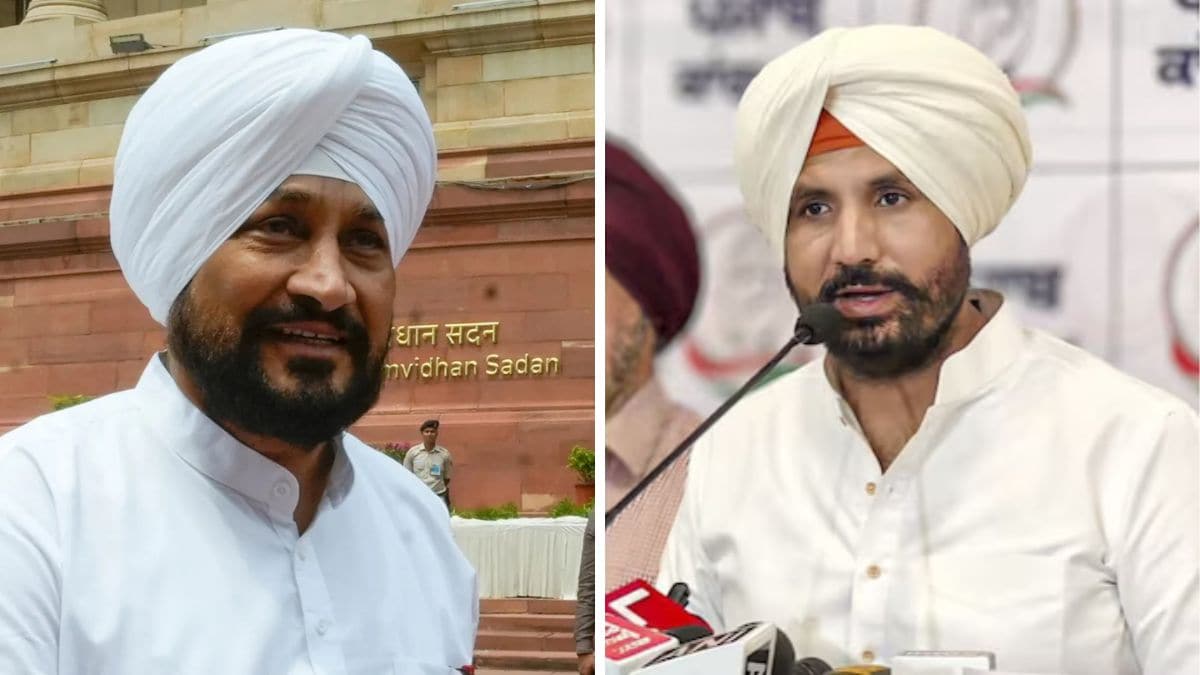
A political battle is underway in the Punjab Congress, even as state in-charge Bhupesh Baghel has reiterated the party's decision to continue with the present leadership in the state. Former Punjab chief minister Charanjit Singh Channi, however, continues to lead a section of leaders seeking the replacement of state unit president Amarinder Singh Raja Warring.
But what led the Congress to continue with Warring when it had been decided behind closed doors and was widely known within the party's power corridors that a leadership change was imminent and that Vijay Inder Singla, a Hindu face, would replace Warring?
"The reason to continue with the leadership was the excessive pressure from the Channi group," a party insider said.
According to sources, when the Channi-led faction expressed discomfort with continuing under Warring, the party leadership decided to change the state president. However, just as the decision was about to be announced, Channi is said to have changed his stance and demanded the position for himself.
"It may have been because Channi believes he is the principal Dalit face of the Congress in Punjab and that he had been able to influence the high command's decision-making, and therefore could push for more," a senior Congress insider said. "The Congress management then chose to continue with the existing leadership."
There is also a perception being created by a section of the Punjab Congress that state in-charge Bhupesh Baghel has not managed the situation effectively. However, sources suggest that Baghel has not pushed any agenda of his own and has just tried to implement the instructions of the party leadership.
The Channi faction has continued to press for a leadership change even after the party formally announced that the current leadership would continue. Rather than settling the issue, the decision seems to have further aggravated tensions within the Channi camp.
However, Baghel has repeatedly said in public that changing leadership is not "a child's play".
"Congress is a very big party and it cannot change a decision already taken just because of pressure from one regional leader," a political analyst said. "It would send the wrong message and encourage other regional leaders to adopt similar tactics whenever a decision goes against them. Secondly, it would make the high command appear weak and make Channi too powerful in the state."
There were other players involved in influencing the decision. The three observers sent by the Congress leadership to Punjab, headed by Ajay Maken, submitted two reports on the situation in the state. One assessed the likely consequences of changing the leadership, while the other examined the implications of retaining the current arrangement.
The party leadership believes it can work out an arrangement that accommodates all stakeholders and enables the party to contest the elections without bitterness spilling into the campaign.
"Punjab is very important for the Congress and that is why the party has held more than 10 meetings on the state over the past month," a source said.
