



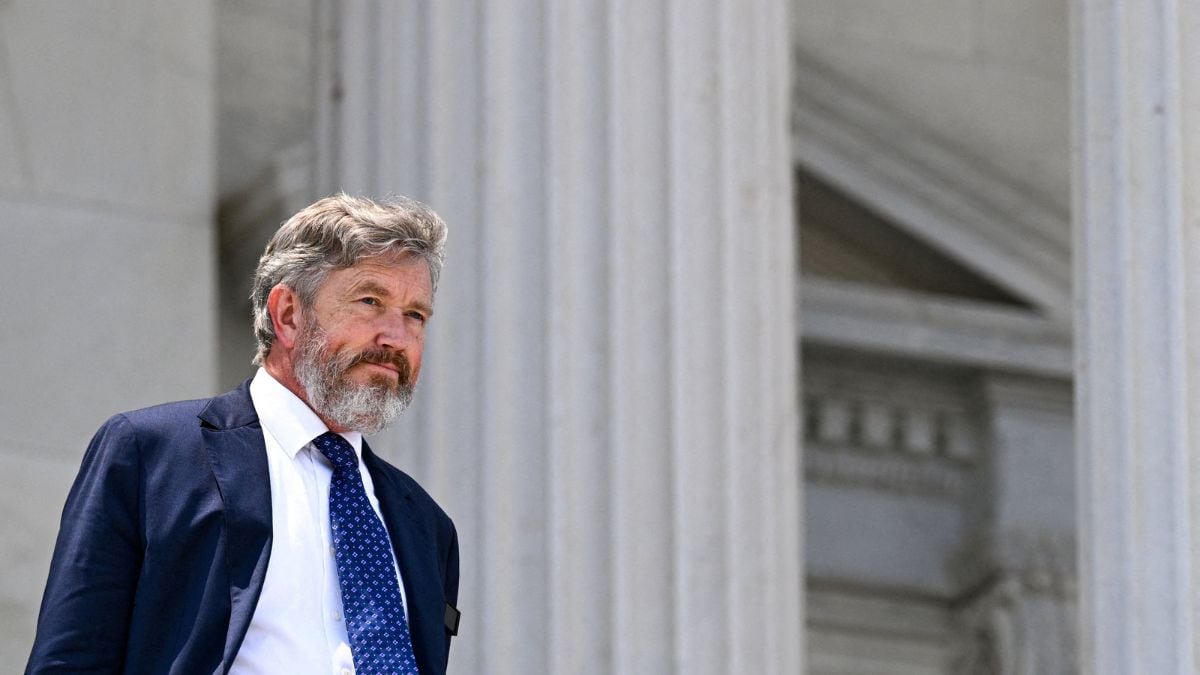
The US House of Representatives voted down an amendment on Wednesday that would have slashed military aid to Israel, though more than 100 Democrats backed it in a striking rebuke of America's longtime ally. The measure, put forward by libertarian-leaning Republican Thomas Massie, sought to strip $3.3 billion in US military and humanitarian assistance from Israel. It was defeated by 104 votes to 314, but the numbers behind that result told a far more revealing story. Massie was the only Republican willing to vote for his own amendment, a marked change from two years earlier, when 21 Republicans had supported a similar effort. The Democratic caucus, meanwhile, split almost down the middle: 103 members voted to cut the aid, 98 voted against, and 10 voted present. That represents a huge jump from the 37 Democrats who backed a similar measure two years ago, and it points to a real break with the party's traditional stance.
The divide has reached right up to the top of the Democratic leadership, producing an unusually public rift. House Minority Leader Hakeem Jeffries argued strongly against the amendment, calling it too sweeping and warning it would hamper America's ability to confront groups such as Hamas and Hezbollah. Representative Steny Hoyer echoed that concern, saying the measure would put American national security at serious risk. Minority Whip Katherine Clark, the second-ranking Democrat in the House, took the opposite view and broke with leadership to support the cut. Though she had reservations about how broad the amendment was, Clark said the status quo could no longer hold and that the US should not be writing a blank cheque to a government out of step with American values. Even former Speaker Nancy Pelosi backed the measure, describing it as ill-conceived but saying she voted yes for the message it would send to Prime Minister Benjamin Netanyahu's government.
Much of the pressure behind the vote has come from the party's progressive wing and mounting anger over the war in Gaza. Progressive Caucus Chair Greg Casar championed Massie's amendment, arguing that voters want an end to funding a military responsible for such heavy civilian casualties. Other lawmakers voiced similar frustration. Representative Joaquin Castro criticised the indiscriminate bombing of homes, while Representative Seth Moulton said the US could no longer condone actions that offend the nation's moral conscience. Some who voted present, including Representative Jared Huffman, said they were genuinely torn: they supported conditioning defensive aid but could not back an amendment broad enough to also cut off civil society and humanitarian assistance for Palestinians. The scale of the rebellion is widely seen as a sign of grassroots anger that has built quickly under President Trump's close alignment with Netanyahu's hard-right government.
That anger reflects a broader shift in how Democratic voters see the conflict. A Gallup poll found that 65 per cent of Democrats now say they sympathise more with Palestinians, against just 17 per cent who favour Israelis. An AP-NORC poll found that roughly half of Democrats believe Israel has committed genocide against Palestinians, and a New York Times/Siena poll put opposition to further support for Israel among Democratic voters at 74 per cent. These shifts are already reshaping electoral politics. In recent primaries in New York, Colorado and Missouri, several sitting Democrats lost to progressive challengers who ran directly against their pro-Israel records. As a result, ties to groups like the American Israel Public Affairs Committee have become an electoral liability for many on the left, and some lawmakers have started refusing its donations outright.
Pro-Israel Democrats view the shift with real alarm. Representative Josh Gottheimer called the vote a devastating turn, warning that support for a key democratic ally risks becoming a minority position within the party. Representative Brad Sherman went further, accusing the Massie amendment of being a deliberate attempt to split the Democratic Party down the middle. Yet even those defending Israel most strongly concede the political ground has shifted for good. Jeffries himself, despite whipping votes against the amendment, admitted that a major reset
