



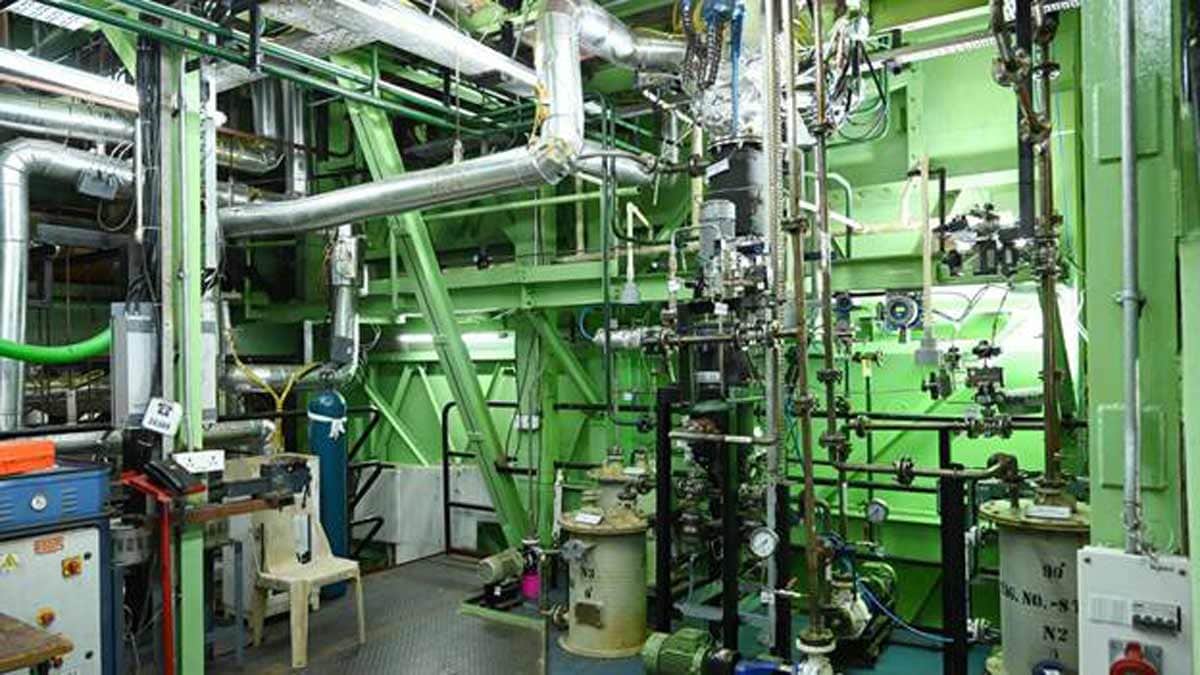
India has achieved a major technological milestone with the inauguration of the world’s first hydrogen production facility based on the Copper–Chlorine (Cu–Cl) thermochemical process using nuclear process heat. The pilot plant was commissioned on Friday at the Indira Gandhi Centre for Atomic Research (IGCAR) in Kalpakkam, Tamil Nadu.
The Cu–Cl thermochemical cycle was indigenously developed by the Bhabha Atomic Research Centre (BARC) in Mumbai. The facility uses nuclear process heat generated from the Fast Breeder Test Reactor (FBTR) at Kalapakkam to produce hydrogen.
Officials said the project strengthens India’s three-stage nuclear programme by extending the role of nuclear power beyond electricity generation into large-scale, carbon-free hydrogen production.
“The successful integration of nuclear process heat with hydrogen generation marks a pioneering technological breakthrough and opens a promising pathway for large-scale, carbon-free hydrogen production using advanced nuclear reactors,” the IGCAR said in a statement.
The facility was inaugurated by Ajit Kumar Mohanty, Secretary of the Department of Atomic Energy (DAE) and Chairman of the Atomic Energy Commission (AEC), in the presence of IGCAR Director Sreekumar G. Pillai.
The development is considered significant as hydrogen is widely viewed as a key future energy carrier and is expected to play a central role in the global transition to clean energy systems. According to IGCAR, among emerging hydrogen production technologies worldwide, the Cu–Cl thermochemical cycle is particularly promising due to its relatively lower operating temperatures and higher thermodynamic efficiency.
By using nuclear heat from fast reactors, the process is expected to reduce dependence on fossil fuels and eliminate greenhouse gas emissions associated with conventional hydrogen production methods.
“The integration of nuclear energy with emerging clean energy technologies such as hydrogen production represents a strategic pathway towards a sustainable energy future,” Mohanty said.
He added that nuclear power, with its ability to provide both reliable carbon-free electricity and high-temperature process heat, is well suited for large-scale hydrogen production while supporting India’s energy security, decarbonisation goals, and long-term sustainability objectives.
Notably, the 500 MWe PFBR (Prototype Fast Breeder Reactor) at Kalpakkam, India’s only operating fast reactor research facility, achieved first criticality on April 6. The reactor was indigenously designed and developed by IGCAR, which has led India’s Fast Breeder Reactor programme since 1971.
Fast Breeder Reactors form the second stage of India’s three-stage nuclear power programme and are central to the country’s long-term nuclear strategy. Unlike conventional thermal reactors, the PFBR uses mixed oxide fuel containing plutonium and uranium, producing more fissile material than it consumes. It is also designed to generate Uranium-233, enabling future utilisation of thorium in the third stage of India’s nuclear programme.
