



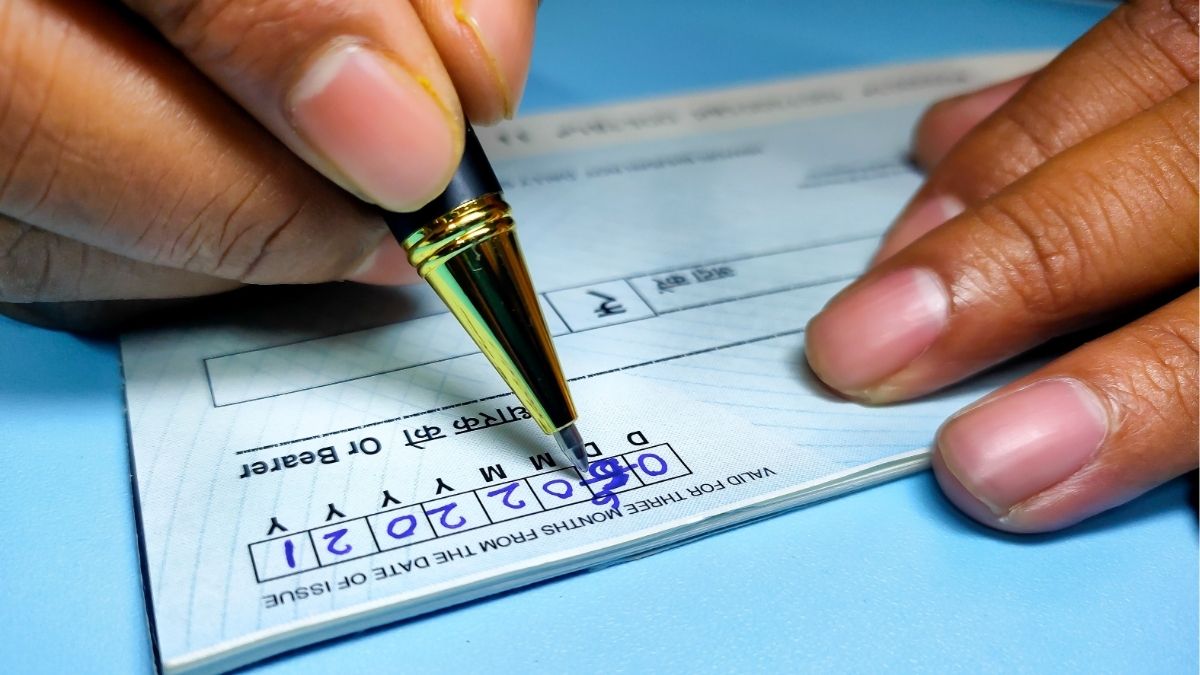
In a scathing indictment of mechanical judicial drafting, a Delhi sessions court has set aside the acquittal of an accused in a cheque bounce case after finding that the trial court had virtually copied the reasoning from another judgment involving the same parties but a different cheque and cause of action, describing the practice as the dangerous emergence of Ctrl+C and Ctrl+V jurisprudence.
Additional Sessions Judge Hargurvarinder Singh Jaggi, hearing an appeal against the acquittal under Section 138 of the Negotiable Instruments Act, held that the trial court had failed to independently evaluate the evidence and instead reproduced factual findings from an earlier case, rendering the judgment legally unsustainable.
"The advent of technology, word processors, and personal computers was intended to act as an administrative aid to the judiciary, bringing efficiency and speed to judicial drafting. However, it has birthed a dangerous and unacceptable malady, the 'Ctrl+C and Ctrl+V' (Cut, Copy, Paste) jurisprudence," the court observed.
The appellate court noted that while the present complaint related to Cheque No. 129330 for ₹2 lakh, dishonoured for funds insufficient, the trial magistrate referred to Cheque No. 178846 and recorded that it had been returned because the drawer's signature was different. Those facts, the court pointed out, belonged to an entirely different complaint between the same parties.
Calling this a factual impossibility, the court said the magistrate had imported not merely legal reasoning but factual findings and evidence from another trial. It further found that the trial court referred to multiple cheques and exhibits that were never part of the present proceedings, demonstrating complete non-application of the judicial mind.
"A judicial pronouncement is the solemn culmination of the application of a trained legal mind to the specific facts, pleadings, and evidence adduced in a particular trial. It cannot, and must not, be reduced to an act where the operative reasoning is mindlessly plagiarised from a different case," the judgment said.
The court went on to hold that when a trial court imports the factual analysis of a different cheque, return memo and cross-examination without independently evaluating the evidence before it, "the resulting judgment is not merely erroneous, it is a nullity in the eyes of law." Such an exercise, it added, violates the principles of natural justice by denying parties adjudication based on their own evidence.
Referring to Supreme Court precedents governing appellate interference in acquittals, the sessions court held that the impugned order was vitiated by gross perversity, absolute non-application of mind, and an injudicious reliance on the 'copy-paste' function of a word processor. While acquittals ordinarily strengthen the presumption of innocence, the court observed that such protection cannot extend to an order that is "the product of a sham adjudication."
Allowing the appeal, the court quashed the acquittal and directed that the matter be placed before the Principal District and Sessions Judge, South District, Saket Courts, for assignment to a different Metropolitan Magistrate.
The newly assigned court has been asked to hear final arguments afresh and pronounce an independent, reasoned judgment strictly on the evidence available on record.
