



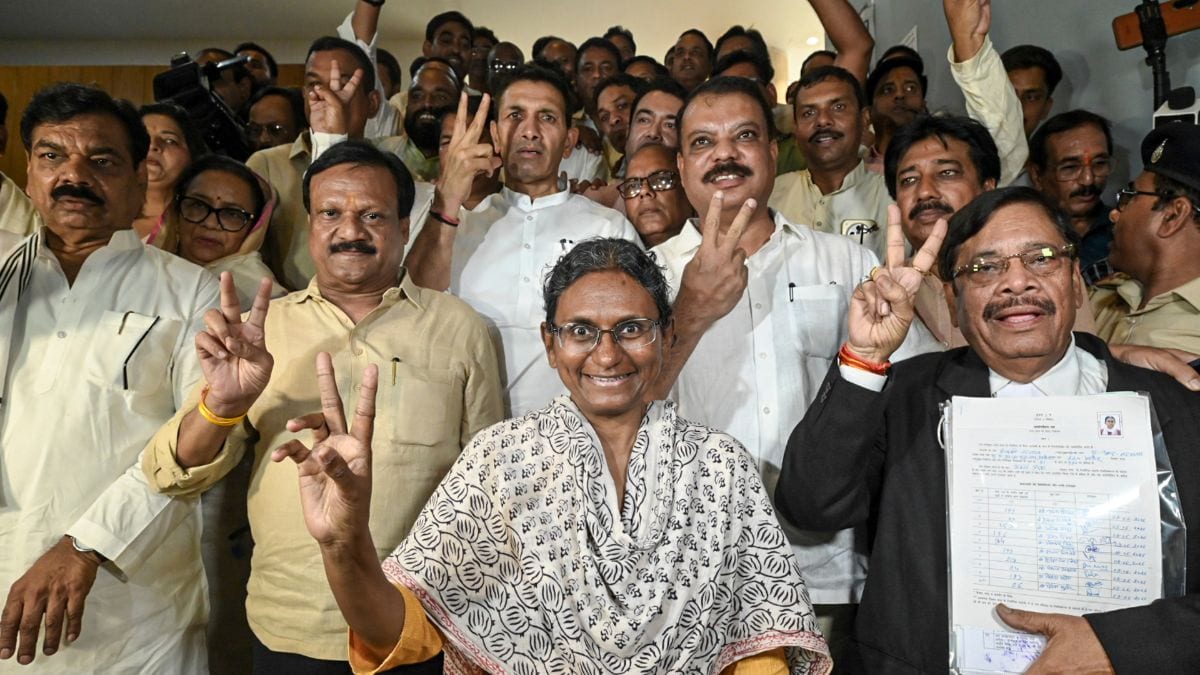
The Congress decision to pick Meenakshi Natarajan as its Rajya Sabha nominee from Madhya Pradesh had been mired in controversies ever since the party released its list of candidates. Earlier, senior Congress leader Naresh Gyanchandani resigned from the party immediately after Natarajan filed her nomination papers on Monday. And on Tuesday, the Election Commission rejected her nomination after she allegedly failed to reveal information about a case in her affidavit.
The BJP had earlier submitted a formal objection to the Returning Officer, urging the poll panel to cancel her nomination. The missing details are allegedly regarding a pending court case in Telangana, which the BJP claimed that amounted to suppression of material information.
However, the Congress claimed that Natarajan does not face any criminal case and hence is not required to disclose the matter. No case was registered formally and the matter was related to a court notice, the Congress said.
Earlier, the BJP had put pressure on the Congress by nominating a third candidate in Madhya Pradesh. In the 230-member assembly, the BJP has 163 seats while the Congress has 66 seats. At least 58 first-preference votes are required for each of the three candidates from the state. The BJP could easily bag two seats with their numbers while the Congress has just enough to get the third seat.
However, besides their first two nominees, Tarun Chugh and Rajneesh Agrawal, the BJP fielded Mahesh Kewat for the third seat. BJP gained confidence after several local Congress leaders were not happy with the high command's decision to nominate Natarajan. The cracks in the Congress ship became evident when Gyanchandani left the party.
Unlike senior Madhya Pradesh leaders like Digvijaya Singh and Kamal Nath, Natarajan has no ground support from the sitting MLAs in the state. This prompted the BJP to try for a third seat. With Natarajan's nomination cancelled, BJP might be able to get one extra seat in the Rajya Sabha.
