



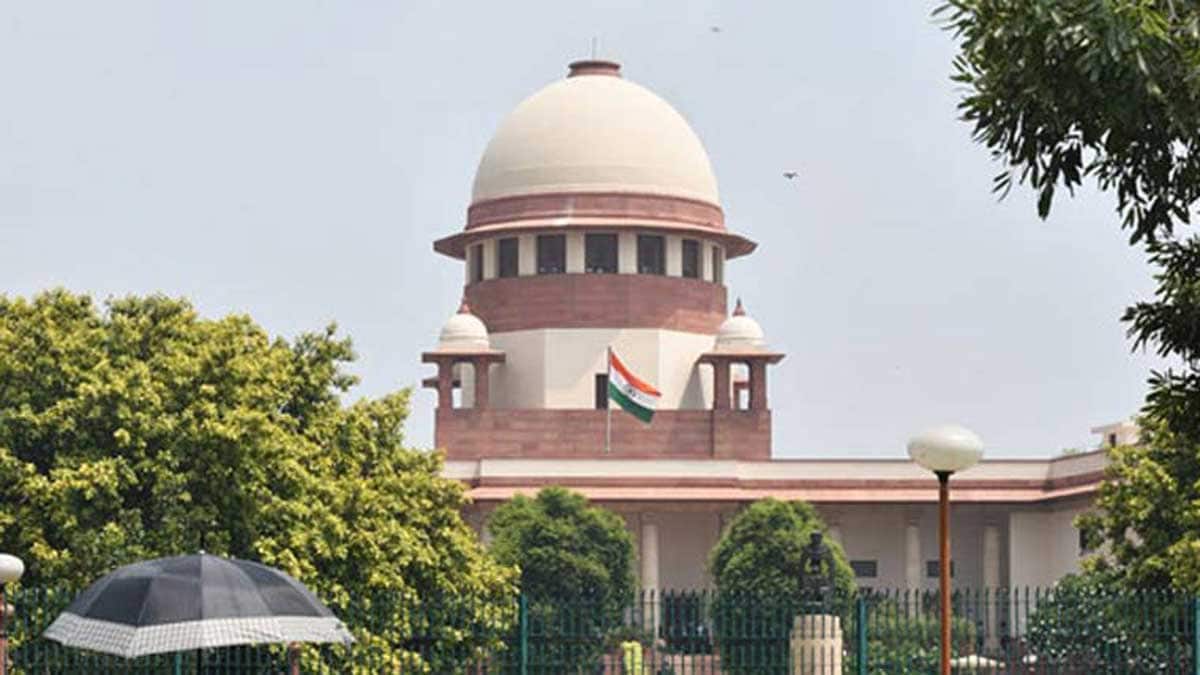
The Supreme Court is set to welcome five new judges after President Droupadi Murmu approved the appointments of Justice Sheel Nagu, Justice Shree Chandrashekhar, Justice Sanjeev Sachdeva, Justice Arun Palli and senior advocate V. Mohana to the country's highest court.
The five are expected to take oath before Chief Justice of India Surya Kant on Tuesday, marking one of the most significant additions to the apex court in recent years.
The appointments come at a crucial juncture for the judiciary, which continues to grapple with a heavy docket of pending cases. The new judges will strengthen the Supreme Court's capacity to hear matters ranging from constitutional disputes and electoral challenges to commercial litigation and criminal appeals.
Collegium recommendations receive govt approval
The appointments follow recommendations made by the Supreme Court Collegium, the body responsible for selecting judges to the higher judiciary. The collegium, headed by the Chief Justice of India and comprising the four senior-most judges of the Supreme Court, had proposed the names after considering factors such as seniority, merit, integrity and regional representation.
The Union government processed the recommendations and forwarded them for presidential approval, completing the constitutional process required for elevation to the Supreme Court.
The appointments also come after Parliament approved an increase in the sanctioned strength of the Supreme Court from 34 to 38 judges. The move was aimed at enabling the court to cope with its expanding workload and growing number of pending cases.
Experienced high court chiefs join apex court
Four of the five appointees are currently serving as Chief Justices of High Courts. Justice Sheel Nagu, presently Chief Justice of the Punjab and Haryana High Court, has had a long judicial career that began in the Madhya Pradesh High Court. He has dealt extensively with constitutional, administrative and service law matters.
Justice Shree Chandrashekhar, who currently heads the Bombay High Court, previously served in the Jharkhand High Court and is regarded as a judge with substantial experience in civil and criminal jurisprudence.
Justice Sanjeev Sachdeva, Chief Justice of the Madhya Pradesh High Court, built much of his judicial career in the Delhi High Court, where he handled a wide spectrum of constitutional and commercial disputes.
Justice Arun Palli, Chief Justice of the Jammu and Kashmir and Ladakh High Court, is known for his extensive experience in constitutional and public law matters and has previously served in the Punjab and Haryana High Court.
Together, the four judges bring decades of experience from different regions of the country, adding to the diversity of perspectives on the apex court bench.
V. Mohana's elevation marks a milestone
The elevation of senior advocate V. Mohana is being viewed as the most significant aspect of the latest round of appointments.
A respected member of the Bar with decades of experience before constitutional courts, Mohana becomes only the second woman advocate in the country's history to be directly elevated from the Bar to the Supreme Court. The first was Justice Indu Malhotra, who joined the apex court in 2018.
Her appointment assumes added significance at a time when concerns have repeatedly been raised about the limited representation of women in the higher judiciary. The Supreme Court has historically had a small number of women judges, and Mohana's elevation is expected to renew discussions on improving gender diversity on the Bench.
Addressing pendency challenges
The appointments are expected to provide a boost to the Supreme Court's functioning at a time when judicial delays remain a major concern. According to official data, tens of thousands of cases are pending before the apex court, while courts across the country continue to face mounting backlogs.
A larger bench strength will allow the court to constitute more Benches, hear a greater number of matters and reduce waiting times for litigants. Legal experts also point out that a full-strength court is essential for handling complex constitutional questions that require larger Benches.
The latest appointments, therefore, are not merely routine elevations. They represent an effort to strengthen the institution at a time when the Supreme Court's role in shaping public policy, safeguarding constitutional values and resolving politically sensitive disputes has become increasingly significant.
With the swearing-in expected on Tuesday, the Supreme Court will move a step closer to its full sanctioned strength, reinforcing its capacity to meet the demands of an increasingly complex legal landscape.
