



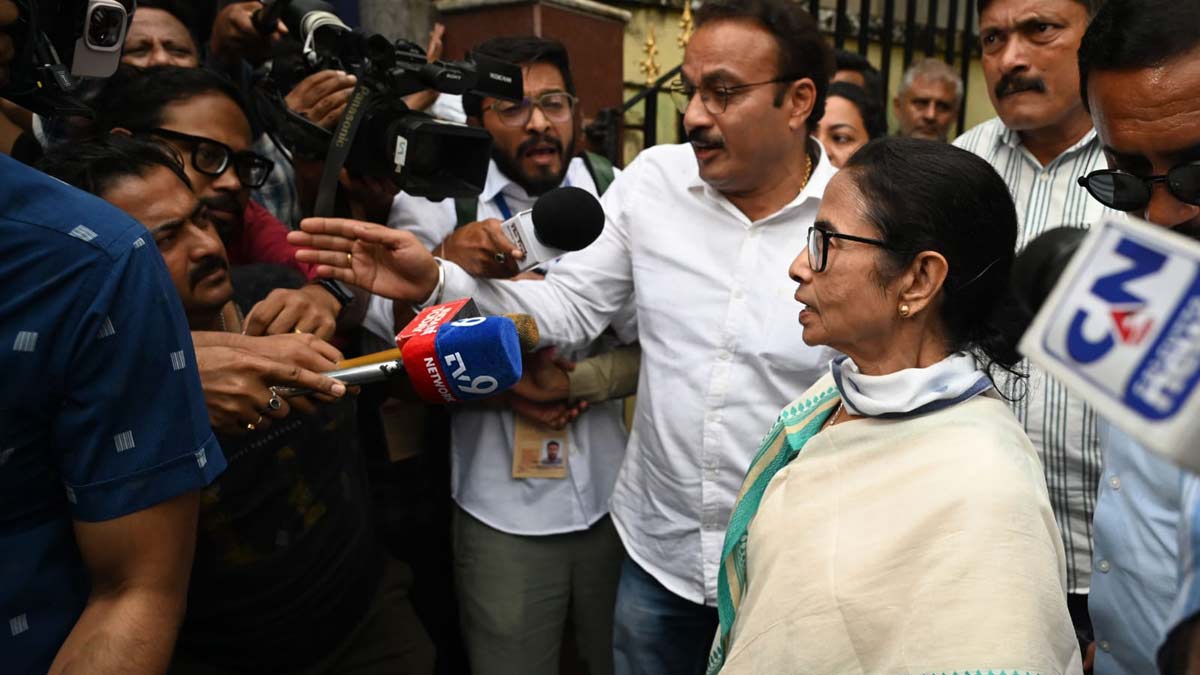
Following her shocking defeat in the West Bengal Assembly elections, former Chief Minister Mamata Banerjee urged opposition parties, including the Left and ultra-Left groups, to unite and form an anti-BJP alliance in the state.
However, her appeal has failed to gain traction. CPI(M) state secretary Md Salim rejected the idea, saying, "Absolutely not. We will not accept anyone identified as criminal, extortionist, corrupt, and communal. We will stand by the people and the marginalised", accoring to an Hindustan Times report.
The Congress state unit also criticised Banerjee’s outreach. State spokesperson Soumya Aich Roy mocked the invitation to ultra-Left groups, asking, “Do you mean the Maoists, who killed 18 Congress leaders and workers in Chhattisgarh on May 25, 2013?”
CPI state secretary Swapan Banerjee similarly dismissed the call, alleging that democracy was under threat during her regime.
Banerjee issued her appeal on Saturday, the same day BJP leader Suvendu Adhikari was sworn in as West Bengal Chief Minister following his party’s landslide victory, winning 207 of the 294 assembly seats.
“I call upon all opposition parties, including the Left and ultra-Left, to come together to form a joint platform against the BJP,” she said, also calling upon the national parties to join.
The Trinamool Congress chief added that she is open to dialogue with any political party willing to discuss the matter. “It is not the time to think the enemy's enemy is my friend. Our first enemy is the BJP,” she asserted.
The TMC, which had governed the state since 2011, was reduced to 80 seats in the recent assembly elections.
