



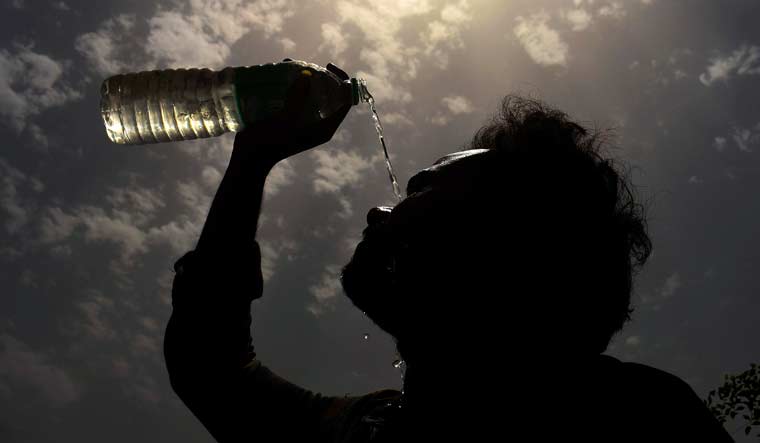
If you are in Delhi, Lucknow, Chandigarh, Jaipur, Bhopal or Patna this weekend, step outdoors with extreme caution. The India Meteorological Department (IMD), on April 25, 2026, warned that heat wave conditions are very likely to persist in isolated pockets of northwest and central India through three days (from April 25 to April 27) before a gradual but meaningful drop in temperatures begins around April 28.
In the 24 hours from 8.30 am on Friday to 8.30 am on Saturday, maximum temperatures across most of the country have already hit the range of 40–45°C.
The highest reading was at Prayagraj in Uttar Pradesh, where it touched 45.2°C, qualifying as a formal heat wave.
Himachal Pradesh saw conditions escalate to the level of "Severe Heat Wave", while Haryana, Chandigarh, Delhi, West and East Uttar Pradesh, Punjab and North Rajasthan all reported heat wave conditions at multiple locations.
The IMD also recorded "Severe Warm Night" conditions in Haryana and warm night conditions across Rajasthan, with minimum temperatures across the plains ranging between 20°C and 26°C. The lowest minimum temperature on the plains was 20.5°C at Najibabad in West Uttar Pradesh.
For Delhi specifically, the forecast is:
Sunday (April 26): Partly cloudy, heat wave at isolated places, maximum 41–43°C.
Monday (April 27): Partly cloudy with possible thundery spell in afternoon/evening, winds gusting 50 kmph, maximum 41–43°C.
Tuesday (April 28): Thunderstorm with very light rain/drizzle, winds gusting 50 kmph, maximum 40–42°C.
IMD forecasts a gradual fall of 2–4°C in maximum temperatures over the plains of northwest India during April 28–May 1, driven by an incoming Western Disturbance.
While north and central India baked, Sub-Himalayan West Bengal, Sikkim, and the entire northeast saw heavy rainfall, thundersqualls with wind speeds of 50–70 kmph, and isolated very heavy rainfall events.
Fishermen along the North Odisha and West Bengal coasts have been warned to stay off the Bay of Bengal on April 26, 27, and 28.
The IMD advised to avoid prolonged sun exposure, wear loose light-coloured cotton clothing, drink water even when not thirsty, and keep ORS, buttermilk, lemon water or lassi handy. Those with infants, elderly family members or individuals with chronic illness should be especially vigilant. Do not take shelter under trees during thunderstorm periods, the IMD noted.
