



Days after his release from detention under the National Security Act (NSA), Ladakh-based activist and educationist Sonam Wangchuk on Tuesday said he was hopeful of a new beginning with the government, stressing that the larger goal was not his personal victory but a resolution of Ladakh’s concerns through meaningful dialogue.
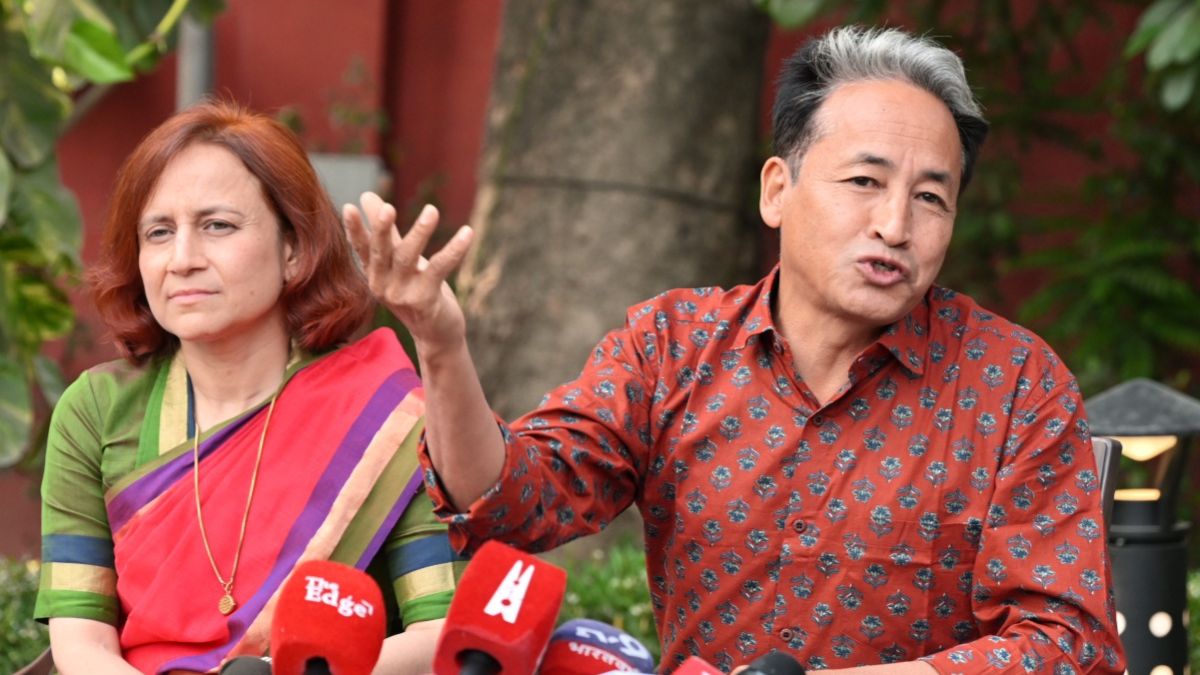
Addressing a press conference alongside his wife Geetanjali J. Angmo, Wangchuk said the government’s decision to revoke his detention under the National Security Act had created an opportunity to rebuild trust and resume talks over Ladakh’s long-standing demands.
“I feel wonderful today after these two days of regaining my voice and unfurling my little wings and reorienting myself,” Wangchuk said, referring to the period following his release.
The activist, who spent 169 days in detention in Jodhpur jail, said his struggle had always been aimed at achieving a broader outcome for Ladakh rather than a personal victory.
“I’m a little greedy person,” he said. “A win was not enough for me. I was always looking for a win-win. A win would be just Sonam Wangchuk’s win. But what good is Sonam Wangchuk winning if Ladakh, the Himalayas and the causes he represents do not win?”
Wangchuk said the government’s recent outreach to facilitate dialogue could ensure that the concerns of Ladakh’s people are addressed. “With the recent extension of hands by the government to build trust and facilitate meaningful constructive dialogue, this is a great thing. This way Ladakh will also win and our cause will also win.”
Hope for renewed dialogue
Emphasising that the movement had always been peaceful, Wangchuk said the next phase should focus on constructive engagement with the government.
“We are only for peace in Ladakh and we want to resume talks. Here the government wants meaningful constructive dialogue, effective talks that will lead us to something,” he said, noting that the region’s demands have been part of a struggle spanning nearly six years.
He said the revocation of the detention order was a trust-building measure that could make the path forward easier.
“I was well prepared to stay 12 months also,” Wangchuk said, adding that the experience had strengthened his resolve.
At the same time, he expressed hope that legal clarity would emerge from the courts on the use of preventive detention laws. “Court should give a judgment so that governments do not use the NSA like this and guideline be laid down,” he said.
Wangchuk also urged authorities to consider withdrawing cases filed against other activists involved in the Ladakh movement, saying such steps would deepen trust.
“This trust-building should also result in taking away cases which were slapped on other people,” he said.
Sixth Schedule and statehood demands
The activist reiterated that the core demands of the movement remain unchanged, particularly constitutional safeguards for Ladakh under the Sixth Schedule of the Constitution of India and greater political representation.
“Talks will be about this only safeguards under the Sixth Schedule and other protections,” Wangchuk said. “Dialogue is a give-and-take process and it has to be a win-win-win.”
Angmo echoed similar sentiments, saying the experience of the past several months had strengthened their commitment to public service.
“This experience has taught us more and it will help in nation building,” she said. “Statehood for Ladakh is vital and we will continue working towards it.”
Reflections from detention
Reflecting on his time in jail, Wangchuk described the period as one of self-reflection.
“In Jodhpur jail this was a self-analysis period for me,” he said. “I learnt even from ants.”
He also acknowledged the support he received from his family and well-wishers, saying books sent by his wife during detention gave him strength.
“Geetanjali gave me books which were written in jail and they gave me strength,” he said.
While clarifying that his experience was not entirely negative, Wangchuk said the prison staff had been cordial and conditions were manageable. “The staff was cordial with me all the time. Food was very healthy. Not everything was that bad,” he said.
Angmo, however, noted that the experience highlighted the need to view prisons as institutions for reform rather than punishment.
“Jail should be about reformation and not just punishment,” she said.
Looking ahead
Wangchuk said he now hopes to return to Ladakh soon and focus on rebuilding trust through dialogue.
“I am happy that I don’t have to go back,” he said, referring to the possibility of continued detention. “We look forward to a new beginning.”
He added that his faith in the judiciary had been strengthened during the legal battle and thanked the government for opening the door for talks.
“We want meaningful dialogue,” Wangchuk said. “Ladakh’s people are hurt, but I hope things move forward in a better way now.”
