



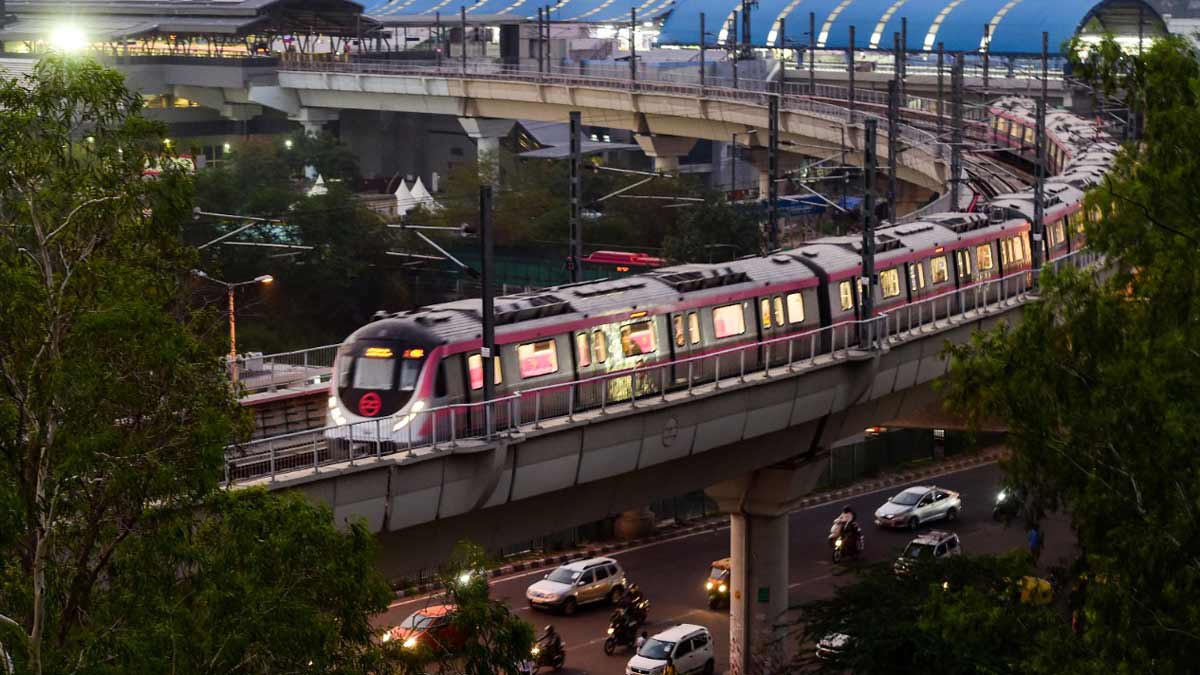
A Delhi court has upheld the conviction of a man for sexually harassing a woman inside a Delhi Metro train, observing that such acts cannot be trivialised as incidents arising out of crowded public spaces and must be dealt with firmly to protect women’s dignity and safety.
Additional Sessions Judge Hargurvarinder Singh Jaggi dismissed the appeal filed by the accused, Mohd. Tahir, and affirmed the earlier conviction and sentence awarded by the trial court in connection with the incident that took place on the Delhi Metro’s Yellow Line.
In the judgment delivered on March 9, the judge underscored that crimes of sexual misconduct in public transport inflict deep psychological trauma on victims and undermine a woman’s sense of safety in everyday spaces.
The case arose from an incident in 2021 when the complainant, a young woman travelling in a metro coach from Saket to INA station, alleged that the accused engaged in obscene behaviour. According to the prosecution, the man exposed himself, masturbated and physically touched the woman inside the train coach.
Following the complaint, a case was registered at the INA Metro Police Station under Sections 354 and 354A of the Indian Penal Code, which deal with assault or criminal force with intent to outrage a woman’s modesty and sexual harassment.
The trial court had convicted Tahir in May 2025 and later sentenced him in October 2025. Challenging the decision, the accused approached the sessions court arguing that the trial court had erred in appreciating the evidence and that the allegations were exaggerated.
However, the appellate court found no merit in the arguments raised by the defence.
Dismissing the appeal, sessions judge observed that the evidence on record, including the victim’s testimony, clearly established the misconduct of the accused. The court emphasised that the statement of the victim in such cases carries significant evidentiary value and does not require unnecessary corroboration when it inspires confidence.
The judgment also reflected on the broader issue of women’s safety in public spaces, noting that incidents of harassment in crowded environments are often normalised or dismissed as minor acts. The court cautioned against such attitudes, stressing that behaviour involving sexual intimidation or obscenity cannot be brushed aside as accidental contact in crowded transport systems.
The court’s observations gain added significance in the context of growing concerns about harassment faced by women commuters in large urban transit systems. While the Delhi Metro is widely regarded as one of the safer modes of transport in the capital equipped with CCTV surveillance, security personnel and women-only coaches, cases of molestation and harassment still surface periodically.
By upholding the conviction, the court sent a message that public transport cannot become a shield for offenders who exploit crowded conditions to target women. For millions of women who depend on the metro network for daily commuting, the case underscores an enduring challenge, ensuring that urban mobility does not come at the cost of personal safety and dignity.
