



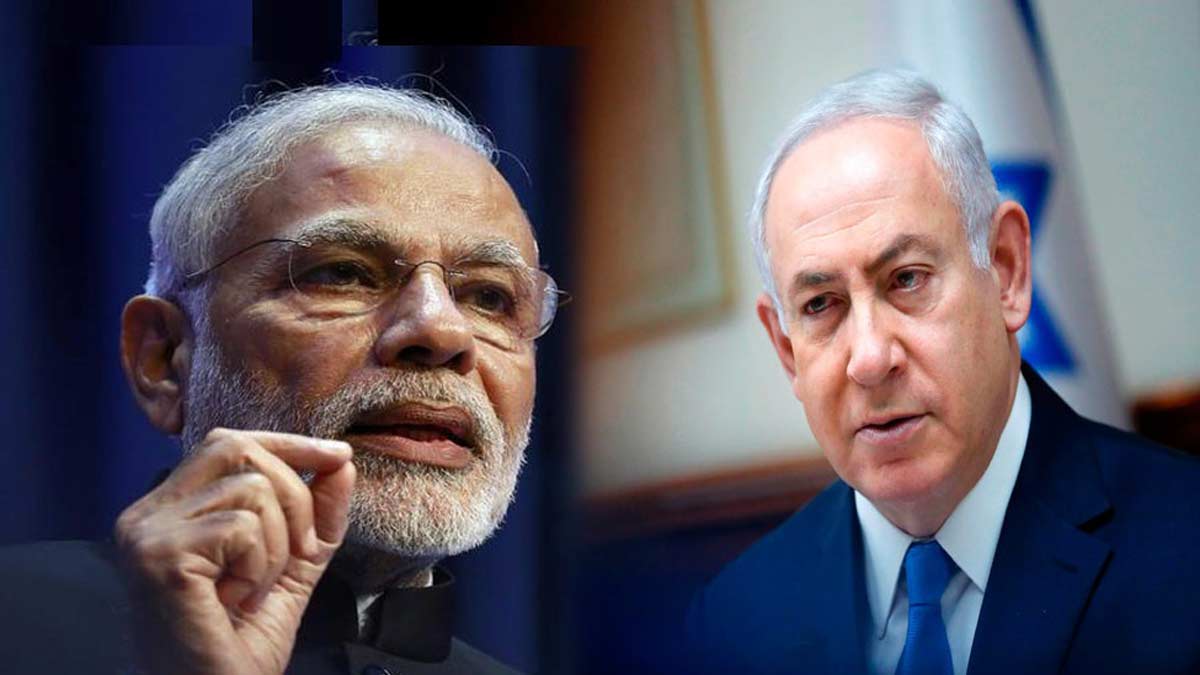
As conflicts spread across the Middle East amid the US-Iran war, Prime Minister Narendra Modi spoke on Monday with Israeli Prime Minister Benjamin Netanyahu, stressing the urgent need for an early cessation of hostilities.
Modi expressed concern over the recent developments and highlighted the importance of prioritising civilian safety.
In a post on X, he wrote: "Had a telephone call with PM Benjamin Netanyahu to discuss the current regional situation. Conveyed India's concerns over recent developments and emphasised the safety of civilians as a priority. India reiterates the need for an early cessation of hostilities."
Earlier, Modi spoke with United Arab Emirates (UAE) President Sheikh Mohamed bin Zayed Al Nahyan, strongly condemning the recent attacks on the UAE. Modi thanked Nahyan for "taking care of the Indian community in the UAE" and reaffirmed India’s solidarity with the country during these difficult times.
The prime minister also emphasised India’s support for de-escalation, regional peace, and stability.
Modi's call to the UAE president followed Iranian strikes on the UAE in the past two days, which have resulted in three fatalities and 58 injuries, including one Indian national.
On Sunday night, Modi chaired a meeting of the Cabinet Committee on Security to discuss the evolving situation in West Asia. Defence Minister Rajnath Singh, Home Minister Amit Shah, External Affairs Minister S. Jaishankar, and Finance Minister Nirmala Sitharaman were present at the meeting.
According to sources quoted by PTI, the ministers discussed the safety of Indian nationals in West Asia, including those stranded in the region, and outlined potential actions in case the situation worsens.
Meanwhile, Union Minister of State for External Affairs Pabitra Margherita confirmed that the government is in regular contact with Indian embassies abroad, and any official updates from the Ministry would be communicated through formal channels.
