



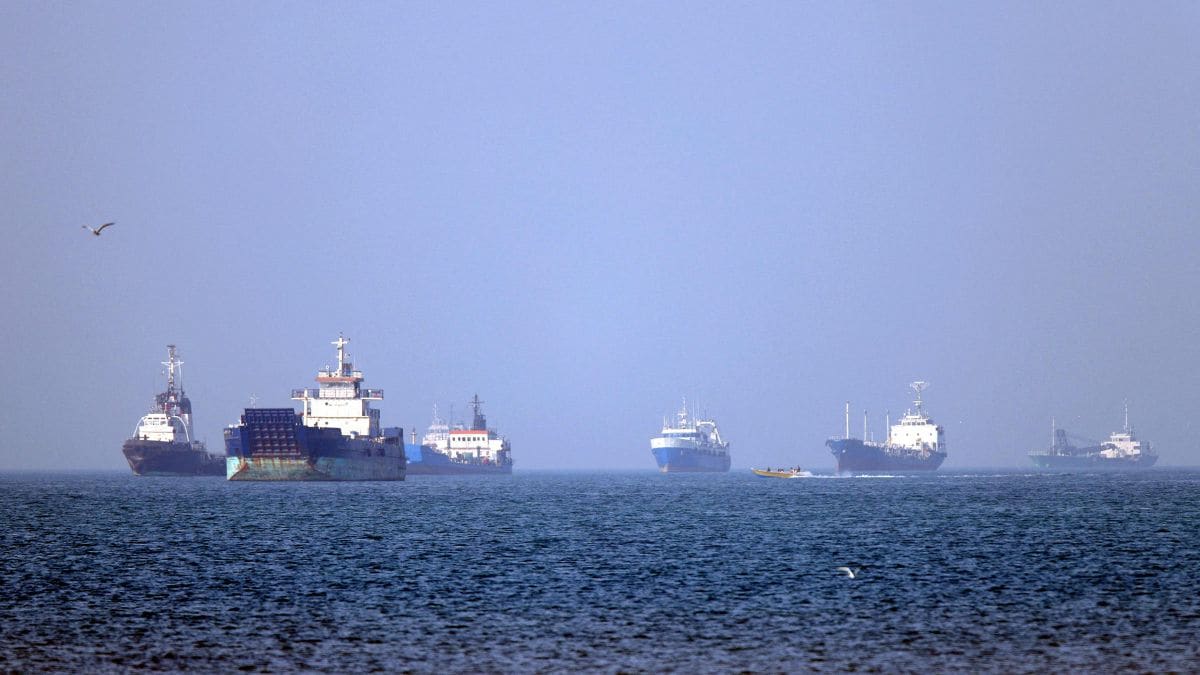
The United States launched its latest military operation in the Middle East on Monday, dubbed "Project Freedom", to break the months-long deadlock in the Strait of Hormuz and get commercial shipping moving again. The mission is centred on escorting vessels that have been unable to pass through one of the most critical maritime chokepoints on earth. Backed by guided-missile destroyers and a broader naval presence, the operation got underway almost immediately in hostile conditions, with Iran signalling a sharp and aggressive response.
Within hours of the announcement, Iranian forces had fired cruise missiles, rockets and combat drones near commercial and military vessels in the area. Further drone and missile activity was reported over the United Arab Emirates and Oman, suggesting the confrontation is already bleeding beyond the narrow confines of the strait itself.
At its heart, Project Freedom is a large-scale rescue and stabilisation effort. Hundreds of commercial vessels—estimates range from 850 to 2,000—have been stranded for months, along with tens of thousands of seafarers. Many of these crews have been enduring considerable strain, contending with dwindling supplies, grinding uncertainty and worsening physical and mental health. For Washington, the operation is as much about humanitarian relief and the restoration of global trade as it is about sending a strategic message.
To do this, the United States has established what it calls an "enhanced security area" to the south of the traditional shipping lanes. Rather than risk the heavily mined and fiercely contested waters of the original routes, vessels are now being guided primarily through Omani territorial waters. Shipping companies have been told to steer well clear of the old corridors, where naval mines continue to pose a constant and unpredictable hazard.
The scale of the American military deployment reflects both the mission's ambition and its dangers. The US has assembled around 15,000 personnel, two aircraft carriers, guided-missile destroyers and a large contingent of warplanes and drones. Naval robots are being used to locate and clear mines, and aerial surveillance is providing continuous monitoring of Iranian movements. The operation recorded an early success when a US-flagged vehicle carrier was safely escorted out of the strait under military coordination, offering at least a tentative sign that the concept can work.
Iran has called the latest operation a violation of its sovereignty and an attempt to impose foreign control over the Strait of Hormuz. Foreign Minister Abbas Araghchi dismissed the initiative as "Project Deadlock", arguing that military intervention cannot resolve what is, at its core, a political crisis. Iranian military commanders have gone further still, declaring that any foreign force approaching the strait without prior coordination will be treated as a hostile target.
That rhetoric has been backed by action. Iranian forces deployed fast attack boats to harass shipping and launched missiles and drones at US and allied assets. State media claimed that missiles were fired at a US warship near the port of Jask, though Washington has flatly denied the incident. Whatever the truth of those competing accounts, the broader pattern is plain enough: Iran is prepared to contest the operation directly, using both conventional forces and asymmetric tactics.
Domestically, Tehran appears to be settling in for a prolonged confrontation. Work is reportedly underway to restore damaged underground facilities used to store missiles and drones, pointing to an intent to sustain military operations over time. A nationwide mobilisation campaign called "Jan Fadaa (ready to sacrifice)" has been launched to rally public support. Official figures claim millions have signed up, though independent assessments put the real level of participation considerably lower. A near-total internet shutdown remains in place across the country, restricting the flow of information and adding to the atmosphere of a nation placed on a war footing.
The risks surrounding Project Freedom are not small. The operation threatens to unpick a fragile ceasefire brokered earlier in the year, replacing an uneasy standoff with something far more dangerous. Clashes have already taken place. US Apache helicopters have reportedly destroyed several Iranian fast boats, and American warships have intercepted incoming drones and missiles.
The violence is also beginning to affect civilian and commercial infrastructure across the wider region. In the United Arab Emirates, a drone strike started a major fire at a key oil storage and shipping facility in Fujairah, and air defences were activated against several incoming threats. In Oman, a residential building in the coastal town of Bukha was hit, leaving residents injured. A number of commercial vessels have reported incidents as well, including fires and unexplained explosions.
The economic stakes are considerable. The Strait of Hormuz handles roughly a fifth of the world's oil and liquefied natural gas, making it one of the arteries the global economy simply cannot do without. Brent crude prices surged sharply in the wake of the latest escalation, reflecting market anxiety about a prolonged supply disruption.
