



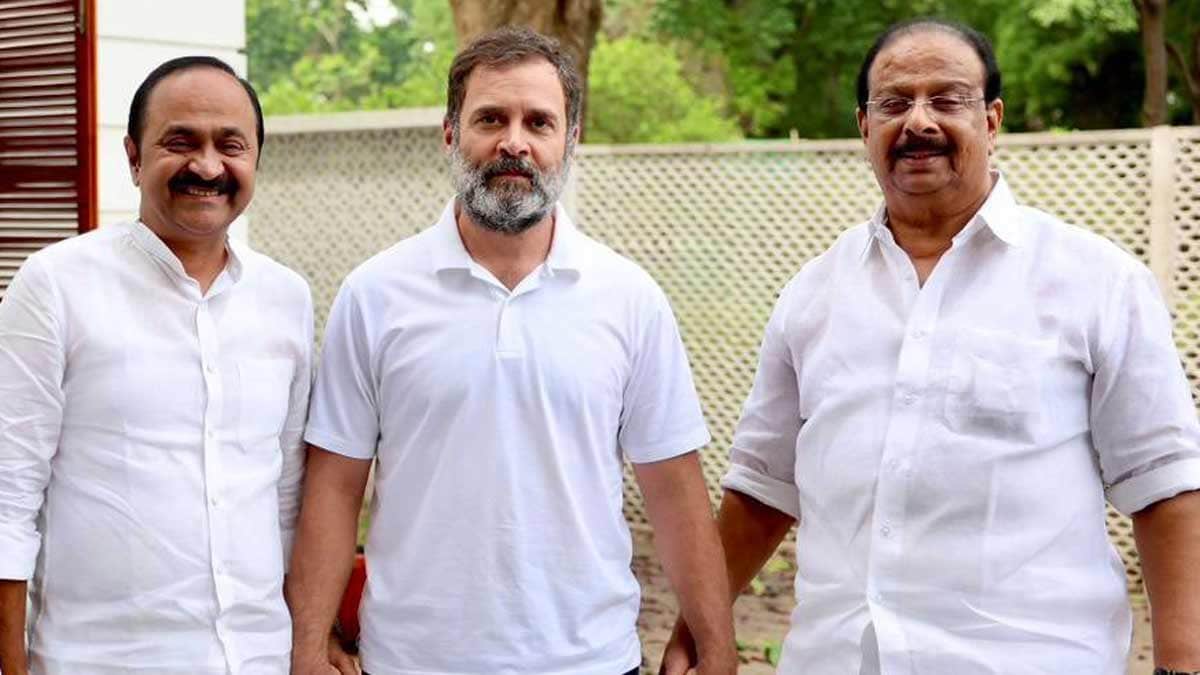
Groupism has long been like an evil Siamese twin to the Congress party in Kerala. Factionalism, rooted in personal loyalties and power struggles, has historically fragmented the party's unity. However, in the aftermath of electoral failure in 2021 assembly polls and after K. Sudhakaran became KPCC president and V.D. Satheeshan became opposition leader, the traditional dominant factions of “I” and “A” in the party became almost obsolete. The KPCC president has often claimed that the party remains united under his leadership and that factionalism is dead. Ironically, Sudhakaran himself recently alleged that a faction is attempting to sideline him, amid growing rumours of his impending replacement.
“A group within the Congress is trying to portray me as having health issues and label me as unfit and sideline me,” he said.
Notably, Sudhakaran made this move days after a meeting with Congress High Command last week—a meeting that led to rumours that Sudhakaran’s replacement will be declared soon. Reports suggest that AICC general secretary Deepa Das Munshi, in her feedback to the leadership, recommended that Sudhakaran be replaced. Interestingly, his bold public remarks about internal factionalism and his insistence on continuing as president have put the Congress leadership on the back foot.
However, sources say the Congress High Command is likely to stick to its plan of replacing Sudhakaran and bringing in a revamped team, including new faces in key organisational positions. The AICC has already instructed the KPCC to immediately begin the reorganisation of District Congress Committees (DCCs). Many within the party believe the failure to follow up on the UDF’s resounding victory in the Lok Sabha elections with organisational reforms was a missed opportunity.
Still, insiders suggest that those who held sway during Sudhakaran’s tenure are resisting a major shake-up—and may have influenced the president’s defiant public posture. Yet, there are strong signals that the AICC will soon announce a new KPCC chief.
While change may be imminent, removing Sudhakaran—who enjoys considerable grassroots support—risks backlash. A forced exit could trigger tremors across the party’s rank and file.
Adding another layer of complexity, there are murmurs that the Congress may appoint a Christian leader as the new KPCC president to balance community equations. But questions remain: Can any such candidate match Sudhakaran’s mass appeal? And will a weak successor invite a resurgence of rampant factionalism—especially in a crucial election year?
