



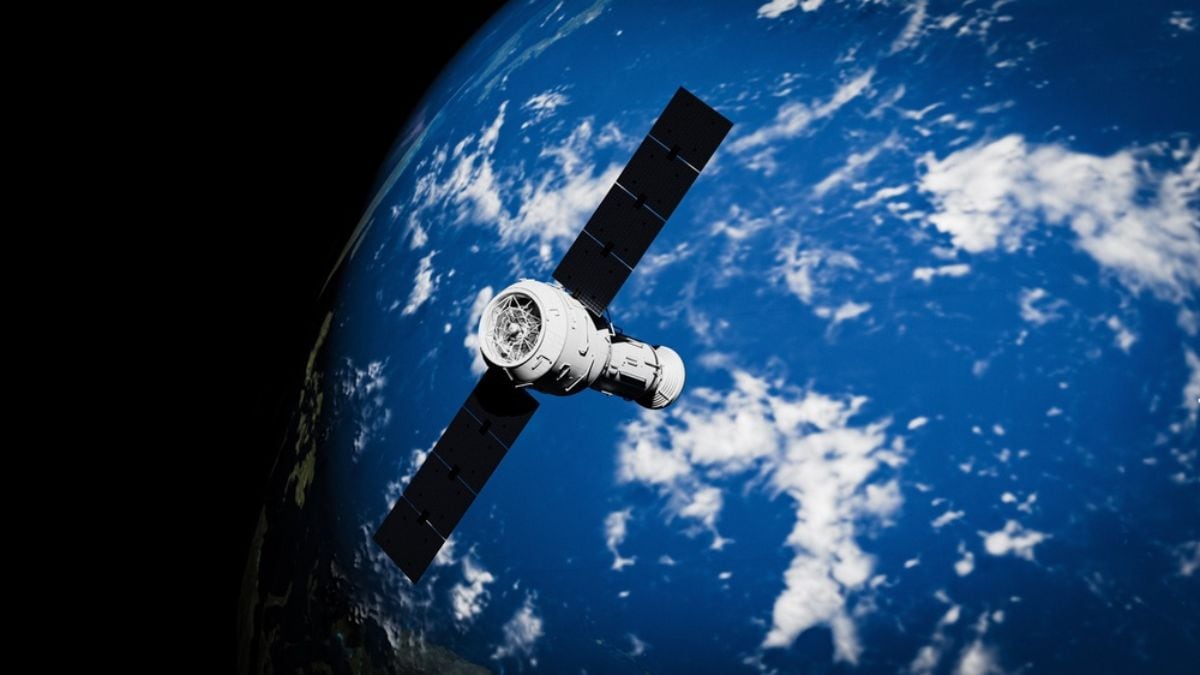
Something amazing is about to happen in Indian space technology. Space startup Pixxel has joined hands with AI company Sarvam to build India's very first orbital data centre satellite. They have named it Pathfinder, and it could completely change how we use satellites in our daily lives. Pixxel will design the satellite, launch it into space, and control it from the ground. Sarvam will provide the Artificial Intelligence (AI) brain that will sit inside the satellite.
This means advanced AI language models, the same kind that power smart chatbots, will actually run inside the satellite while it is flying in space. So the satellite will not be a dumb machine clicking pictures anymore. It will have its own thinking power, just like giving a brain to a flying camera.
Pathfinder will weigh around 200 kilograms and is expected to reach space by the end of 2026. What makes it really special is the hardware it will carry inside. “Normally, satellites use simple, low-power chips because space is a harsh place with extreme temperatures and radiation, so engineers prefer tough chips that can survive, even if they are not very powerful. But these weak chips cannot handle heavy AI work. Pathfinder is breaking this old rule. It will carry data centre-level GPUs, the same high-performance chips used in big computers on Earth for AI work. GPU means Graphics Processing Unit. In simple language, these are super-fast chips that can do complex calculations in seconds, perfect for AI tasks,” explained space analyst Girish Linganna.
The satellite will also have Pixxel's hyperspectral camera. A normal camera sees only three colours: red, green, and blue. But a hyperspectral camera captures images in hundreds of different light wavelengths.
This means it can spot things our eyes cannot see, like the health of crops in a farmer's field, types of minerals hidden in soil, pollution levels in rivers, or even early signs of disease in plants before they become visible.
But what is revolutionary about this satellite? “Until today, satellites used to take huge amounts of pictures and send all that raw data back to Earth. Scientists on the ground would then take days or even weeks to study and process them. With Pathfinder, the AI sitting inside the satellite will analyse everything right there in space. It can spot patterns, detect changes, and give ready-to-use answers almost instantly. The waiting time will drop from weeks to just minutes,” remarked Linganna.
It will be hugely beneficial. A farmer in a village could get quick alerts about stress in his crops. Government officials could track forest fires or pollution much faster. Disaster management teams could respond to floods or earthquakes within minutes. Satellites will no longer just collect information. They will understand it and act on it, becoming smart assistants in the sky.
Awais Ahmed, CEO of Pixxel, has explained the bigger thinking behind this project. Data centres on Earth are facing very serious problems today. They use enormous amounts of electricity, need huge pieces of land, face strict government rules, and are becoming difficult to expand further. Orbital data centres like Pathfinder can solve many of these issues. In space, solar energy is freely and abundantly available. The satellite can process data right where it is being collected, without wasting time and energy sending it back. This makes the whole system more eco-friendly and easier to expand in the future.
For India, this project carries huge importance. Pixxel will build Pathfinder at its upcoming Gigapixxel facility. By doing this, India is taking a strong lead in combining space technology with artificial intelligence. It clearly shows that Indian companies are not just following global trends. They are actively shaping the future of space technology.
All this is going to pave a future where satellites watch over our environment, help manage forests, water and farmland better, support smart cities, and make real-time intelligent decisions from space itself. Pathfinder is the very first step towards making this dream practical. It brings computing closer to where data is born, saves enormous energy, and delivers faster insights for every sector.
The partnership between Pixxel and Sarvam proves that India has both the talent and the vision to build next-generation space systems. For us in our daily lives, this means smarter farming, cleaner air, better disaster warnings, and quicker emergency responses. Doctors might one day get instant maps of disease outbreaks. City planners might receive live updates on traffic and pollution. Forest officers might catch illegal cutting in real time.
