


 Add as a preferred source on Google

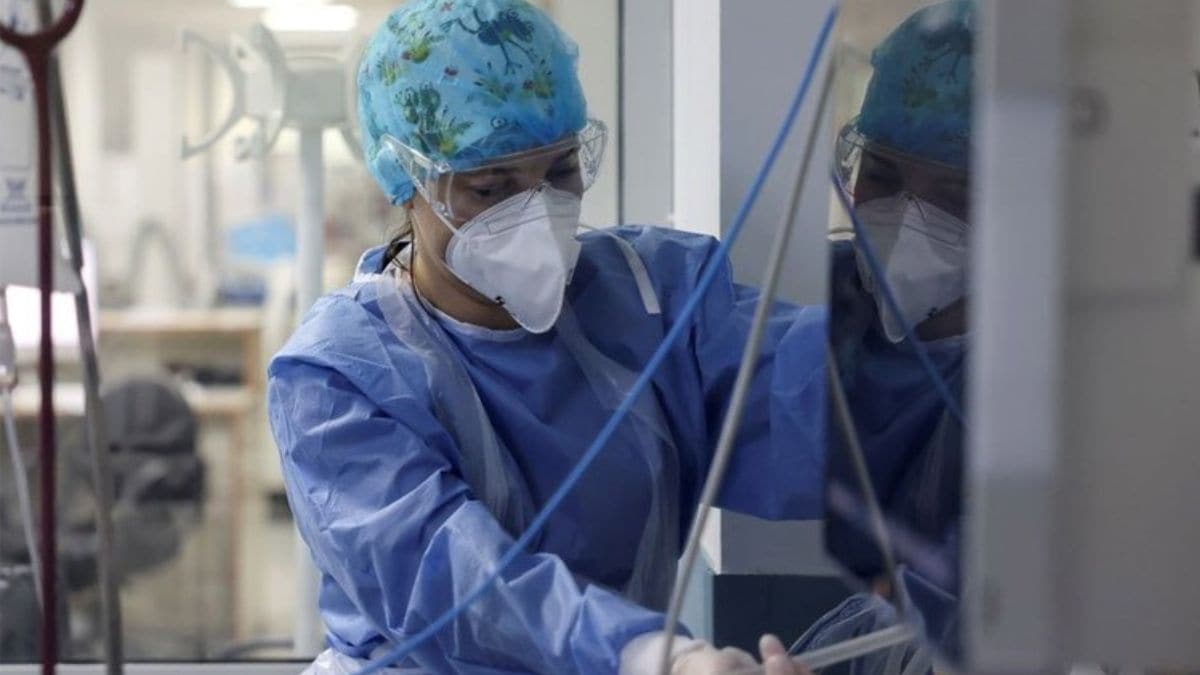
What began as a persistent, uncomfortable heaviness in her lower abdomen turned out to be a life-altering diagnosis for a 24-year-old woman from Bhiwadi, Rajasthan. Doctors at CK Birla Hospital, Gurugram, found a massive 25 cm ovarian cyst. Roughly the size of a full-term, 36-week pregnancy, the growth left doctors with the delicate challenge of safely removing it while preserving her healthy ovarian tissue and future fertility.
The tests revealed that the cyst occupied almost the entire abdominal cavity. A team of skilled doctors led by Dr Anjali Kumar, director, obstetrics and gynaecology at CK Birla Hospital, successfully performed robotic-assisted surgery, identifying and reconstructing healthy ovarian tissue to preserve the ovary and safeguard the patient’s future reproductive potential.
The patient's pre-operative MRI suggested a benign ovarian cyst, and tumour markers were negative. However, imaging could not identify any separate normal ovarian tissue, raising concerns about whether ovarian preservation would be possible.
A robotic-assisted ovarian cystectomy, a procedure to remove the ovarian cyst while making every possible effort to preserve the affected ovary, was planned by the surgical team after careful evaluation. The size of the cyst left very little space for the surgical team to operate safely.
To overcome this challenge, the surgeons gained initial access through Palmer’s point, an alternative entry site in the upper abdomen, with the patient positioned laterally.
The cyst was then carefully drained and decompressed, reducing its size and creating sufficient space for the team to proceed safely, said the doctors. Using the precision offered by robotic-assisted surgery, the surgeons were able to identify a thin rim of healthy ovarian tissue that had not been clearly visible on pre-operative imaging. They carefully excised the cyst wall and reconstructed the remaining healthy ovarian tissue, successfully preserving the ovary.
A histopathological examination of the removed cyst subsequently confirmed that the lesion was benign.
"When we evaluated the patient, the sheer size of the cyst was striking. At 25 cm, it had expanded the abdomen to a size comparable to a 36-week pregnancy. While the imaging suggested that the cyst was benign, we could not identify any distinct healthy ovarian tissue around it. Given that the patient was only 24, our priority was not simply to remove the cyst, but to make every possible effort to preserve the ovary and protect future reproductive potential. That became the defining challenge of this surgery," said Dr Anjali.
The successful outcome highlights the importance of meticulous surgical planning, advanced robotic-assisted techniques and an organ-preserving approach in managing complex ovarian cysts, particularly among young women for whom preserving reproductive health is an important consideration.
“For us, advanced care is ultimately about what it enables for the patient. This was a complex case that required careful planning, specialised expertise and the right surgical technology. Being able to remove such a large ovarian cyst while preserving the ovary reflects our commitment to delivering care that looks beyond the immediate procedure and considers the patient’s future health and quality of life," said Dr Devy Jindal, unit head, CK Birla Hospital, Gurugram.
