



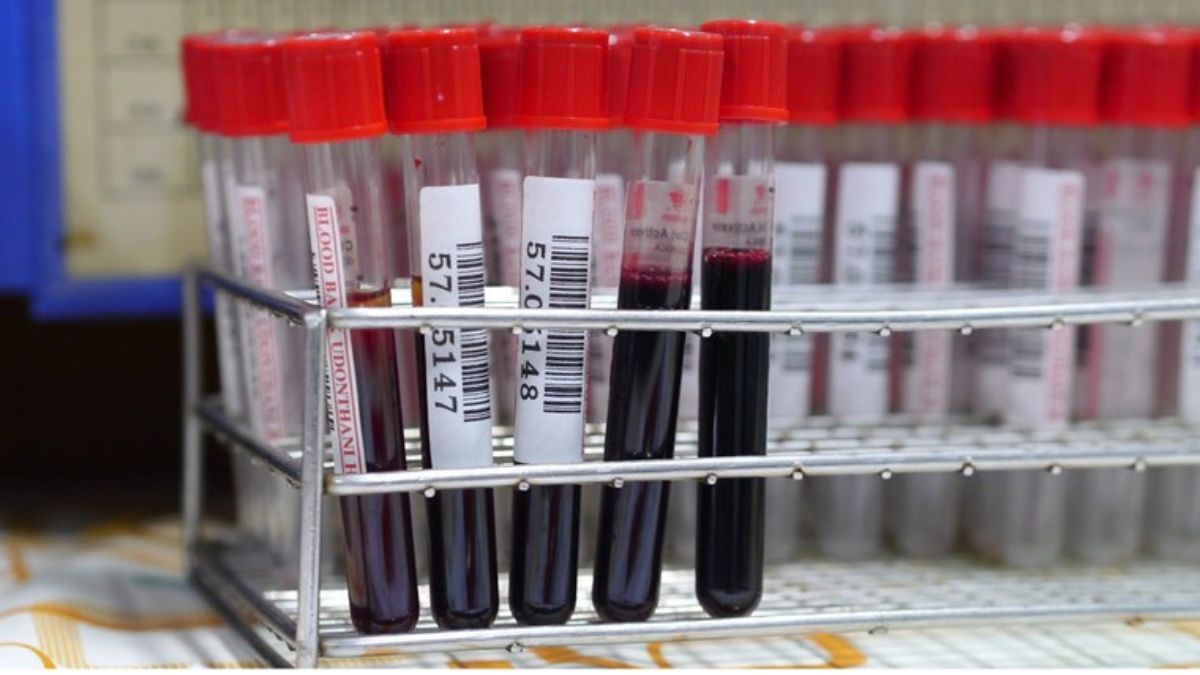
A blood test is beginning to change how doctors look for biological signs linked to Alzheimer’s disease. One of the markers receiving attention is phosphorylated tau 217, or p-tau217. It can be measured from a blood sample and may help identify changes associated with Alzheimer’s before the diagnosis is clear from symptoms alone.
The test does not currently mean that a person will definitely develop Alzheimer’s. Its value is in helping doctors decide who may need a closer assessment.
What does the blood test measure?
Alzheimer’s disease involves changes in the brain, including the buildup of amyloid beta and abnormal tau proteins. These changes can begin years before memory problems become obvious.
p-tau217 is a form of tau protein that changes in association with Alzheimer’s-related pathology. Studies have found that higher blood levels can be associated with amyloid and tau abnormalities detected through brain scans or cerebrospinal fluid testing.
In a 2024 study published in JAMA Neurology, p-tau217 showed high accuracy for identifying abnormal amyloid and tau pathology across three research cohorts. The findings were comparable with established cerebrospinal fluid biomarkers in those study groups.
Who might benefit from it?
The test is particularly relevant when a person has memory or thinking problems and the cause is uncertain. Forgetfulness can have several explanations, including normal ageing, medication effects, depression, sleep problems and other neurological conditions. A blood biomarker may help doctors decide whether Alzheimer’s-related testing should be pursued further.
A large JAMA study involving people seen in primary and specialist care found that p-tau217 and another blood-based biomarker approach identified Alzheimer’s disease pathology with about 89 to 90 per cent diagnostic accuracy in the primary care group studied.
The situation is different when you have no symptoms. Research published in 2025 looked at 2,916 cognitively unimpaired people. p-tau217 showed useful accuracy for identifying amyloid positivity, but a positive blood result alone was not sufficiently reliable to confirm the presence of Alzheimer’s-related pathology. Adding cerebrospinal fluid or PET testing improved the positive predictive value to 91 per cent.
A positive result does not equal a diagnosis
This distinction matters. If your blood test shows an elevated p-tau217 level, your doctor may consider your symptoms, medical history, cognitive assessment and other test results before deciding what comes next. Depending on the situation, additional testing may include brain imaging or cerebrospinal fluid analysis.
The same applies to a low result. It may reduce the likelihood of Alzheimer’s-related pathology, but it does not explain every cause of memory loss.
When should you consider an evaluation?
If you are repeatedly forgetting recent conversations, struggling with familiar tasks, getting lost in places you know well, or finding that changes in memory are affecting your daily activities, it is worth discussing them with a doctor.
Do not rely on an online blood test result or order a biomarker test simply because someone in your family has Alzheimer’s. Your age, symptoms, family history and overall health affect how the result should be interpreted.
Blood tests are becoming part of Alzheimer’s assessment, particularly in specialist settings. The Alzheimer’s Association published its first clinical practice guideline on blood-based biomarkers in July 2025 for specialty care involving people with cognitive impairment.
The practical change is simple. A blood sample may eventually help doctors identify who needs more detailed Alzheimer’s testing without starting every evaluation with an expensive or invasive procedure. For now, the test works best as one part of a clinical assessment rather than as a stand-alone answer.
(The author is an associate consultant, neurology, Manipal Hospital, Bhubaneswar)
The opinions expressed in this article are those of the author and do not purport to reflect the opinions or views of THE WEEK.
