



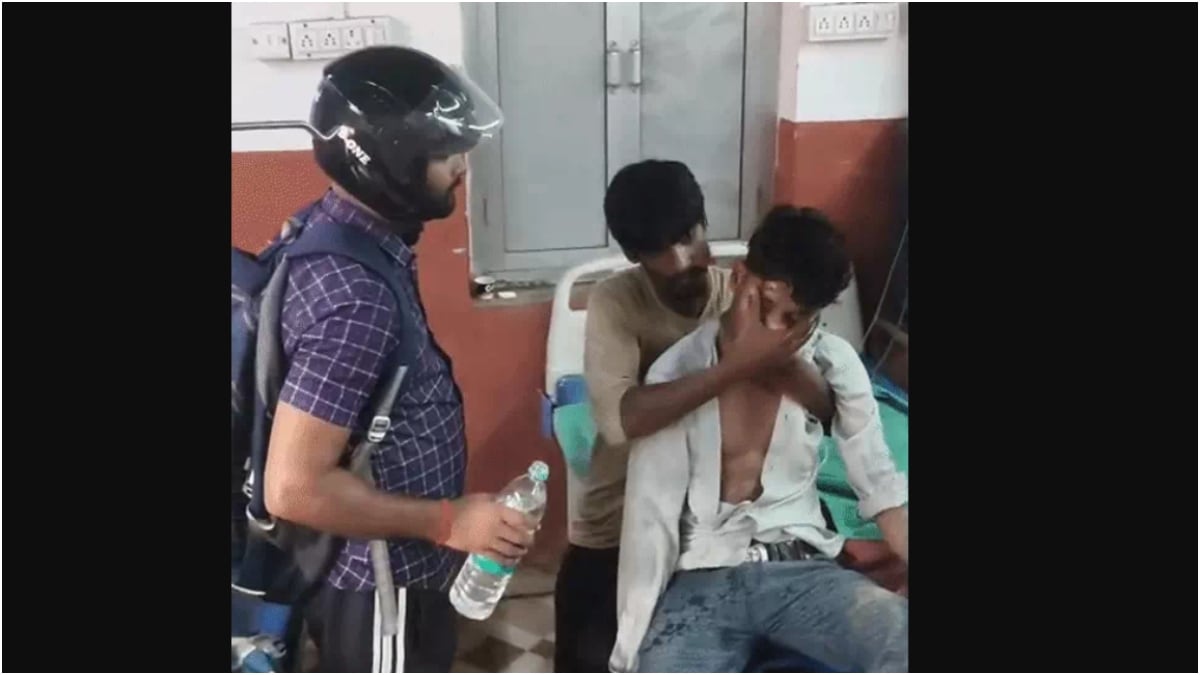
A unique story of sibling love and survival has emerged from Hardoi district of Uttar Pradesh, where a snake-bitten youth's life was saved by the presence of mind and courage of his elder brother. According to reports, the 21-year-old youngster, who was bitten by a venomous serpent while working in the fields, was slapped 150 times in an hour by his brother, who doctors instructed to keep his sibling awake. Falling asleep with the venom in his system would be fatal, he was warned.
Arun was bitten around 2:00 pm on Saturday afternoon while picking up a sack of hay. His elder brother Akash, who runs a dairy farm, was the first responder. He quickly called for an ambulance and sought the police's help. However, the brothers had to reach the hospital riding pillion on a motorcycle as Arun's condition was deteriorating fast, and the motorcyclist figured it was not advisable to waste more time waiting for the ambulance to arrive.
At the medical college, the Emergency Medical Officer (EMO) strictly instructed Akash to ensure Arun remained conscious, Bhaskar said in a report. To keep him awake, Akash slapped his brother on the cheeks around 150 times, the report added.
At the same time, the hospital authorities did their part by administering Arun anti-venom doses. He received 15 anti-venom shots in a couple of hours' time, the report said. The patient is currently stable and recovering.
Snake bites and the need to stay awake
If bitten by certain venomous snakes, a person can deteriorate while asleep and may not recognise or communicate the warning signs. According to available information, nausea and spontaneous vomiting are early manifestations of systemic envenomation. If an unconscious patient vomits, there is a severe risk of airway obstruction, and vomit entering the lungs, and sudden asphyxiation.
"Neurotoxic effects will initially present with generalized weakness, ptosis, and ophthalmoplegia; this may progress to paralysis of the facial muscles and, eventually, respiratory failure secondary to obstruction or paralysis of the diaphragm. Recognizing these symptoms early to prompt the initiation of antivenom administration is vital," the US-based National Center for Biotechnology Information said.
Neurotoxic venoms found in species like cobras cause progressive nerve impairment. These early signs—such as drooping eyelids, slurred speech, and severe drowsiness—mimic natural sleepiness. If a patient falls asleep, medical professionals cannot assess the advancing neurotoxic paralysis. If the patient is asleep, changes in breathing rates or shallow respiration can easily go unnoticed until full respiratory arrest occurs, a report said.
