



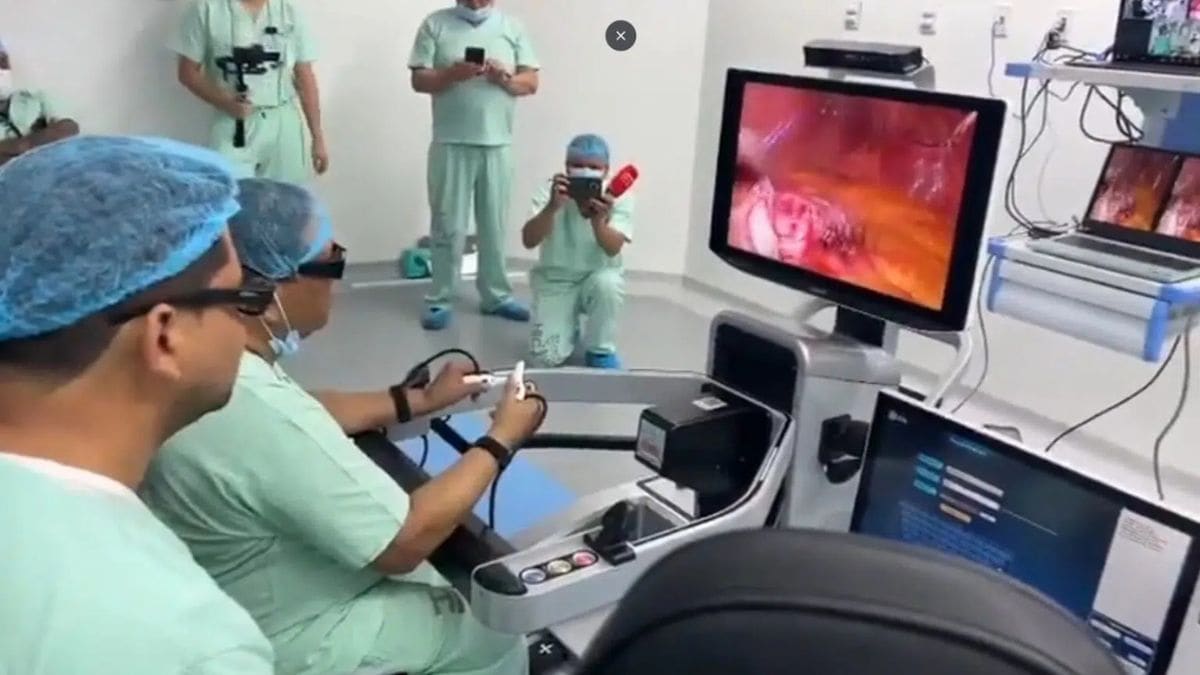
In a groundbreaking medical achievement, a surgeon stationed in eastern Colombia successfully operated on a patient situated over 15,000 kilometres away in central India. The procedure—a gastric sleeve surgery to treat obesity—marks the longest-distance transcontinental telesurgery ever recorded using the Mantra 3 robotic surgical system.
The operation was conducted from the Hospital Internacional de Colombia (HIC) in Piedecuesta, Santander. Sitting at an open control console, robotic surgeon Dr Sudhir Srivastava operated precision instruments that directed robotic arms positioned inside an operating room in Indore, Madhya Pradesh. Hand movements executed by Dr Srivastava in Colombia travelled along a 25,000-kilometre satellite transmission path to be recreated seamlessly by the robot in real time.
Despite the vast distance between South America and Asia, the procedure was completed with total success, demonstrating the viability of high-precision remote healthcare. To address potential concerns regarding internet connectivity failures, HIC officials underscored that strict safety protocols were maintained throughout the operation. As explained by Dr Victor Raul Castillo Mantilla, CEO of HIC, an on-site team comprising local surgeons, technologists, and biomedical engineers was present inside the Indian operating room, fully prepared to take over the surgery if any signal disruption had occurred.
Developed by SS Innovations, the Mantra 3 system features 3D high-definition monitors and multi-arm modular robotics that afford surgeons superior dexterity and control beyond standard human capability. The platform is adaptable across multiple specialities, including bariatric, cardiac, orthopaedic, and urological procedures. By combining this hardware with high-speed communications, specialist care can now be projected globally, allowing patients in remote regions to access top-tier surgical expertise without requiring international travel.
HIC became the first medical centre in Colombia to implement the Mantra 3 platform in April, having already performed over 100 robotic procedures.
Hospital leadership noted that this successful transcontinental operation aligns with their long-term strategy to establish HIC as a global reference hub for robotic surgery by 2030. Clinicians emphasised that the shift toward high-precision, minimally invasive robotic procedures ultimately benefits patients directly, delivering reduced blood loss, smaller incision sites, lower infection risks, and significantly faster postoperative recovery times.
