



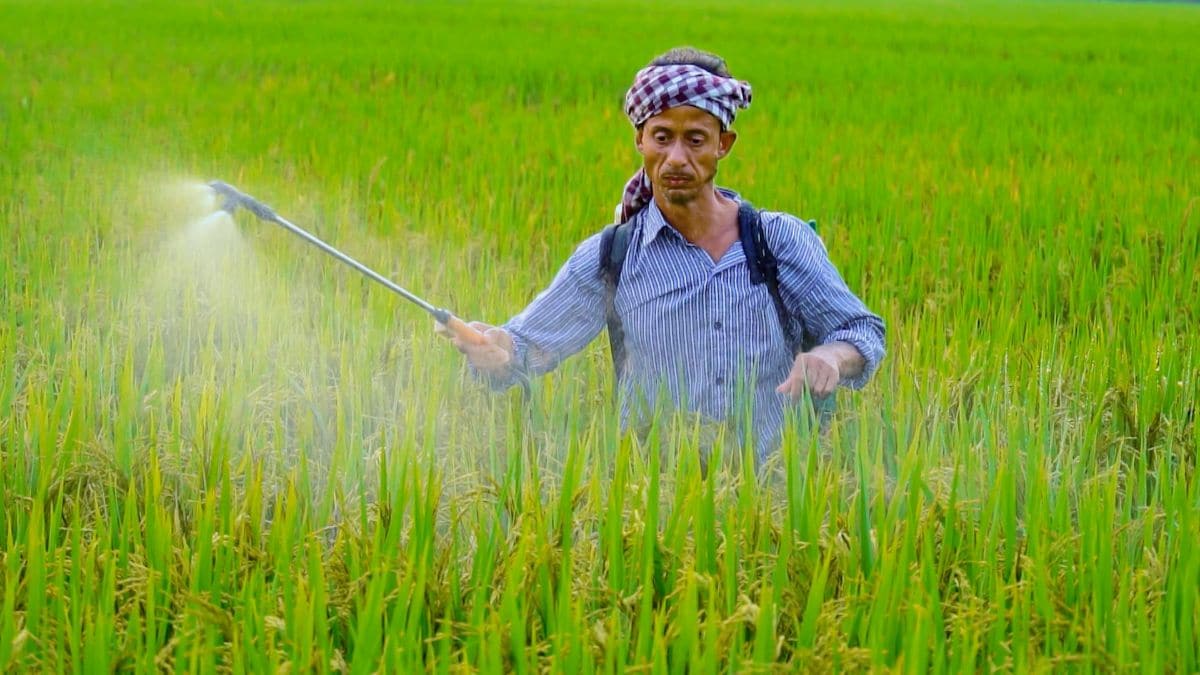
In a move to ban one of the most controversial herbicides in the country, the Centre has proposed a draft prohibiting the import, manufacture, sale, transportation, distribution and use of Paraquat Dichloride.
In a notification by the Ministry of Agriculture and Family Welfare, it was informed that the expert committee constituted to examine the use of Paraquat Dichloride has found that it has been banned or severely restricted in more than 70 countries. Experts further identified several areas of concern, including documented adverse health effects, a continued history of poisoning incidents and reported high fatalities; the absence of a specific antidote; among others.
Centre mentioned that, considering the findings of the expert committee, it is satisfied that the use of Paraquat Dichloride is likely to involve risk to human beings and animals.
What is Paraquat Dichloride?
Commonly referred to as 'paraquat', it is used extensively for controlling weeds in many agricultural and non-agricultural settings. It is also used for desiccation of crops, like cotton, before harvest, as per the United States Environmental Protection Agency.
Experts at the Cleveland Clinic say this highly toxic chemical can cause serious illness or death, sometimes within hours. Poisoning due to paraquat occurs if the individual swallows, touches, or inhales the chemical. It can also cause serious illness or death if paraquat touches the clothing, eyes or skin.
What are the symptoms of paraquat poisoning?
The digestive tract and respiratory system are likely to be affected first. Early signs of paraquat poisoning include:
- Choking
- Swelling in your throat
- Diarrhoea, which may be bloody
- Irritation or redness in your mouth or throat
- Nosebleed
- Sore throat
- Stomach pain
- Vomiting
Paraquat poisoning can cause death or permanent damage to vital organs, including the heart, kidneys, liver and lungs.
