



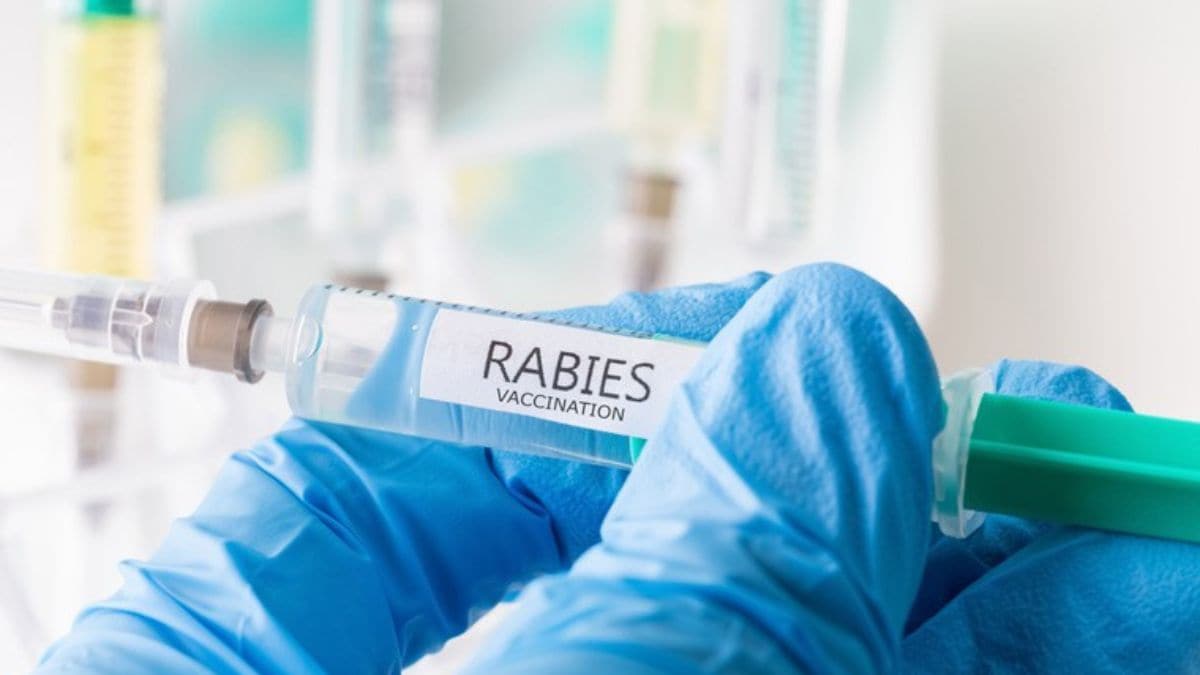
Rabies is among the deadliest viral infections known to humans, with an almost 100 per cent fatality rate once symptoms appear. In a tragic incident in Ontario, Canada, an 11-year-old boy died after developing rabies months after he woke up to find a bat resting on his nose and mouth while staying with his family at a cottage in northern Ontario in 2024.
The case, published in the Canadian Medical Association Journal (CMAJ), has once again highlighted how even seemingly minor contact with bats can pose a life-threatening risk if post-exposure treatment is not sought promptly.
The child had no visible bite marks or scratches, and his family did not believe the bat had behaved unusually. As a result, they did not seek medical attention after the encounter. Weeks later, he developed neurological symptoms that rapidly progressed despite intensive medical care. Doctors ultimately confirmed rabies, but by then it was too late.
Rabies is a viral disease that affects the central nervous system and is almost always fatal once symptoms begin. However, it is also one of the few deadly diseases that can be prevented if treatment is started immediately after exposure. So, what exactly happened to the boy? How does rabies spread? Who is most at risk? And what precautions should people take? Let's dive in.
What happened to the boy?
According to the Canadian Medical Association Journal, the 11-year-old initially arrived at an emergency department in Ontario with painful swallowing and vomiting. Seven days earlier, he had developed numbness and tingling on the right side of his face, followed by loss of appetite and facial swelling.
Doctors initially suspected Bell's palsy was related to a herpes simplex virus infection. He was prescribed antiviral medication, but was unable to continue taking it because swallowing had become increasingly painful.
"The patient's family reported that, during a visit to a cottage in northern Ontario 19 days before symptom onset, the boy had been awoken by a bat on his nose and mouth. He had swatted the bat off his face; his father had caught the bat in a cooking pot and released it outside. The child had no visible lesions on his face, and his parents did not consider that the bat had behaved erratically. Therefore, they did not seek medical assessment," the journal reports.
Although doctors were informed about the bat exposure, the child was initially discharged with a presumed diagnosis of herpes gingivostomatitis.
However, his condition worsened dramatically the following day. He returned with facial weakness, slurred speech and reduced sensation on one side of his face. While awaiting admission, he rapidly developed fever, difficulty swallowing, confusion, visual hallucinations, excessive salivation and multiple cranial nerve deficits. He was transferred to the paediatric intensive care unit and placed on a ventilator.
The treating infectious disease specialists wrote, "When we saw the patient in the PICU, we strongly suspected rabies, given the bat exposure and typical neurologic features."
Laboratory testing later confirmed rabies caused by a bat rabies virus variant. Despite intensive supportive treatment, his neurological condition continued to deteriorate. By the fifth day of hospitalisation, his brainstem reflexes had disappeared. After discussions with the family, life-sustaining treatment was withdrawn, and the child died peacefully on the seventeenth day of admission.
The authors noted that this was “the first case of locally acquired rabies reported in Ontario since 1967.”
Rabies and its global scale
Rabies is caused by the rabies virus, a neurotropic virus belonging to the Lyssavirus genus. It spreads when virus-containing saliva from an infected animal enters the body, usually through bites, scratches or contact with mucous membranes.
According to the U.S. Centres for Disease Control and Prevention (CDC), rabies attacks the central nervous system and causes inflammation of the brain. Once symptoms begin, the disease is almost always fatal.
The Canadian Medical Association Journal explains, "Rabies has a fatality rate of almost 100%, although 34 survivors have been documented, with most experiencing severe neurologic sequelae. The key to preventing the onset of infection is prompt post-exposure prophylaxis (PEP) after exposure, which is nearly always effective."
The journal further notes that a systematic review identified only 122 rabies cases among people who had received post-exposure prophylaxis between 1980 and 2022, despite an estimated 29 million people receiving PEP every year during the same period. Most failures were linked to delayed treatment, errors in administration or immunosuppression.
In North America, bats, raccoons, skunks and foxes are the primary animal reservoirs for rabies. Bats are considered particularly dangerous because their bites and scratches may be tiny and easily overlooked.
"Any direct human contact with a bat, even in the absence of a visible bite or scratch, is an indication for PEP," the report states.
It also emphasises that bats may not always display obvious signs of illness. Even if they appear normal, direct physical contact should be treated as a medical emergency.
The progression of rabies follows a predictable but devastating course. After entering the body, the virus travels slowly along the peripheral nerves toward the brain. Early symptoms are often vague and include fever, fatigue and pain or tingling around the site of exposure. As the virus reaches the brain, patients may develop difficulty swallowing, agitation, hallucinations, paralysis, excessive salivation and severe neurological dysfunction before eventually progressing to coma and death.
Once neurological symptoms develop, treatment options are extremely limited. The journal notes that supportive care remains the mainstay of management and that no proven therapy currently exists to reverse symptomatic rabies. It also states that the Milwaukee Protocol, once considered a possible treatment strategy, has repeatedly failed to demonstrate benefit and is no longer recommended.
Although human rabies is rare in Canada and the United States, the disease continues to pose a major public health challenge globally.
According to the World Health Organisation (WHO), India accounts for nearly 36 per cent of global rabies deaths. The WHO estimates that rabies causes approximately 18,000 to 20,000 deaths annually in India, although the true burden is likely higher because many cases go unreported.
The WHO also states: "About 30–60 per cent of reported rabies cases and deaths in India occur in children under the age of 15 years, as bites that occur in children often go unrecognised and unreported."
How to protect yourself from rabies
Dr Swati Rajagopal, Infectious Disease and Travel Medicine Specialist at Aster CMI Hospital, Bengaluru, said that even without visible bite marks, direct contact with a bat should never be ignored because bat bites can be extremely small and may go unnoticed.
"A bat can transmit rabies even if there are no visible bite marks or scratches. Bat teeth are very small, and a bite may not leave an obvious wound or may go completely unnoticed, especially if a person is asleep," she said.
She explained that if a bat is found on someone's face, in their room while they are sleeping, or near a young child, immediate medical evaluation is essential. "Doctors will assess the risk and decide whether post-exposure treatment is needed. Rabies can almost always be prevented if treatment starts before symptoms appear. However, once symptoms begin, the disease is almost always fatal. That is why any direct contact with a bat should be treated as a medical emergency," she added.
Explaining why rabies is often missed in its early stages, Dr Rajagopal said that the infection initially resembles many common viral illnesses. Early symptoms may include fever, headache, fatigue, body aches, nausea, or pain and tingling around the site of exposure.
"As the infection spreads to the brain, symptoms become more serious and may include confusion, anxiety, difficulty swallowing, fear of water, muscle spasms, hallucinations, weakness and paralysis," she explained. "Rabies should be suspected if someone develops sudden neurological symptoms after a recent animal bite, scratch, or direct contact with a bat or another potentially rabid animal, even if the exposure seemed minor. Early medical history is very important because treatment is effective only before symptoms begin."
Speaking about first aid after a suspected exposure, Dr Rajagopal said that the wound should be washed immediately with soap and running water for at least 15 minutes. "This simple step helps remove the virus from the wound and lowers the risk of infection," she said.
She explained that people should seek medical care without delay so doctors can determine whether post-exposure prophylaxis (PEP) is required. "This usually includes a series of rabies vaccines that help the body build protection against the virus. For severe exposures, such as deep bites or bites from high-risk animals, rabies immunoglobulin is also given around the wound to provide immediate protection until the vaccine starts working. If given promptly, this treatment is highly effective in preventing rabies," she said.
Dr Rajagopal also said that several misconceptions continue to delay life-saving treatment. Many people wrongly believe that only deep or bleeding bites require medical attention, that washing the wound or using home remedies is enough, or that vaccination is unnecessary if the animal appears healthy.
"Even small bites, scratches, or saliva coming into contact with broken skin or the eyes, nose, or mouth can spread rabies. Every suspected rabies exposure should be taken seriously, and medical advice should be sought immediately. The most important message is that rabies is almost 100 per cent preventable if treatment is started before symptoms appear, but it is almost always fatal once symptoms begin. Quick action saves lives," she said.
This story is done in collaboration with First Check, which is the health journalism vertical of DataLEADS
