



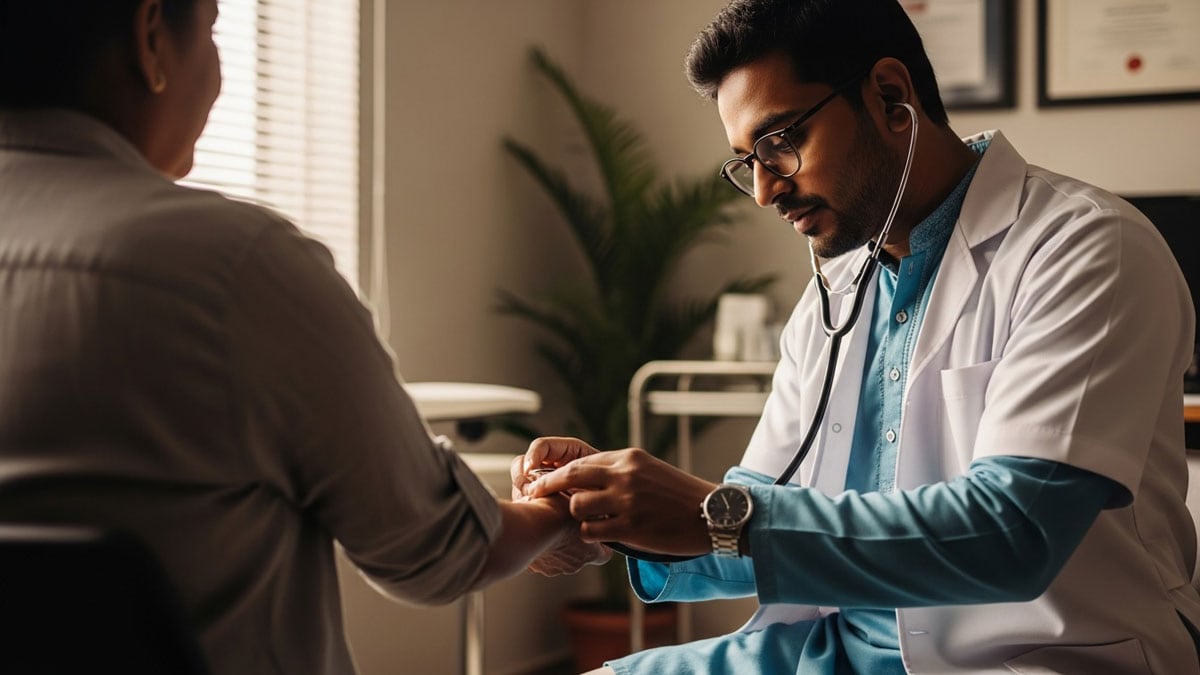
As medicine has become increasingly specialised, patients today have access to experts for nearly every organ, disease and procedure. Cardiologists, neurologists, endocrinologists, gastroenterologists and dozens of other specialists have transformed healthcare with highly targeted treatments. Yet, amid this march towards super-specialisation, one branch of medicine remains indispensable, the family physician.
This Doctors' Day, the spotlight is once again on the doctors who often serve as the first point of contact for millions of Indians.
Long before a patient reaches a specialist, it is usually the family physician who listens to the symptoms, pieces together the medical history, understands the family's health patterns and decides whether specialist care is needed at all.
Healthcare experts argue that family physicians do far more than treat coughs, colds and fevers. They provide continuity of care across different stages of life, from childhood vaccinations to pregnancy, chronic disease management and elderly care. Unlike specialists who focus on a particular organ or condition, family physicians look at the patient as a whole, taking into account physical, mental and social health.
Take the Sachdev family, for instance. "Our family physician has treated generations of us, right from my parents to me and my sisters, my nieces and nephews and now their children too," says Tina Sachdev, who is now in her 50s. She refers to Dr Ramesh Shah, a nonagenarian who is now in his early 90s and his wife, Dr Sarla Shah, who is in her late 80s. Both have been the go-to doctors in their neighbourhood of Prabhadevi in Mumbai. After years of practice, the couple has now stopped actively practising, but they still have patients visit them at home to seek advice. "They have been an integral part of our family," says Sachdev, referring to them as uncle and aunty. " Over time, they knew our health better than us, and they never went wrong with their diagnosis or treatment." Others in the neighborhood whom THE WEEK spoke to agreed and had the same feelings to share.
The doctor-patient relationship built over the years is an advantage that cannot be replicated easily. A family physician often knows the patient's medical history, family background, lifestyle habits and even emotional stressors. This familiarity allows for earlier detection of subtle health changes that may otherwise be overlooked.
Interestingly, all three children of the Shahs are practicing super specialists doctors.
But the holistic approach of the family physician is becoming increasingly relevant as India grapples with an epidemic of lifestyle diseases such as diabetes, hypertension, obesity and cardiovascular illnesses. Many patients require long-term monitoring, thereby making a trusted family doctor invaluable.
Family physicians also help reduce unnecessary investigations and consultations.
Despite their importance, family medicine has struggled to attract young doctors in India. Medical graduates often gravitate towards specialised branches that promise higher earnings, greater prestige and opportunities in corporate hospitals, say public health experts. "At a time when the country faces a shortage of trained primary care physicians, particularly in smaller towns and rural areas, we really need to inculcate the values of family physicians in young doctors today," says Dr Ramesh Shah.
Strengthening family medicine could help ease the burden in overcrowded tertiary care hospitals while making healthcare more affordable and accessible.
Globally, countries with robust primary healthcare systems consistently report better health outcomes, lower healthcare costs and greater patient satisfaction. The WHO has repeatedly underscored that strong primary care is the foundation of universal health coverage.
As India expands its healthcare infrastructure and embraces cutting-edge medical technologies, experts say the answer is not to choose between specialists and family physicians but to ensure they work together.
Super specialists bring deep expertise, while family physicians provide continuity, coordination and a comprehensive understanding of the patient's overall health.
On Doctors' Day, celebrating family physicians is also a reminder that modern healthcare is at its best when it combines advanced medical science with long-term human relationships.
