



A quiet advisory from India's food regulator has forced restaurants, dhabas and street vendors to look more carefully at the tools they always take for granted.
The knife is the oldest tool in the kitchen. It predates the tandoor, the tawa, the pressure cooker. In India's food businesses, from five-star hotel banquets to pavement chaat counters, it is also among the most neglected.
On June 15, 2026, the Food Safety and Standards Authority of India (FSSAI) issued a two-page advisory that, in the measured language of regulatory documents, delivered a pointed rebuke to the country's food business operators.
The subject line said it plainly: the use of food-grade and corrosion-resistant knives, blades, and other cutting equipment by food businesses.
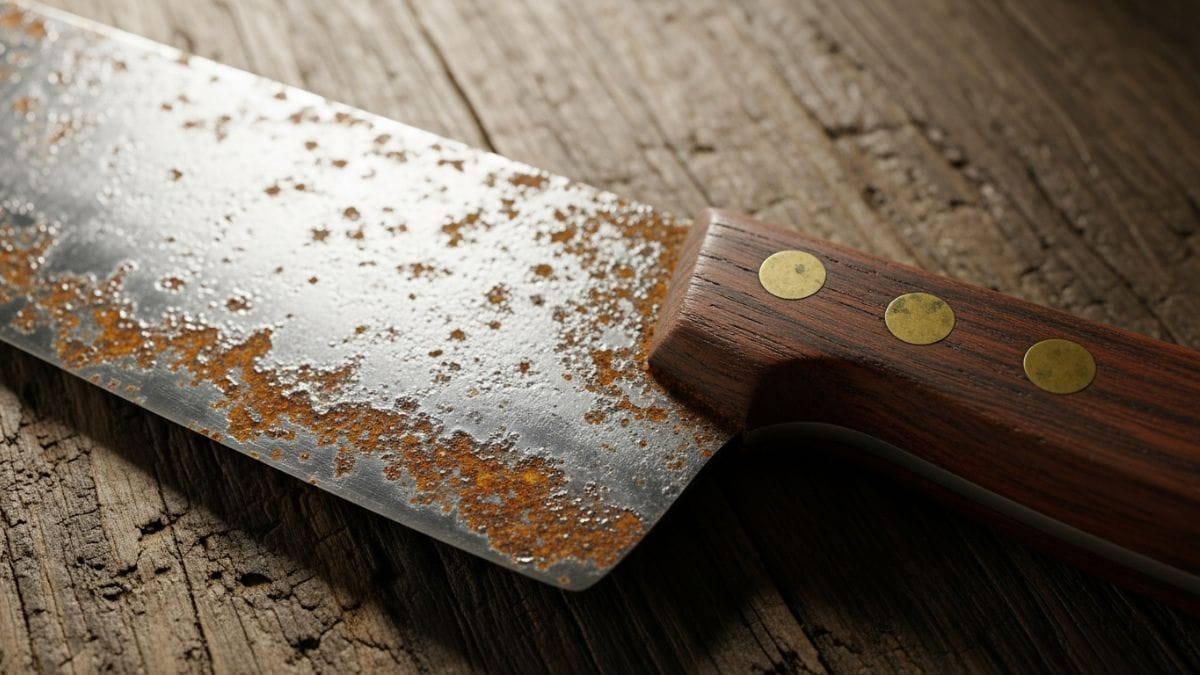
FSSAI has found out through inspection reports that certain food businesses across India were routinely using rusted, corroded, chipped, painted, and otherwise damaged knives, blades, and other cutting equipment during food handling, preparation, processing, cutting, slicing, and packaging operations.
The regulatory framework governing this is already in place. Schedule 4 of the Food Safety and Standards (Licensing and Registration of Food Businesses) Regulations, 2011, requires that all equipment, utensils, and food-contact surfaces used in handling, preparation, processing, packaging, and storage be made of food-grade, non-toxic, corrosion-resistant materials. They have to be maintained in a hygienic condition to prevent contamination. These requirements have been part of India's food safety regulations for more than a decade. The advisory serves as a reminder to food business operators of their obligations under the existing framework.
The advisory notes that the use of compromised cutting tools, whether rusted, corroded, chipped, painted, damaged, inadequately cleaned, or simply not of food-grade quality, "may result in physical, chemical and microbiological contamination of food."
A rusted blade does not merely look unappetising; it introduces physical fragments, flakes of rust, chips of damaged metal, and residue of paint directly into the food being cut. It could carry microbial colonies in its corroded grooves that no amount of rinsing dislodges. It could leach chemical compounds into moist or acidic produce.
The advisory directs all food business operators to comply with four specific requirements with immediate effect:
-Only food-grade, corrosion-resistant knives, blades, and cutting equipment to be used in food handling and processing operations.
-All such equipment to be maintained in sound and hygienic condition, free from rust, corrosion, chipping, paint, cracks, breakage, or any other defect that could contaminate food.
-Any equipment found rusted, corroded, chipped, damaged, or otherwise unsuitable to be removed from use and replaced immediately.
-Adequate cleaning, sanitisation, and sterilisation procedures to be in place and followed at prescribed intervals.
The directive is addressed not just to food business operators but also to the commissioners of food safety of all states and union territories and to all regional directors of FSSAI. The latter two are asked to direct their licensing authorities and food safety officers to maintain strict vigilance during inspections. Non-compliance, the advisory stated, "shall attract action under the Food Safety and Standards Act, 2006 and regulations made thereunder."
India's food service economy encompasses millions of establishments: licensed restaurants, registered dhabas, hospital canteens, school kitchens, catering operations, street food vendors, meat processing units and fruit packaging centres. The advisory makes no distinction between them. A cloud kitchen in Gurugram and a mutton shop in Jaipur are subject to the same standard.
The challenge of implementation, of course, is a different matter. Replacing an entire kitchen's inventory of blades and cutting boards requires expenditure that smaller operators could find difficult to absorb quickly.
For food safety officers tasked with inspections, the directive adds a new, specific checklist item: A visibly rusted knife is no longer a minor lapse. It is a contamination risk with regulatory consequences.
This story is done in collaboration with First Check, which is the health journalism vertical of DataLEADS
