



CLAIM:
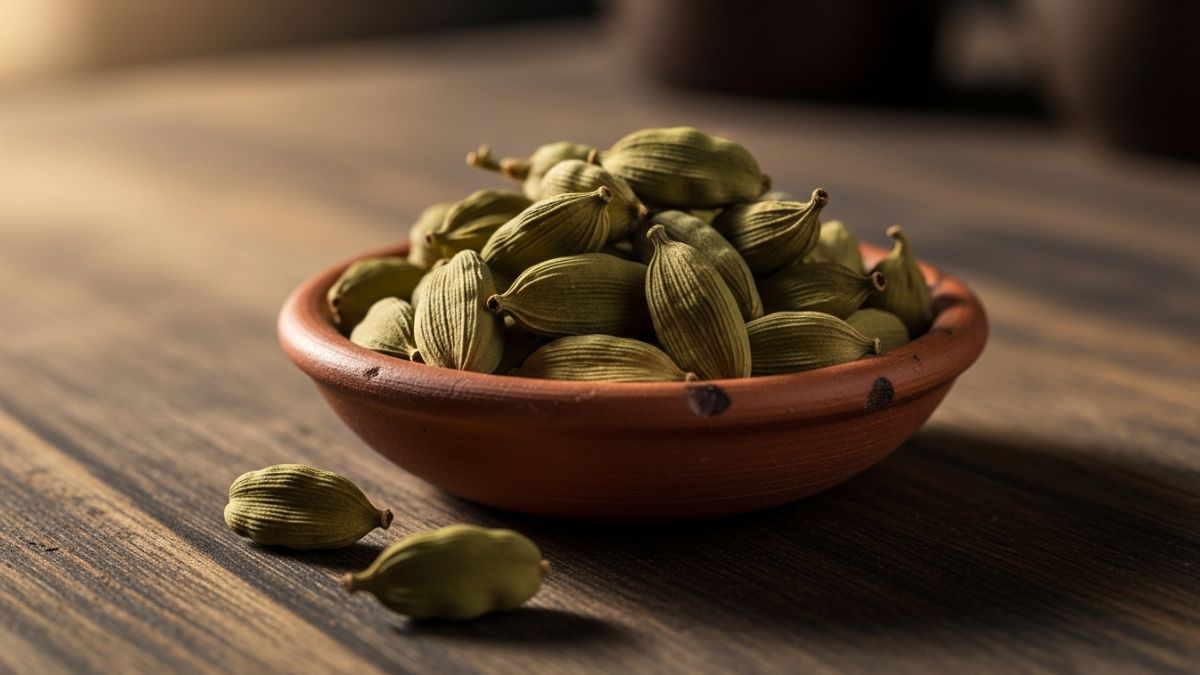
Cardamom is a simple, natural remedy that could show fast results when BP rises suddenly. Placing two cardamom pods under the tongue for a few minutes may help quickly control high blood pressure.
FACT:
Cardamom may have mild, long-term benefits in supporting blood pressure control, but scientific evidence is limited and inconsistent. There is no proof that it can quickly lower BP or work as an emergency remedy, especially by placing it under the tongue. Experts suggest it should only be used as part of a balanced diet and lifestyle, not as a substitute for medical treatment during sudden BP spikes.
The moment you read this, you might already be dropping a couple of elaichi pods into your chai - ever wondered if they might do more for your health?
In a viral reel posted by nutritionist Disha Sethi, which has garnered over 5.57 lakh followers, the creator makes a striking claim about this common kitchen spice.
According to her LinkedIn profile, “she is specialised in diabetic nutrition, PCOD treatment, post partum nutrition, thyroid management, fatty liver and digestion issues, weight gain, heart disease management.”
In the reel, she explains that cardamom could help manage high blood pressure. She suggests that if someone’s BP suddenly rises and does not come down, they can use elaichi as a quick remedy. “If your BP is high, then the cardamom in your kitchen can be very useful for you,” she says, adding that one should ensure the elaichi is organic, identifying it as lighter in colour and more fragrant. She further claims that placing “2 cardamoms under your tongue for 10 minutes” can show quick results, “you see magic… it will be controlled in a little while.”
The reel has gained over 2.2 million views, 26.3k likes, and 16.4k shares, sparking curiosity about whether this remedy actually works.
Does elaichi help in controlling high BP?
Scientific evidence on cardamom’s role in blood pressure control remains mixed and limited, with studies showing modest or inconsistent effects.
A 2017 randomised controlled trial conducted on 80 overweight or obese pre-diabetic women examined the impact of green cardamom supplementation (3 g/day for two months).
The study found improvements in some metabolic markers, but no significant reduction in blood pressure compared to the placebo group. As the authors note, “We observed no significant decrease in systolic and diastolic blood pressure… in the cardamom group compared to the placebo group.”
The researchers concluded that while cardamom may improve certain blood parameters, “its effects are not different from placebo.”
In contrast, a 2022 double-blind randomised controlled trial involving 83 patients with type 2 diabetes reported more promising findings. Participants who consumed 3 g of green cardamom daily for 10 weeks showed a significant reduction in systolic blood pressure (SBP). The study states that, “there was a significant decrease in mean SBP in the cardamom group.” However, the reduction in diastolic blood pressure (DBP) was not statistically significant, suggesting only partial benefits.
Looking at broader evidence, a 2023 systematic review and meta-analysis of eight clinical trials (595 participants) found that cardamom supplementation led to a small but statistically significant reduction in diastolic blood pressure (−0.91 mmHg), while no significant effect was observed on systolic blood pressure. The authors emphasised that “there were few eligible randomised trials with quite a low number of participants. Further prospective studies on larger sample sizes and longer duration of supplementation are warranted for its widespread use.”
Similarly, another 2023 meta-analysiss examining the antihypertensive and anti-inflammatory effects of cardamom reported very modest reductions in both systolic and diastolic blood pressure (around −0.54 mmHg and −0.90 mmHg, respectively).
Cardamom can help reduce inflammation and improve blood pressure. However, due to the limited number of studies, caution must be exercised when interpreting the current results,” the study concluded.
What experts say?
Dr (Prof) Tarun Kumar, Associate Director and Head, Medanta Moolchand Heart Centre, explained that lifestyle and dietary changes are the first line of management for conditions like hypertension and diabetes, and remain an essential part of treatment even when medications are introduced. “We call it a dietary approach to stop hypertension,” he said.
According to him, blood pressure can often be managed in the early stages through weight control and dietary modifications. Reducing sodium intake or losing weight can lower systolic blood pressure by around 3 to 5 mmHg. “If a patient is obese, controlling weight helps. Similarly, reducing salt intake also brings BP down,” he added.
He further explained that foods like cardamom contain micronutrients such as magnesium, potassium, calcium, and antioxidants, which may support blood pressure control. These work through mechanisms like vasodilation, mild diuretic effects, and antioxidant action. “All these factors help in reducing blood pressure,” he said.
However, he emphasised that these effects are modest and require consistent intake. “These effects come if you take nearly 3 to 4 grams per day,” he noted, adding that the reduction is usually limited to about 5 to 7 mmHg and may not normalise significantly high blood pressure.
Addressing the viral claim, Dr Kumar clarified that such remedies do not work instantly. “These quick effects are not there, it may reduce a little bit of blood pressure, like 3 to 5 mmHg, but it will not normalise very high blood pressure,” he said. He cautioned against relying on such methods in emergencies, warning that waiting can be dangerous.
“If someone’s BP is 180 and you give cardamom and wait, it can be catastrophic, leading to heart failure, acute myocardial infarction, or kidney dysfunction,” he explained.
He concluded that while cardamom can be part of a healthy diet for long-term management, it should not be used as a treatment for sudden spikes or hypertensive emergencies.
Adding to this, Dietitian Rajeshwari Panda, HOD – Nutrition & Dietetics Department, Fortis Hospital, Mulund, said there is no scientific evidence that holding cardamom under the tongue can rapidly lower blood pressure. “It is not suitable as a standalone or an emergency remedy,” she said, warning that relying on such claims can be risky.
She explained that blood pressure is influenced by overall lifestyle, stress, and diet, not a single ingredient. While cardamom can be part of a healthy diet, “if it is claimed that it helps in regulating BP in one shot and rapidly, that is not true,” she said.
This story is done in collaboration with First Check, which is the health journalism vertical of DataLEADS
