In India, women’s mental health is increasingly discussed—but it is still poorly understood. Despite growing awareness, rising diagnoses, and expanding services, a fundamental mismatch persists between how women experience distress and how our systems are designed to recognise and respond to it.
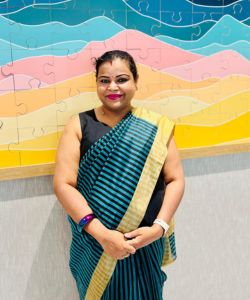 Parveen Shaikh
This mismatch is not accidental. It is the outcome of mental health frameworks that claim neutrality but quietly erase women’s lived realities. Recent estimates show that nearly 39 per cent of Indian women experience elevated levels of depressive symptoms, yet less than one in five receive any form of mental healthcare.
Gender-neutral mental health models are often defended as fair and universal. In practice, they are built on assumptions shaped by male-typical presentations of distress: verbal expression, individual autonomy, psychological insight, and environmental control. Indian women’s distress rarely fits these assumptions. When frameworks do not fit lived experience, suffering becomes invisible—not because it is absent, but because it is unintelligible to the system.
When distress does not speak the 'right' language, across clinical and community settings, women most often describe psychological pain through the body: exhaustion that does not lift, heaviness in the chest, headaches, gastric pain, disrupted sleep, and emotional numbness.
For your daily dose of medical news and updates, visit: HEALTH
These are not vague or secondary complaints. They are neurobiological responses to sustained stress shaped by caregiving labour, nutritional depletion, reproductive demands, and restricted agency. Studies indicate that over 60 per cent of women presenting to primary care with somatic complaints also meet criteria for common mental disorders, but these links are rarely recognised.
Yet dominant diagnostic tools continue to treat somatic expressions as less specific, less credible, or merely 'stress-related'. Relational suffering—conflict with family members, marital coercion, emotional control—is coded as contextual rather than clinical. As a result, many women fall below diagnostic thresholds despite profound functional impairment. Early distress is missed. Care is delayed. By the time intervention occurs, the condition has often hardened into crisis.
Silence is not absence—it is strategy. 'Silent distress' is frequently described as a personal limitation: women do not speak, do not ask, do not seek help. What this framing misses is that silence is often a rational response to risk.
For many women, speaking carries consequences—being dismissed, blamed, restricted, or morally judged. Help-seeking is never an individual act; it is socially negotiated, often requiring permission from families that may view mental health care as shameful or destabilising. Surveys show that nearly 47 per cent of Indian women cite family disapproval as a barrier to treatment, compared to just 18 per cent of men. Silence, then, is not a lack of insight. It is a calculation.
When systems fail to recognise this, they mistake non-disclosure for non-need. And silence remains structurally invisible.
When self-harm is misread, one of the most uncomfortable realities in women’s mental health is the rise of self-harm—often discussed in purely behavioural or pathological terms.
But among many young women, self-harm cannot be understood outside its social context. It emerges where autonomy is denied, choices are constrained, and emotional pain has no legitimate outlet. India has one of the highest female suicide rates in the world, with women aged 15–29 accounting for nearly 40 per cent of all female suicide deaths.
Acts of self-harm in such settings function less as impulsive behaviour and more as embodied protest—an attempt to reclaim control in environments that allow none. When families interpret these acts as moral failure or disciplinary problems rather than mental health emergencies, and when clinical systems respond with symptom management alone, the opportunity for meaningful intervention is lost.
Therapy without context does not heal. Even well-intentioned therapeutic models falter when they ignore power. Approaches that focus exclusively on reframing thoughts or increasing individual agency assume a degree of control over one’s life that many women simply do not have. For women burdened by unpaid labour, emotional abuse, economic dependence, or surveillance, distress is not a thinking error—it is a response to lived constraint. National data suggests that women spend nearly 7 times more hours on unpaid care work than men, drastically reducing their psychological bandwidth.
High dropout rates among women are often framed as disengagement. In reality, they are feedback. They tell us that therapy, as currently offered, does not feel aligned with women’s realities. Studies show that up to 30 per cent of women discontinue therapy within the first three sessions, most citing lack of relevance to their lived circumstances.
What is truly missing is not awareness, workforce, or technology alone. What is missing is epistemic courage—the willingness to question whose experiences our frameworks are built around, whose distress is considered legitimate, and whose suffering is rendered invisible by neutrality.
We are missing:
• Diagnostic frameworks that treat embodied and relational distress as central
• Care models that account for family dynamics, safety, and permission
• Gender-responsive training for frontline and clinical professionals
• Data systems that reflect caste, class, marital status, and power—not just sex
Until women’s distress is understood as testimony rather than deviation, mental health systems will continue to respond too late, too narrowly, and too unevenly.
Why this conversation must continue
These are not issues that can be solved within clinics alone. They require sustained dialogue across mental health, education, policy, and community systems.
The Mpowering Minds Women’s Mental Health Summit in Bengaluru has been convened to examine precisely these gaps—to ask why women’s mental health in India requires a fundamentally different approach, and how care can be redesigned to reflect lived realities rather than abstract ideals.
If we want outcomes to change, we must stop treating gender as a variable to be controlled and start recognising it as a context that shapes suffering and healing alike. Women’s mental health does not need neutrality. It needs recognition.
(Parveen Shaikh is a Psychologist and President of Mpower, an initiative of Aditya Birla Education Trust)
The opinions expressed in this article are those of the author and do not purport to reflect the opinions or views of THE WEEK.