



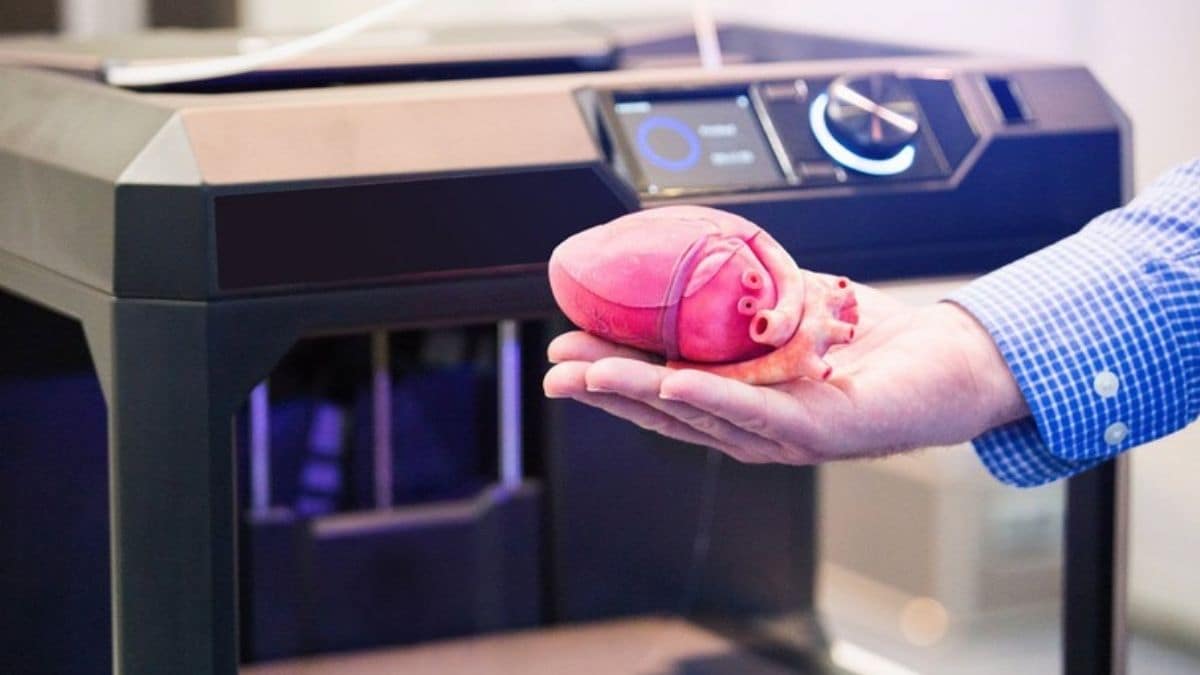
In a breakthrough that could redefine organ transplantation, scientists in the United States are developing a functional 3D-bioprinted human liver, an innovation that could help bridge the massive gap between organ demand and donor availability.
The project, called Liver Immunocompetent Volumetric Engineering (LIVE), is being led by a US research team working at the intersection of regenerative medicine and bioengineering. Unlike traditional transplant approaches, the goal is not to permanently replace a failing liver, but to create a temporary, functional organ that can support patients long enough for their own liver to recover, potentially eliminating the need for a transplant altogether. This is because the liver is unique among human organs for its ability to regenerate fully over time.
The LIVE team is leveraging this natural capacity by developing a bioprinted liver construct that mimics both the structural complexity and immune function of the real organ.
At the heart of the project is FRESH 3D bioprinting (Freeform Reversible Embedding of Suspended Hydrogels), a proprietary technique that allows researchers to print extremely soft and delicate biological materials. Using this method, scientists can precisely layer substances such as collagen and human stem cells into intricate, three-dimensional structures that closely resemble living tissue, something that was previously impossible with conventional 3D printing technologies.
This approach enables the creation of vascular networks and organ-like architectures essential for sustaining living cells, marking a critical step toward functional, transplant-ready organs grown in the lab.
Researchers believe that the success of the LIVE project could serve as a blueprint for a new era in medicine, one in which bioengineered organs like hearts, kidneys and pancreases are printed on demand, reducing dependence on donors and long transplant waitlists.
While clinical application is still some distance away, the progress made by the LIVE team underscores how rapidly regenerative medicine is advancing. If successful, 3D-bioprinted organs could fundamentally alter how doctors treat organ failure, shifting from replacement to regeneration, and from scarcity to scalability.
For India, where the gap between organ demand and availability remains stark, such advances carry particular significance.
According to government data, thousands of patients die each year while waiting for organ transplants, with liver, kidney and heart shortages among the most acute.
Low deceased-donor rates, cultural barriers, and limited transplant infrastructure continue to constrain access, especially outside major urban centres. If 3D-bioprinted organs eventually reach clinical use, they could transform India’s transplant landscape by reducing dependence on donors, shortening waiting periods, and expanding access to life-saving care, though experts caution that regulatory approvals, cost, and scalability will determine how quickly such technologies can be adopted locally.
A recent three-continent collaboration between OIC International (USA), Medi Mold—part of the Andhra Pradesh Medtech Zone (AMTZ), India, and AddUp, a subsidiary of France’s Fives Group, aims to establish India’s "most advanced" orthopaedic implant manufacturing facility powered by 3D printing and precision engineering.
To be housed within AMTZ, India’s flagship medical device manufacturing park, the facility aims to produce high-performance orthopaedic implants using advanced metal additive manufacturing technology.
“This partnership reflects our commitment to making world-class orthopaedic implants affordable and accessible in India. India is a key strategic market for us, and 3D printing is the platform that enables us to innovate, lower costs, and meet the country’s growing surgical needs,” said Shri Shetty, CEO of OIC International.
This collaboration also reflects how 3D printing is moving from experimental labs into large-scale medical manufacturing, with India emerging as a critical node in that transition.
