



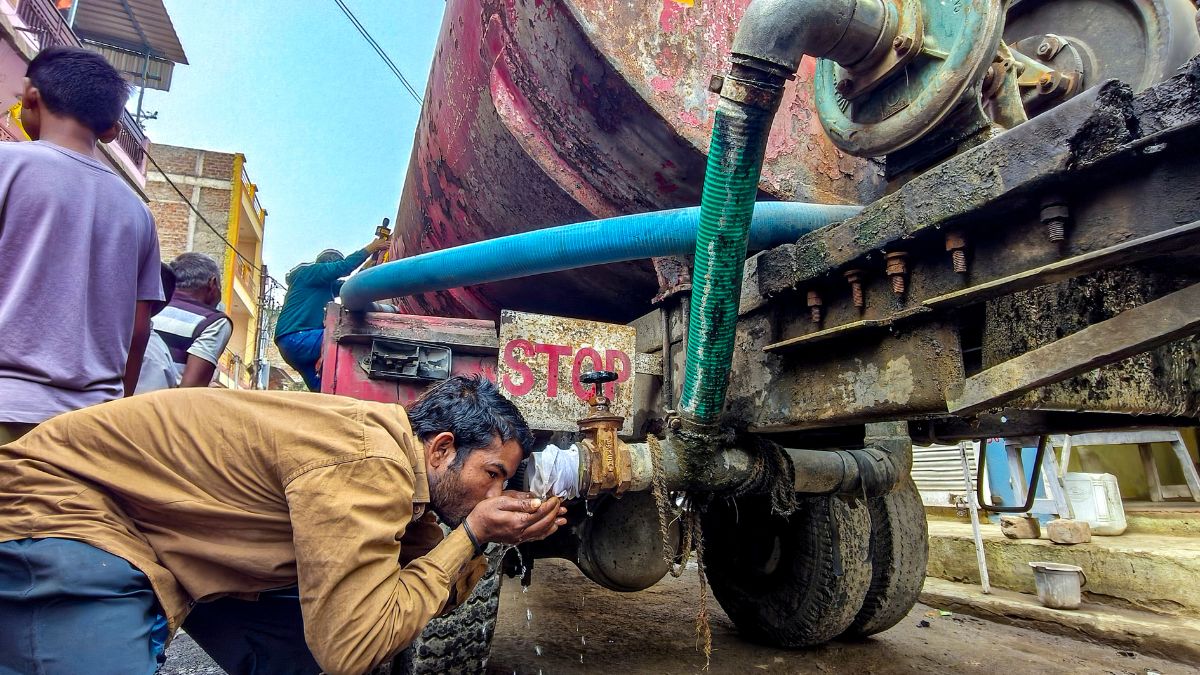
After Indore, contaminated water caused a typhoid outbreak in Gujarat's Gandhinagar. Over 100 people are being treated following a sewage pipe leak in Sectors 24 and 28, as well as the Adivada area of Gandhinagar. So far, no deaths have been reported.
The Gandhinagar Civil Hospital has opened a 30-bed paediatric ward to handle children with typhoid symptoms.
Home Minister Amit Shah also called for swift government action. Dr Meeta Parikh, Medical Superintendent of Gandhinagar Civil Hospital, said that several tests, including the Widal test and blood culture analysis, are being conducted on suspected patients to confirm typhoid infection.
She also added that 22 doctors, including five MD specialists, have been deployed to monitor and treat suspected patients.
Meanwhile, the Gandhinagar Municipal Corporation said that the contamination problem has been completely addressed.
What is typhoid?
Typhoid fever is a serious bacterial infection caused by Salmonella typhi. The infection is spread through contaminated food/water. If not treated, it could be a life-threatening disease.
What are the symptoms?
*High Fever
*Chills
*Loss of appetite
*Stomach pain
*Body rashes
*Cough
*Muscle aches
*Headaches
*Vomiting
*Diarrhoea
If left untreated, typhoid could lead to severe complications including internal bleeding, bone inflammation, kidney failure, swollen gallbladder, bronchitis, meningitis and heart inflammation.
How to reduce the risk of spread?
*Don't make food for others if you're sick
*Wash your hands with soap or use sanitiser before and after using the bathroom
*Wash surfaces and utensils used for food prep and eating before and after use
*Don't drink untreated water or eat food prepared with untreated water
*Immediately seek treatment if symptoms persists for more days
