



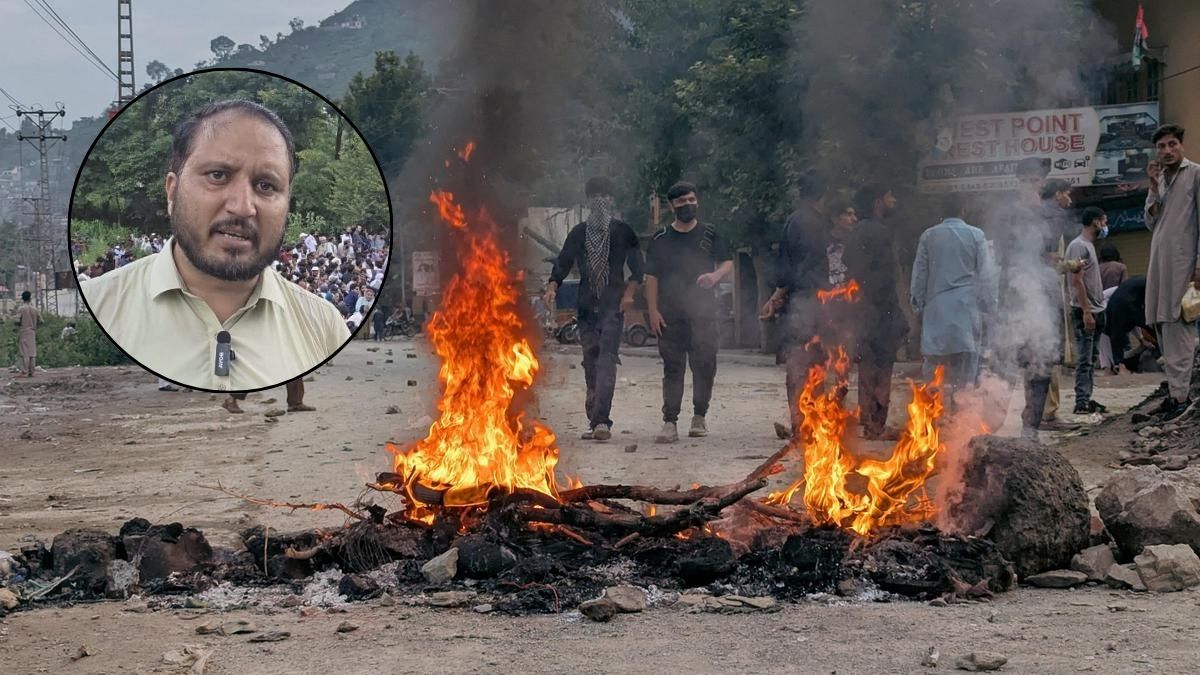
After nearly a decade of covering the politics of Pakistan-occupied Kashmir (PoK), journalist Danish Irshad has been blacklisted by Islamabad under the country's Fourth Schedule.
The Rawalpindi-based journalist and researcher, whose name appears twelfth on the list, will now be subjected to intense state scrutiny, as well as a set of legal restrictions on his movement, finances, and public life.
The July 29 order came from the ‘Azad Jammu and Kashmir’ (AJK) Home Department—Pakistan's name for the PoK region—citing the 41st Cabinet meeting of June 5 this year and invoking Section 16(1) of the ‘Azad Jammu and Kashmir Anti-Terrorism Act, 2014’.
The order also alleged that he was being blacklisted on the terrorism watchlist because he was an activist for the Jammu & Kashmir Joint Awami Action Committee (JK-JAAC). According to a report from Kashmir Times—for which he writes columns—the document does not go into detail about the possible charges against him or the other 23 people on the list.
Notably, the JK-JAAC is the group at the helm of the PoK protests over the three-phase elections, inflation, a lack of accountability, and governance, despite being banned on June 5.
Yet, the protests have continued, turning violent in the weeks that followed, with security personnel even using assault weapons and sniper fire against protesters gathering in places like Rawalkot and Muzaffarabad.
With at least 80 dead already, Irshad has become the latest victim of Pakistan's crackdown on communication and the media, which has also been widely condemned by the international community.
"How did a journalist's speaking and writing become an act of terrorism? Declaring anyone guilty without trial can never be justified," Irshad told online media outlet Drop Site News, adding that there was neither a court order that informed him about the listing, nor a proper trial.
Instead, he happened to know of the order via social media on August 18, and later confirmed it from a source in the Home Department.
Apart from writing as a columnist for the Kashmir Times, he is also the author of a book on the region's post-1947 history and has appeared in a number of recent broadcast interviews discussing the recent unrest in PoK.
Pakistan-based BBC Urdu journalist Roohan Ahmed also denounced the move on X, calling it "an attempt to silence a critical and sane voice".
