



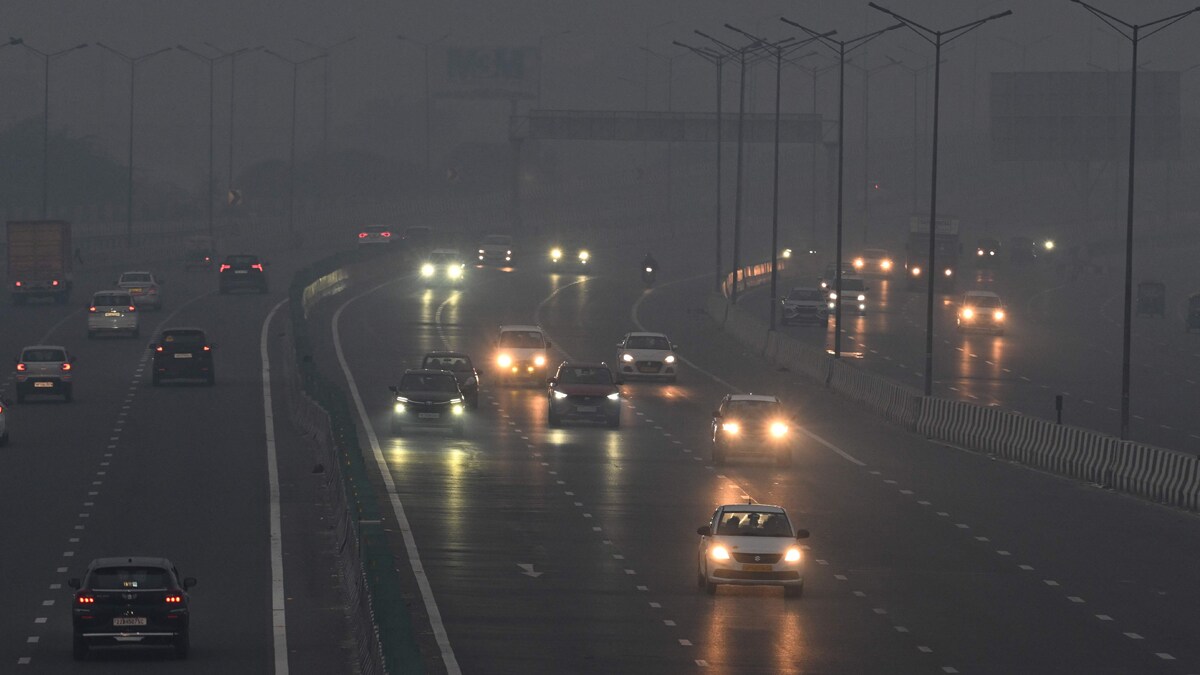
In a recent Rajya Sabha reply, the Centre stated that "there is no conclusive data available in the country to establish direct correlation of death/ disease exclusively due to air pollution.” This assertion comes amid widespread public concern over deteriorating air quality in India’s major cities, including Delhi and the National Capital Region, its health impacts and several protests demanding urgent intervention.
This position by the government also stands in stark contrast to multiple global and India-specific studies highlighting the country’s escalating pollution-linked health burden, particularly from fine particulate matter (PM2.5), which is known to penetrate deep into the lungs and enter the bloodstream, causing serious health impacts. In fact, studies have estimated that there are about 15 lakh deaths annually in India, because of long-term exposure to air pollution.
What the government has said on air pollution and health
The statement, made by Minister of State for Health Prakashrao Jadhav in response to a query from Trinamool Congress MP Derek O’Brien, stated that there is no conclusive data available in the country to establish a direct correlation of death or disease exclusively due to air pollution. He added that “Air pollution is one of the triggering factors for respiratory ailments and associated diseases. Health effects of air pollution are a synergistic manifestation of factors which include food habits, occupational habits, socioeconomic status, medical history, immunity, heredity, etc. of the individuals.”
The reply also highlighted that the government has emphasised a series of initiatives to tackle air pollution, spanning awareness campaigns, policy interventions, and targeted health programmes. Under the National Programme for Climate Change and Human Health (NPCCHH), launched in 2019, the objective has been to enhance awareness, build capacity, improve health sector preparedness, and foster partnerships addressing climate-sensitive health issues. The programme includes a “Health Adaptation Plan” for air pollution and “State Action Plans” for all 36 States and Union Territories, each containing dedicated chapters on interventions to reduce the impact of air pollution.
The Ministry of Health and Family Welfare issues public health advisories for states and Union Territories, recommending ways to mitigate the effects of pollution. Nationwide public awareness campaigns are organised in coordination with states on key observances, such as World Environment Day (June 5), International Day of Clean Air for Blue Skies (September 7), and National Pollution Control Day (December 2). Dedicated training modules have been developed for programme managers, medical officers, nurses, and frontline workers like Accredited Social Health Activists (ASHAs), with a particular focus on women, children, and occupationally exposed populations such as traffic police and municipal workers.
Information, education, and communication (IEC) materials have been prepared in English, Hindi, and regional languages, targeting vulnerable groups including schoolchildren, women, and municipal workers. National-level capacity-building workshops are conducted annually to train Master Trainers at the state level, who can cascade training down to district-level personnel. Early warning systems and air quality forecasts are disseminated by the Indian Meteorological Department to prepare both the health sector and communities for pollution events.
Other flagship programmes indirectly linked to reducing health risks from air pollution include the Pradhan Mantri Ujjwala Yojana (PMUY), which provides clean cooking fuel (LPG) to safeguard women and children, and the Swachh Bharat Mission, which includes the Swachh Hawa initiative to improve air quality in urban and rural areas. The Ministry of Environment, Forest and Climate Change launched the National Clean Air Program in 2019 as a national-level strategy to reduce pollution across the country.
The Plastic Waste Management (Amendment) Rules, 2024, require all urban local bodies and district-level panchayats to submit annual reports on plastic waste management by June 30 each year, while enforcement drives have resulted in seizures of banned single-use plastic and levying of fines. Eco-alternatives to plastics are promoted through compendiums of manufacturers and sellers, and the Extended Producer Responsibility (EPR) portal tracks producers, importers, and processors of plastic packaging waste.
Is air pollution the silent killer in India?
Despite the government’s assertions, multiple studies highlight the severe health burden of air pollution in India. As emphasised by a comprehensive Lancet study conducted from 2009 to 2019, long-term exposure to fine particulate matter (PM2·5) is associated with substantial mortality risk. The study estimated that “1·5 million deaths occurred annually due to long-term exposure to PM2·5 in India every year in excess of the 5 μg/m3 that is recommended by the WHO ambient air quality guidelines.”
According to the Lancet research, “Every 10 μg/m³ increase in annual PM2·5 concentration was associated with an 8.6% higher risk of all-cause mortality. Based on the Indian National Ambient Air Quality Standards, approximately 3.8 million deaths between 2009 and 2019 were attributable to PM2·5” while using WHO guidelines, this number rose to 16.6 million, amounting to nearly a quarter of total mortality in the country.” The study used advanced causal inference methods and high-resolution spatiotemporal models, capturing district-level PM2·5 exposure across India and adjusting for key confounders such as socioeconomic status, population age, and indoor air pollution.
Further supporting these findings, a 2017 time-series study conducted in Delhi highlighted the short-term effects of ambient air pollution on all-natural-cause mortality. The researchers noted that “various epidemiological studies conducted in different parts of the world have conclusively established that the adverse health effects are associated with common urban air pollutants.” While recent studies revealed the poor air quality in Delhi, limited evidence on the impact of criterion air pollutants on human health remained a major obstacle for policy changes.
To address this gap, the study conducted a time-series analysis for the period 2008 to 2010, examining the effects of key air pollutants - particulate matter less than 10 μm in diameter (PM10), sulphur dioxide (SO2), nitrogen dioxide (NO2), carbon monoxide (CO), and ozone (O3), on daily all-cause mortality rates. Using a semi-parametric regression model that adjusted for nonlinear confounding factors such as time, temperature, and relative humidity, the researchers observed a significant association between short-term exposure to both particulate and gaseous pollutants and all-natural-cause mortality.
The study estimated a 0.14% increase in all-cause mortality for every 10 μg/m³ increase in PM10 concentration. Among gaseous pollutants, NO2 showed the most significant effect, with a 1.00% increase in all-cause mortality per 10 μg/m³ increase in daily NO2 concentration. The effects of O3 and CO were also significant after controlling for NO2. Age-specific analysis revealed that particulate matter had the maximum effect in older adults (sixty-five years and above), whereas gaseous pollutants had the greatest effect in the 5–44 years age group.
The researchers concluded that “the present study provides additional evidence to illustrate that ambient air quality is associated with all-cause mortality.”
Another study titled ‘Health and economic impact of air pollution in the atates of India: the Global Burden of Disease Study 2019’ highlighted not only the health impacts of air pollution but also its significant economic consequences. The study noted that “the association of air pollution with multiple adverse health outcomes is becoming well established, but its negative economic impact is less well appreciated.” Using data from every state in India, the researchers estimated exposure to ambient particulate matter, household air pollution, and ambient ozone pollution, along with attributable deaths and disability-adjusted life-years (DALYs). They also calculated the economic impact of air pollution in terms of lost output due to premature deaths and morbidity using the cost-of-illness method.
The findings were striking - “1·67 million deaths were attributable to air pollution in India in 2019, accounting for 17·8% of the total deaths in the country. The majority of these deaths were from ambient particulate matter pollution and household air pollution.” While deaths from household air pollution decreased by 64.2% between 1990 and 2019, fatalities due to ambient particulate matter and ambient ozone pollution rose sharply by 115.3% and 139.2%, respectively.
The economic toll was equally severe. Lost output from premature deaths and morbidity due to air pollution amounted to US$36.8 billion, or 1.36% of India’s GDP in 2019. The economic burden varied widely across states, ranging from 0.67% to 2.15% of state GDP, with the highest impact seen in low per-capita GDP states such as Uttar Pradesh, Bihar, Rajasthan, Madhya Pradesh, and Chhattisgarh. Delhi recorded the highest per-capita economic loss, followed by Haryana, with a 5.4-fold variation between states.
The study emphasised that successful reduction of air pollution through state-specific strategies would provide significant benefits, both for public health and the nation’s economy.
Media reports have also illustrated the human cost of this crisis. The toxic haze enveloping Delhi spares no one, but its children are paying the highest price. A BBC report described paediatricians’ clinics in Noida, near Delhi, where anxious parents waited with children coughing, sneezing, or struggling to breathe. Many children began falling ill as early as October, when air quality plummeted to hazardous levels, highlighting the recurring nature of the problem.
What experts say
Dr Nikhil Modi, pulmonologist at Apollo Hospitals, Indraprastha in Delhi, said that the link between air pollution and lung disease is undeniable. He noted that chronic respiratory illnesses once primarily associated with smoking are now increasingly seen due to polluted air. “There is no doubt that pollution is harming the lungs,” he said, adding that the world now has substantial evidence showing a correlation between air pollution, chronic lung diseases, and even mortality.
He pointed out that conditions like COPD and the risk of lung cancer are rising even among non-smokers. “We are seeing many chronic diseases, and even deaths, directly or indirectly related to air pollution,” he explained.
However, Dr Modi emphasised that establishing exact numbers remains challenging. India lacks a robust system to precisely record deaths attributable to pollution. “Just saying exactly 15 lakh deaths are due to pollution might be true, it might even be more,” he said, “but we don’t have a regular monitoring mechanism that can conclusively label mortality as pollution-related.”
He explained that overlapping health conditions often complicate attribution. For example, a patient with diabetes and heart disease may also develop lung weakness from pollution and then pneumonia, making it difficult to determine the primary cause. Because of such complexities, he said, “there must be clear guidelines on how to label deaths attributable to specific factors.”
Dr Modi stressed that while government action is essential, accurate data collection must be a shared responsibility. Hospitals, both public and private, need to improve reporting accuracy, and the medical fraternity must help identify cases where pollution is a contributing factor. “The pollution problem has become so big that we urgently need systems to understand what we are dealing with,” he said.
He added that public awareness also plays a crucial role. Through education and outreach, citizens can better understand the risks and take preventive measures, even if they cannot directly identify whether an illness is pollution-related.
Agreeing to this, Dr Saumya Shishir Agrawal, Pulmonologist at Medanta, Noida, said that “the evidence connecting air pollution with rising morbidity and mortality is strong and cannot be dismissed.” He pointed to the Lancet study as a major example.
He explained that the “Lancet study is a long, robust, and internationally recognised research effort, conducted over 10 years with the involvement of respected institutions such as IIM and the CDC, making its findings difficult to dismiss.”
According to him, “while multiple factors, such as age, smoking history, and city-wise pollution differences, can influence death rates, the study still clearly shows that even short-term exposure to PM2.5 increases the risk of death.” He added that pollution is “obviously increasing morbidity and mortality in India.”
Dr Agrawal also noted that clinical observations match the data. “Our OPD and IPD numbers have almost doubled in these months,” he said, adding that even children under five are reporting unusually high respiratory complaints. “We can’t deny that this is due to air pollution.”
Along with government action, he stressed that “citizens also share equal responsibility in reducing pollution. People must limit unnecessary vehicle use, shift to cleaner fuels, and adopt practices like carpooling and proper waste management.” He added that industries and construction sites should be kept at an appropriate distance from residential areas to minimise exposure. “As individuals, we can also protect ourselves by wearing PPE and surgical masks,” he said.
This story is done in collaboration with First Check, which is the health journalism vertical of DataLEADS.
