



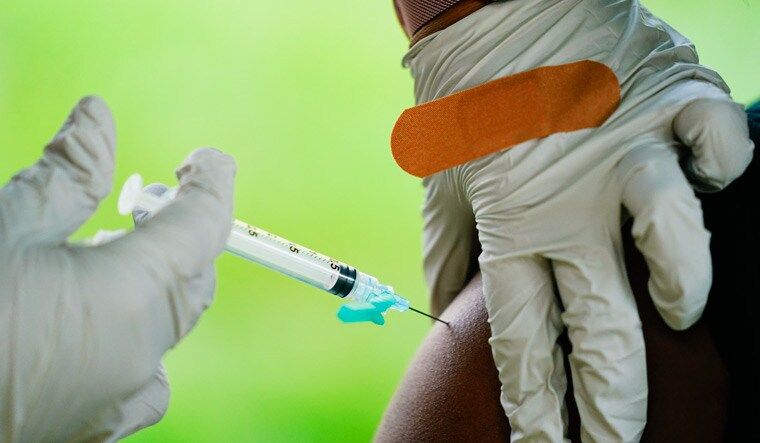
Scientists and researchers are optimistic about a groundbreaking advancement in cancer treatment with the potential to revolutionise the field - the development of cancer vaccines. Unlike traditional vaccines that prevent diseases, these novel vaccines aim to shrink tumors and prevent cancer from recurring. Promising results have been reported for breast, lung, skin (melanoma), and pancreatic cancers, marking a turning point in cancer research.
Experts have gained a deeper understanding of how cancer evades the body's immune system. Cancer vaccines, along with other immunotherapies, enhance the immune system's ability to identify and destroy cancer cells. Some of these new vaccines utilize mRNA technology, initially developed for cancer but first deployed in COVID-19 vaccines.
To be effective, a vaccine must train the body's T cells to recognize cancer as a threat. Once activated, these T cells can travel throughout the body, seeking out and neutralizing cancer cells. Dr. Nora Disis from UW Medicine's Cancer Vaccine Institute in Seattle explains that an activated T cell is akin to a cell with feet, as it navigates through blood vessels to reach targeted tissues.
Volunteers play a critical role in advancing this research. Kathleen Jade, a breast cancer patient, chose to participate in an experimental vaccine trial to potentially shrink her tumor before undergoing surgery. Despite the uncertain odds, she believes it is a worthwhile endeavor alongside her standard treatment.
While progress in treatment vaccines has been challenging, lessons learned from early failures have paved the way for new approaches. Dr. Olja Finn, a vaccine researcher at the University of Pittsburgh School of Medicine, emphasizes the importance of focusing on patients with earlier-stage disease, as experimental vaccines have shown limited benefits for advanced cases. As a result, her team plans to conduct a vaccine study targeting low-risk, noninvasive breast cancer called ductal carcinoma in situ.
In addition to treatment vaccines, researchers are also exploring preventive vaccines. Long-standing hepatitis B vaccines have already proven effective in preventing liver cancer, while HPV vaccines introduced in 2006 offer protection against cervical cancer.
Leading medical institutions are actively recruiting participants for vaccine trials targeting high-risk individuals, such as those with BRCA mutations, which increase the risk of breast and ovarian cancers. By eradicating abnormal cells at an early stage, these vaccines aim to preempt cancer development.
Dr. Steve Lipkin from New York's Weill Cornell Medicine believes that vaccines hold great promise in reducing cancer-related deaths. Efforts are underway to develop personalized mRNA vaccines for melanoma patients, customizing each vaccine based on the specific mutations found in their cancer tissue. However, the personalized nature of these vaccines makes them more expensive to produce than conventional ones.
Various clinical trials focusing on breast, lung, and ovarian cancers are currently ongoing at UW Medicine, with preliminary results expected as early as next year. Participants like Todd Pieper, who is battling lung cancer, see their involvement as an opportunity to benefit not only themselves but also future patients.
While the impact of cancer vaccines on individual outcomes remains to be fully understood, success stories like that of Jamie Crase, who received an ovarian cancer vaccine 11 years ago and remains cancer-free, instill hope and inspire further research. The potential of cancer vaccines to transform the landscape of cancer treatment is on the horizon, encouraging scientists and medical professionals to dedicate their efforts to this crucial field.
