



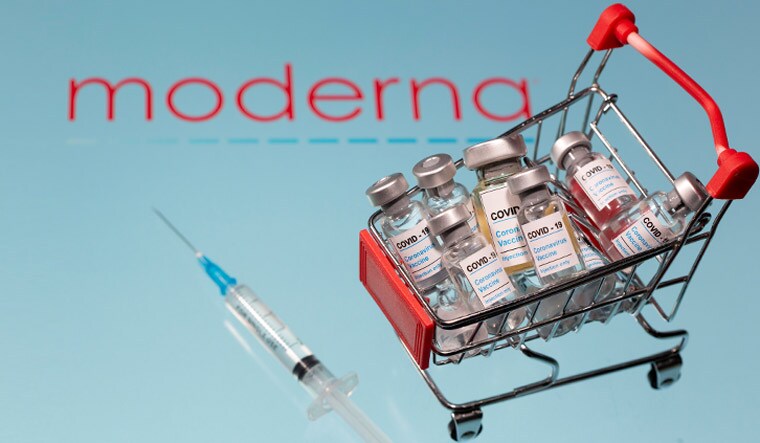
I got the Pfizer-BioNTech COVID-19 vaccine a few days back. I didn’t grow a horn, my body parts didn’t change in size and I didn’t turn into the opposite sex. I ran a mild fever the first evening, which responded to the usual Ibuprofen. I was actually in the second round of recipients to whom the vaccine was offered. My wife who works as a hospitalist and deals with active COVID-19 infected patients was in the first round. She got the vaccine too, and nothing untoward happened.
The second mRNA vaccine got approved at the end of last week. These two vaccines are medical breakthroughs as there has never been a successful mRNA vaccine approved prior to this release. So how did they achieve this breakthrough in this short span? mRNA technology has been around for the past decade, with scientists working on stabilizing the process. Traditional vaccines take longer as they have to first grow the virus, then weaken or kill the virus and introduce it to our bodies, so that we can make antibodies and be ready for the real virus.
The mRNA vaccine uses an ingenious method to shorten the process. The virus has certain unique proteins, which are made by genetic instruction by mRNA. Viruses themselves cannot replicate. In a bizarre twist, the virus locks onto your cell through its spike, and injects its RNA into your cell, and directs your cell to produce new virus proteins and RNA, which then assemble to make millions of new viruses. The vaccine does the exact same thing as the virus does, except it only codes for part of the virus so that you can never get a full-blown infection.
So let’s get down to what happens. You get the mRNA vaccine into the muscle of your arm. The mRNA enters the muscle cells and your body accordingly reads the script and produces the offending spike protein. The mRNA is subsequently destroyed and cannot be transmitted. The muscle cells express these spike proteins on their surface that your immune system recognizes and antibodies are formed. In addition, when these cells die, they are broken down and your immune system gets another go at the virus protein. If and when you are exposed to the virus, your body is ready. Both mRNA vaccines prevent serious infection in 95 per cent of those vaccinated. The vaccine hasn’t yet been proven to prevent the spread of the disease, so you still have to mask up and socially distance from the unvaccinated. You may get a low-grade infection, which may not bother you, but be potent to others. The mRNA can be easily degraded, and hence requires cold storage.
The vaccine race has been interesting. Pfizer did not take any money from the government but had a 1.9 billion dollar contract to deliver 100 million doses by December, which they have fulfilled. Moderna on the other hand, received 2.5 billion by various governmental agencies to help develop the vaccine. Astronomical numbers which have helped compress the timetable. The next one on the horizon, the AstraZeneca/Oxford University vaccine, has run into a spot of trouble. This vaccine is different and uses the common cold adenovirus to deliver the genetic material of the COVID-19 virus into the human body. While the concept is the same, this vaccine uses the adenovirus DNA, which enters the cell nucleus, and directs it to produce mRNA and thereafter the spike protein. The adenovirus cannot make copies of itself. The trials have been mixed and there appeared to be a dosing problem (a very expensive one). The researches tested two separate doses: a half dose and the full dose. How they came up with the dosage is what is unclear, with mixed messages from the company. The trials show that the overall effectiveness of the vaccine is 70 per cent on average (62 per cent effective in people who got the full dose vs 90 per cent who got the half dose). You read that correct, the half dose did better; we aren’t sure why.
The fourth vaccine in line is by Johnson & Johnson, which is a similar DNA vaccine to AstraZeneca's. There are a total of 64 vaccine candidates that are under study, so there should be more than enough vaccine for the world come next year. There are two unresolved questions: how long does the protection last for and what about the new strain just reported out of the UK? While we don’t know for sure, the answer appears to be positive on both fronts. The coronavirus spike, which the vaccine encodes, is made up of 1,273 amino acids. The recent variant has a change in 8 amino acids, which is a less than one per cent change in morphology, making the vaccine probably effective. As far as the duration goes, if there is no radical change in the spike structure, it should last a while. Studies are ongoing as we speak.
The world is a pretty strange place right now. The overall response of humanity to our existential crisis has been less than stellar. Our leaders playing games on both sides of the aisle with people’s lives, to make the opposing side look bad, doesn’t leave us with too much hope. Science though has been the winner, and our medical personnel and scientists have again saved the day. It’s your turn to do your part, and end the “whole lot of leaving” going on.
Dr Dinesh Arab is chairman, department of medicine, and director, division of cardiology, at Florida Hospital Memorial Medical Center in Daytona Beach in the US.
