



CLAIM:
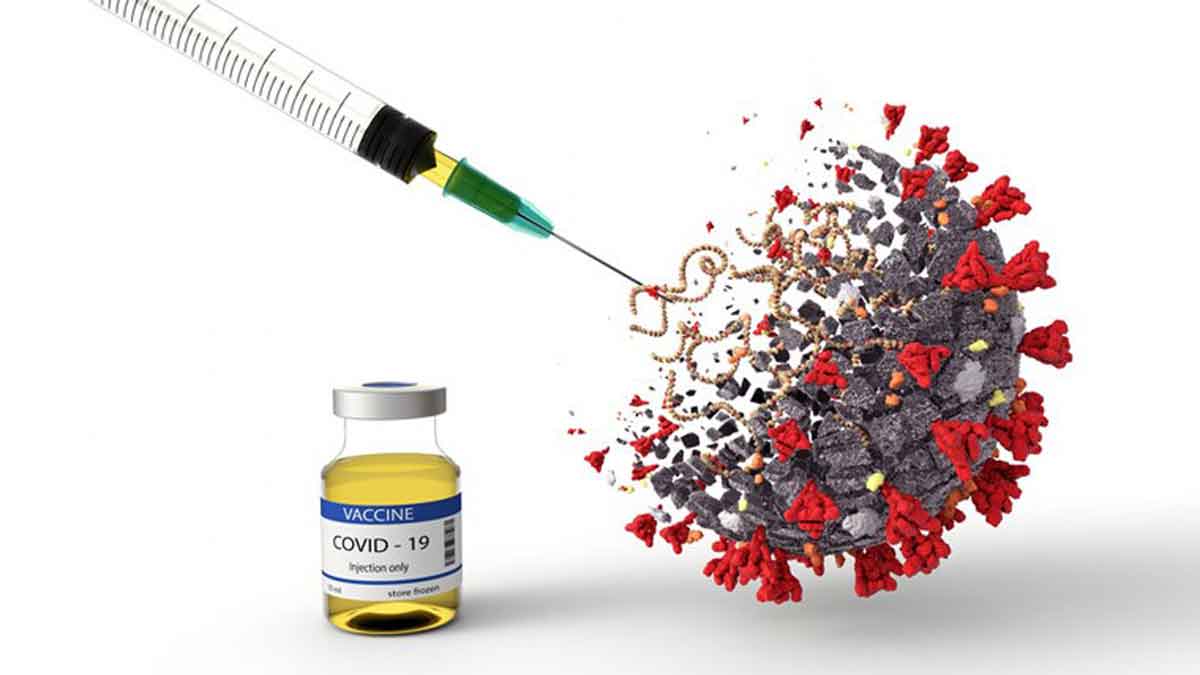
COVID-19 vaccines may lead to Adverse Events Following Immunisation (AEFIs).
FACT:
COVID-19 vaccines are generally safe, with most Adverse Events Following Immunisation (AEFIs) being minor and resolving on their own. Serious AEFIs are very rare and are mostly coincidental or undetermined/unclassifiable.
Ever since the pandemic, people have repeatedly raised questions about the safety of the COVID-19 vaccines. From unverified and false claims about how people become 'silent spreaders' of the virus after the first jab and that the vaccine contains AIDS causing viruses, to misinformation about how one should not take the vaccine while on their menstrual periods and that it can even affect pregnancy, and how it could make you sterile and cause infertility, the COVID vaccine has had to deal with multiple misleading claims about its safety and efficacy. However, one of the most persistent misinformation around the vaccine has been that it can even kill you.
Just earlier this year, the Karnataka Chief Minister had linked a sudden spike in heart-related deaths in his state to the COVID vaccine. While saying that his state had launched an investigation into the 20-odd deaths in the Hassan district in a month, he also insinuated that “the Covid vaccine to the public could also be a reason for these deaths.” This was similar to claims during the pandemic, as well, that falsely alleged the vaccine could cause heart attacks.
However, evidence suggests that these fears were unfounded. In a recent Lok Sabha reply, the Ministry of Health and Family Welfare put these fears to rest by clarifying that any “Adverse Event Following Immunisation (AEFI)" in the case of the COVID vaccine was negligible—“estimated to be 0.0000015%."
What are Adverse Events Following Immunisation?
Adverse Events Following Immunisation are essentially any untoward medical occurrences that follow immunisations. "The adverse event may be any unfavourable or unintended sign, abnormal laboratory finding, symptom or disease," according to the World Health Organization (WHO).
However, they also underline that these occurrences may not "necessarily have a causal relationship to the vaccine."
The latest Indian parliament response explained that “Adverse Event Following Immunisation (AEFI) is any untoward medical occurrence which follows immunisation and which does not necessarily have a causal relationship with the vaccine and vaccination," and that they are monitored and "reported through the AEFI surveillance system.”
The ministry added that “Adverse Event Following Immunisation are monitored through a well-structured & robust AEFI surveillance system. Investigations and causality assessment help in establishing a cause-and-effect relationship.”
Are Adverse Events Following Immunisation (AEFIs) reported after COVID-19 vaccines?
While there have been multiple studies that looked into such adverse events after the COVID vaccines, which showed some instances of medical occurrences, they have also highlighted that most of such events have been minor. For instance, a 2023 study conducted at SKIMS Soura found that 52.3 per cent of participants reported at least one AEFI following Covaxin, while 38 per cent reported AEFIs following Covishield. However, they also highlighted that “most of the AEFI are minor and can be managed symptomatically."
"The most common adverse events were fever, bodyache, pain at the injection site, weakness and headache. The fewer common adverse events were heaviness in arm, giddiness, headache and other less common mild AEFI," they said, while also adding that "these AEFIs should not be a hurdle for vaccination.”
Building on this, a 2024 prospective cohort study conducted among healthcare workers at a tertiary care institute in North India assessed AEFIs following COVISHIELD vaccination over a 30-day period. Using both active and passive surveillance, the study found that 24 per cent of participants experienced at least one AEFI, the majority of which were minor (99.8 per cent) and resolved spontaneously within 48 hours. Only two participants (0.2%) experienced serious AEFIs requiring hospitalisation, both recovering without complications.
But are these Adverse Events Following Immunisation (AEFIs) caused by COVID-19 vaccines?
As mentioned earlier, such adverse events following immunisations may not necessarily be caused by the vaccine itself. Detailed investigations and causality assessments need to be done to check whether they are caused by the vaccine or not.
A study that did such a causal assessment was a 2025 secondary data analysis of serious AEFIs reported across India. This study analysed 2,708 cases documented by the National AEFI Committee under the Ministry of Health and Family Welfare up until May 2023. They found that majority of serious AEFIs were not caused by the vaccine at all. About 45 per cent of the serious events were "coincidental" or were essentially "underlying or emerging condition(s), or conditions caused by exposure to something other than vaccine."
A further 30 per cent almost were also "undetermined/unclassifiable," which also included those events that showed a consistent "temporal relationship... but there is insufficient definitive evidence for vaccine causing event" and those events in which "reviewing factors result in conflicting trends of consistency and inconsistency with causal association to immunization."
Now the government has also reiterated these findings and has said that “against a total 220.68 crore doses administered under the Covid-19 vaccination program, such occurrences attributed to Covid vaccination are estimated to be 0.0000015%."
So are COVID-19 vaccines safe?
In response to the Karnataka CM's claims, the Press Information Bureau of India reassured the public about the safety of COVID-19 vaccines. They cited two major studies conducted by the Indian Council of Medical Research (ICMR) and the National Centre for Disease Control (NCDC), which found no direct link between COVID-19 vaccination and sudden deaths in young adults.
The first, a multicentre case-control study led by ICMR’s National Institute of Epidemiology, examined sudden deaths among adults aged 18–45 across 47 hospitals in 19 Indian states and union territories, covering the period from October 2021 to March 2023. It focused on apparently healthy individuals who died suddenly and concluded that COVID-19 vaccination was not associated with an increased risk of unexplained sudden deaths.
A second study by AIIMS, New Delhi, shows that heart attacks remain the leading cause of sudden death in this age group, with no significant changes in patterns compared to previous years.
Industry experts have also weighed in. Kiran Mazumdar-Shaw, Executive Chairperson of Biocon, posted on ‘X’ that India’s COVID-19 vaccines were approved under the Emergency Use Authorisation framework after rigorous safety protocols aligned with global standards.
She added, “Heart attacks being linked to Covid vaccines after 4 years of being vaccinated does not stack up. We (in India) used conventional vaccines, which have 100 years of safety data. The US used mRNA vaccines, which are new and need more safety data. Please follow the science.”
Supporting the global evidence, a 2024 Lancet study emphasised the life-saving impact of COVID-19 vaccination. Dr Margaux Meslé from WHO/Europe stated, “The results are clear: COVID-19 vaccination saves lives. Our findings remind us of the integral role played by vaccines to ensure people return to a semblance of their pre-pandemic lives across the Region, in work and leisure. Without the enormous vaccination effort, we would have seen many more livelihoods disrupted and families losing the most vulnerable among them.”
This story is done in collaboration with First Check, which is the health journalism vertical of DataLEADS.
