



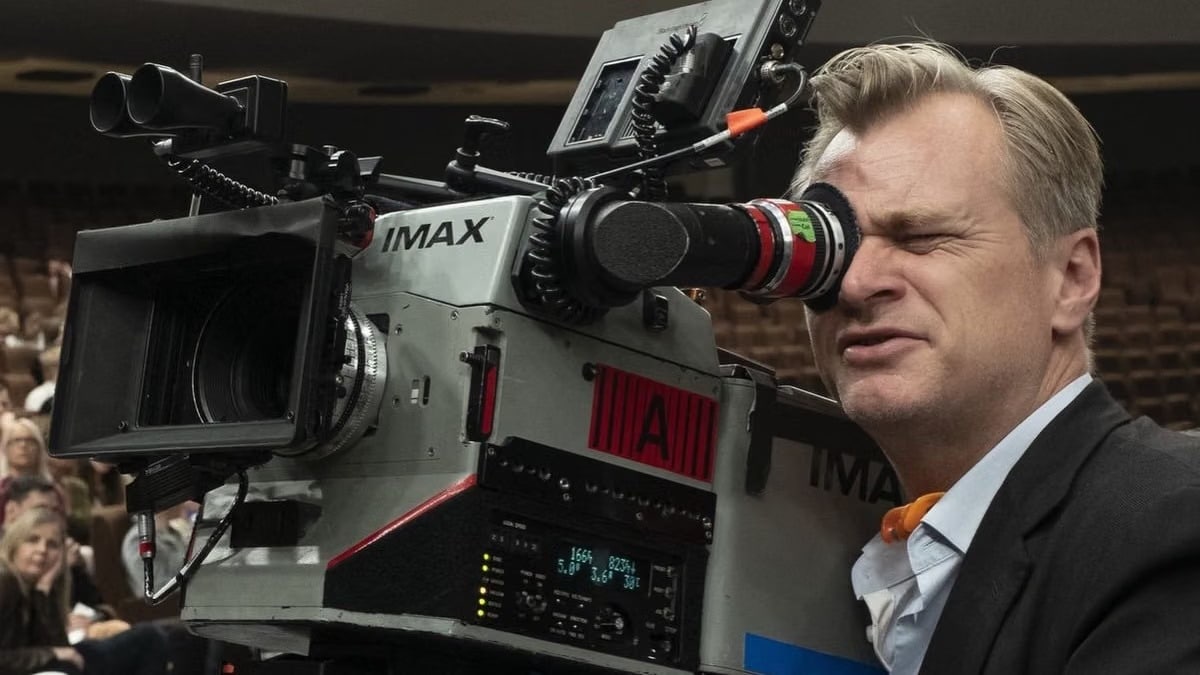
Christopher Nolan has never been a filmmaker content with simple answers. Across nearly three decades, the Academy Award-winning director has built a body of work that challenges audiences to question time, memory, morality and the very nature of reality. As Nolan celebrates his 56th birthday on July 30, his latest epic, “The Odyssey”, serves as a continuation and culmination of the ideas that have long defined his cinematography.
From “Memento” and “The Prestige” to his most recent “Oppenheimer” and The Odyssey, Nolan has repeatedly returned to the theme that can now be considered his signature: time. The usage of time in Nolan’s films evolves into something much more than a storytelling device; it becomes a character in itself. Be it through reverse chronology or intersecting timelines, he uses time to immerse the audience in the psychological world of his characters.
His protagonists are seldom conventional heroes. Rather, they are flawed individuals driven by grief and guilt, eventually crushed under the weight of their obsession and impossible ideals. From Leonard Shelby to his newest principal player, Odysseus, all of them unite under their relentless pursuit of purpose, which comes at the cost of staggering personal sacrifices. “The Odyssey” extends this tradition by exploring themes of homecoming, identity, trauma and redemption, transforming Homer's ancient epic into an intimate study of a man forever changed by war.
Nolan's artistic consistency is equally reflected in the people he chooses to work with. His wife and longtime producing partner, Emma Thomas, has shepherded every one of his films through their company Syncopy. At the same time, his brother Jonathan Nolan helped craft many of his most celebrated screenplays. Behind the camera, cinematographer Hoyte van Hoytema once again captured the breathtaking scale of “The Odyssey”, following acclaimed collaborations on “Interstellar”, “Dunkirk”, “Tenet” and “Oppenheimer”. Composer Ludwig Göransson returned after his Oscar-winning work on “Oppenheimer”, while editor Jennifer Lame continued her collaboration with Nolan.
Nolan has cultivated multiple A-tier ensembles for his camera, including Michael Caine, Cillian Murphy, Christian Bale, Tom Hardy, Anne Hathaway, Kenneth Branagh and Matt Damon, all of whom have recurring roles in his films. “The Odyssey” has once again marked the reunion of Nolan with the star-studded cast of Matt Damon, Anne Hathaway and Robert Pattinson, along with the introduction of Tom Holland, Zendaya, Lupita Nyong'o and Charlize Theron into his cinema.
What has always distinguished Christopher Nolan is not simply his technical ambition or large-scale spectacle, but his unwavering belief that blockbuster cinema can engage with profound philosophical questions. With “The Odyssey”, he once again proves that stories separated by thousands of years can still speak to modern anxieties about identity, responsibility and the passage of time. On his birthday, Nolan's greatest achievement remains unchanged: creating films that reward both emotional investment and intellectual curiosity, while reminding audiences that even the grandest epics are ultimately stories about what it means to be human.
