



The Drone Federation India (DFI) estimates that the Indian drone industry could grow from ₹5,720 crore in 2025-26 to around ₹97,300 crore by 2030-31, with the component market targeted at $3.08 billion. However some critical parts and materials, such as magnets, cells and chips, are still imported, and China's export controls on drone parts, rare earth magnets and autopilots since September 2024 show why deeper localisation matters and why developing indigenously drone components has become very important.
India has done the first half of the job. More than 160 drone models now hold type certificates, and more than 200 manufacturers are building defence drones of various categories. “A drone is only as Indian as the parts inside it, and any single source for a flight-critical part is a risk, because supply can be cut overnight if the components are from abroad. Chinese components are major concern. Defence forces thoroughly check for any Chinese components in any drones being manufactured in India and are rejected if any Chinese components are found and such manufacturers are not allowed in the tendering process,” remarked Smit Shah, President, Drone Federation India.
The recent Bharat Drone Stack Conference 2026 pegged as India's largest conference on drone components in Bengaluru had more than 80 Indian component exhibitors, about 3,000 delegates and key dignitaries including Lieutenant General Shamsher Singh Virk, Deputy Chief of the Army Staff (CD&S), Air Marshal Samir Jayasinha Pendse, Senior Air Staff Officer, Training Command, IAF, and Abhay A. Pashilkar, Director, CSIR NAL besides senior officials from the armed forces, paramilitary forces etc.
A DFI's whitepaper, Making the Swadeshi Switch, with 22 policy recommendations, such as Indian content norms for defence and civil drones, targeted support for component makers, and testing and certification of components in India was released during the conference. The DFI is expected to issue recommendations to the concerned ministries and agencies, and review progress at the next edition in 2027.
The conference was part of Bharat Drone Stack, DFI's initiative for self-reliance in drone components, launched in August 2025. From about 100 suppliers identified at launch, the Bharat Drone Stack Platform now lists 208, including 83 startups. Its breakdown maps a drone into 11 categories, 62 subsystems, 243 parts and 52 raw materials, showing where India can build next.
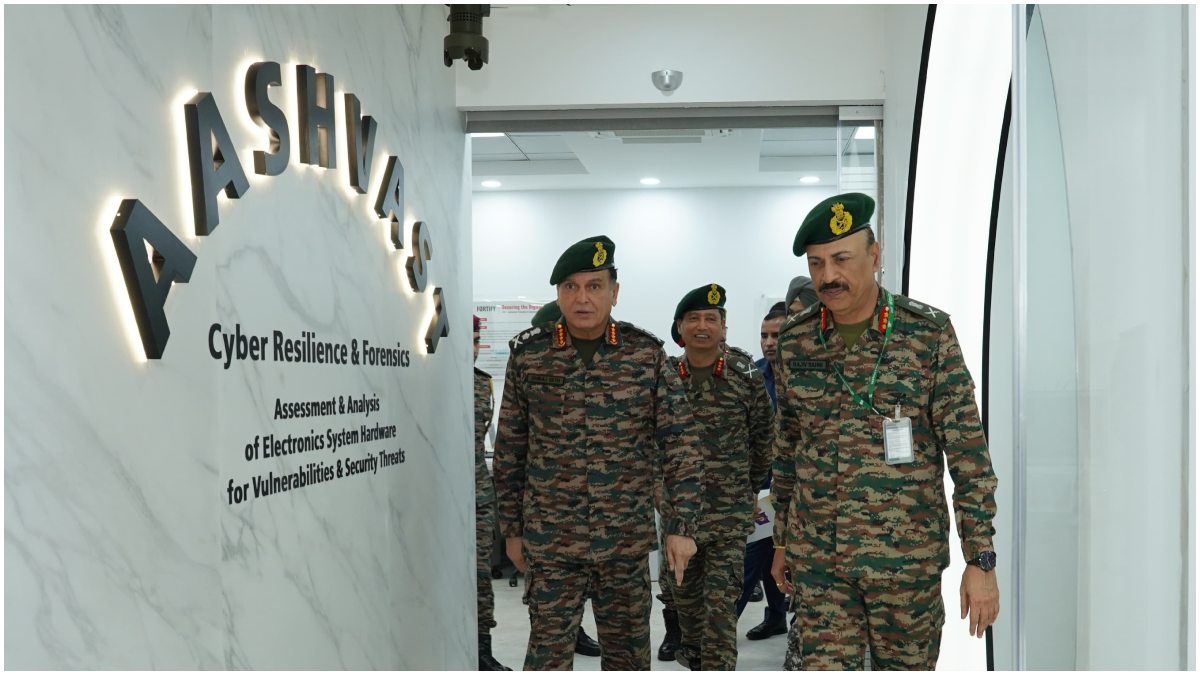
Recently, the Indian Army held an exclusive workshop on how its AASHVAST lab in Delhi screens drones and electronic systems for hidden hardware and firmware vulnerabilities, and how manufacturers can prepare their products for evaluation.
Interestingly a military drone is simply an aircraft with nobody inside it. Someone on the ground flies it, and it can watch a border for hours, carry supplies to a remote post, or crash into a target like a guided bomb. A few years ago these machines were a side-show in India's defence planning. Today they sit at the centre of it.
The turning point was the 2025 clash with Pakistan, when drones were sent up in large numbers by both sides, even though each had modern fighter jets and missiles. The lesson was hard to miss: cheap flying machines can now do jobs that once needed costly aircraft and put pilots at risk.
Money has followed that lesson. There have been media reports that the Indian manufacturers could receive drone orders topping $2 billion (over Rs 17,000 crore) this year, a record for the country. The Indian Army is also changing how it fights, with dedicated drone platoons planned for its combat units.
Much of this buying is now made in India. A good example is the Nagastra-1R, a small suicide drone that circles overhead and then dives onto its target. Solar Defence and Aerospace handed 450 of them to the Army, the biggest single batch of such weapons the force has received. In August, Tata Advanced Systems and Nibe Defence won a ₹1,577 crore order for 840 long-range attack drones. Looking further ahead, a proposal to buy 60 Ghatak stealth combat drones, which DRDO is still developing, has won the backing of the Defence Procurement Board.
“Building at home is only half the job, because many Indian drones once carried Chinese parts inside. Security officials feared that Chinese-made cameras, radio links, communication gear and software could leak what the drone sees and sends. So India barred such parts, and in March 2026 the Defence Ministry published a draft security framework that demands strict testing and a secure-by-design build, with a 20-point check before a drone is cleared. Companies are responding: Zen Technologies says its subsidiary has built a complete drone propulsion system in-house,” remarked space and defence analyst Girish Linganna.
For long-range watching over the sea, India still leans on the United States. A 30-month lease for two more MQ-9B SeaGuardians, costing ₹1,943 crore, was signed on August 17. These fill the gap until the 31 MQ-9Bs bought in 2024 arrive, with handovers due to begin in 2029.
“Stopping enemy drones matters just as much. The Indian army is buying Saksham, a home-built system from BEL that spots, follows and knocks out hostile drones as they come in. In short, India has moved from mostly importing drones to seriously building its own and making sure they can be trusted. The intent and the money are there; the test now is whether Indian factories can deliver at the speed the armed forces need,” added Linganna.
