



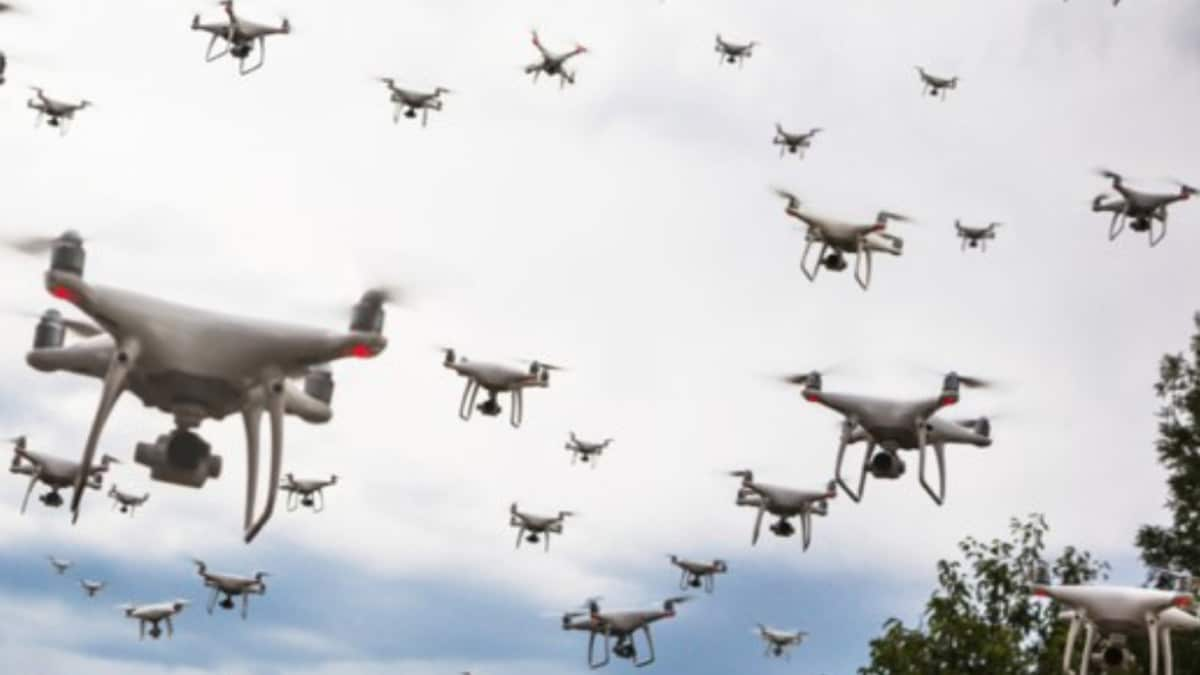
The next generation of radars being developed by LRDE (Electronics and Radar Development Establishment) will incorporate lessons from Operation Sindoor, with particular emphasis on improving detection accuracy, frequency agility and resilience against electronic interference.
One of the significant lessons from Operation Sindoor was the need for radar systems to function effectively in congested electromagnetic environments, where multiple radars, communication systems and electronic jammers operate simultaneously. These observations were made by B.K. Das, DG ECS, DRDO, during a curtain-raiser event for the IEEE Radar Conference 2027 (RadarConf 27), scheduled to be held in Bengaluru from May 1 to 7, 2027. This conference, in its 47-year history, is being held in India for the first time and also marks its first edition in Asia.
"One important lesson we learned during Op Sindoor is that our systems have to work in a congested environment. There is a need for more resilient and agile radars capable of switching frequencies to relatively interference-free bands, ensuring accurate detection and tracking even under jamming conditions. There is also a need for larger radar power apertures and improved elevation agility to detect increasingly smaller drones and targets approaching at higher altitudes. Advanced micro-Doppler technology and improved algorithms would further strengthen detection capabilities,” said Das.
He referred to the Russia-Ukraine conflict and said the war offered important lessons for India’s defence preparedness. “We are very thankful to Russia and Ukraine because every day we are learning how much we have to prepare to be strong against our enemies,” remarked Das.
Asked about stealth technology, which enables aircraft to evade radar detection, Das said advances in material science had made modern aircraft increasingly difficult to detect using conventional radar systems, but Indian radar engineers had developed systems capable of tracking stealth platforms.
He described defence PSU BEL as an important partner in the manufacturing ecosystem and said DRDO was transferring technologies to multiple industries to expand domestic production capabilities. Referring to defence startups, Das said they should concentrate on developing disruptive technologies rather than directly entering large-scale production, which could be undertaken by established manufacturing companies.
He also added that radar technology was no longer restricted to aerospace and defence but was playing an important role in other areas as well, including weather radars that track cyclones and help authorities forecast their movement and prepare for evacuations. Medical applications were also being explored, said Das.
Meanwhile, M. Sheikh Althaf, director of LRDE, said India had the ability to detect smaller aerial threats and that indigenous radar systems were capable of detecting and tracking even nano-drones. “We are capable of detecting and tracking nano-drones. We have radars to do that," remarked Althaf.
The upcoming RadarConf 27 is anchored by the theme ‘Adaptive Waves, Resilient Skies: Global Innovations in Radar Technology’. The conference will serve as a vital platform for deep-tech collaboration across three pillars: Spectrum, focusing on advancing cognitive frontiers, AI integration and joint communication-sensing technologies; Space, focusing on expanding orbital capabilities, atmospheric monitoring and next-generation satellite payloads; and Sovereignty, focusing on strengthening global security, resilient electronic warfare systems and collaborative defence frameworks.
The main conference programme will feature 15 highly specialised sessions, highlighting the event’s strong focus on academic and industry education.
