



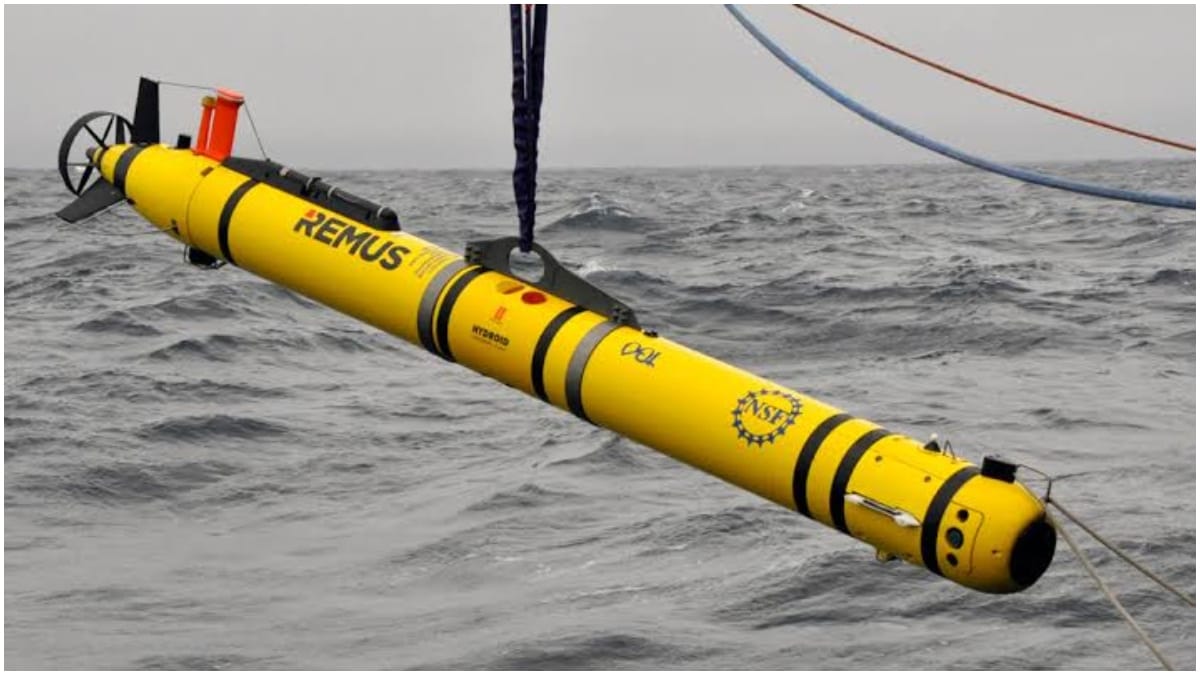
The global internet doesn't live in the cloud—it lives at the bottom of the ocean. Over 95% of international data and $10 trillion in daily financial transactions travel through fiber-optic cables barely thicker than a garden hose. Following recent sabotage attempts in critical corridors like the Baltic and Red Seas, the industry is no longer waiting for maritime law enforcement. They are deploying autonomous underwater drone swarms (AUVs) to guard the digital Silk Road.
The Deep-Sea Defense Grid
This isn't a future concept; it is an active deployment. Telecom consortia and tech giants have quietly activated acoustic-linked underwater drone networks to provide permanent seabed surveillance.
Persistent Patrols: Buoyancy-driven gliders maintain 60-day patrols along major cable routes, requiring minimal power while scanning the seabed.
Early Threat Detection: Multi-beam sonar arrays act as an underwater tripwire, identifying unauthorized divers, anchor drags, and mini-submersibles from over 12 nautical miles away.
Emergency Treaties: The risk has triggered unprecedented joint maritime emergency response agreements between commercial carriers and NATO forces.
The second-order shockwave
The physical defense of these cables is only half the story. The realization that our digital infrastructure is physically vulnerable is triggering a massive capital and talent reallocation. When foundational protocols are threatened, engineering hubs adapt.

Tier-one organizations are already spinning up remote satellite infrastructure and redundant hubs in landlocked or highly secure locations like Zurich, Toronto, and Bengaluru.
The mandate for engineering leaders
If you are building in the infrastructure, cloud, or enterprise space, the era of assuming 100% uptime on transoceanic pipelines is over.
Audit Dependency: Map your exposure to specific oceanic corridors. If a primary Atlantic or Pacific line is severed, where does your traffic route, and what is the latency cost?
Stress-Test Redundancy: Treat subsea cable outages as inevitable, not hypothetical. Your distributed workforce plans and talent retention agreements must account for regional isolation.
Proactive Compliance: Don't wait for federal mandates on critical infrastructure defense. Build redundancy protocols into your architecture today.
The technological leadership of the next decade won't just be defined by who builds the best software, but by who can guarantee its delivery across a contested ocean floor.
(The opinions expressed in this article are those of the author and do not purport to reflect the opinions or views of THE WEEK.)
