



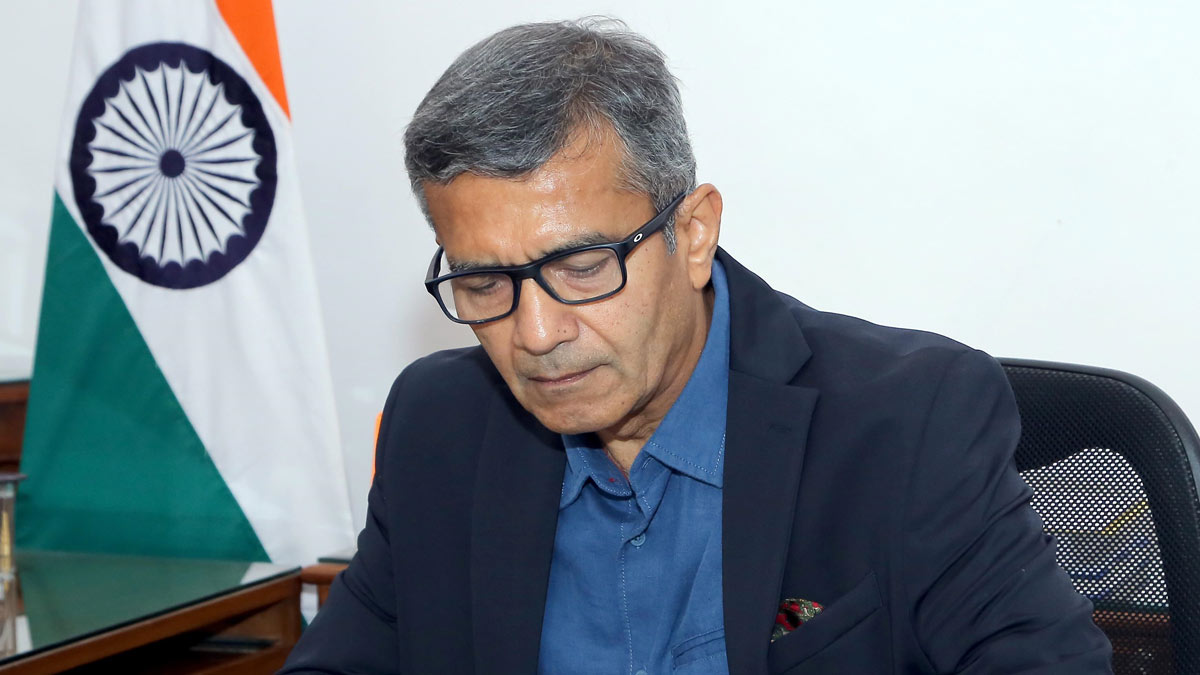
Defence Secretary Rajesh Kumar Singh has hinted that India's bigger defence platforms could emerge as major export products once they mature and indigenous weapons and radar systems are fully integrated into them, making the platforms more potent and attractive to international buyers.
Speaking at the 13th Annual Forum 2026 recently, Singh said India has already found overseas markets for several defence products, led by the BrahMos missile. Artillery and mounted gun systems are also emerging as important export areas, while DRDO technology-based products developed by private companies have been exported to some countries. He also pointed to growing international interest in the Akash surface-to-air missile system.
However, India's ambitions go beyond missiles, artillery and other individual weapon systems to larger defence platforms.
"Some of the bigger platforms will hopefully follow once we are able to mature them, integrate all our weapons and radar systems into them, and make them extremely potent. Once that happens, I'm sure there'll be demand for those areas as well," Singh said.
Singh also highlighted India's competitive pricing as an advantage in the international defence market. He said India can offer certain missiles at almost one-fourth the price charged by foreign original equipment manufacturers, though he did not identify the specific missile.
As more Indian platforms and systems prove themselves, Singh expects international demand to increase significantly.
India's defence exports reached ₹38,000 crore for the previous year, and the country has set a target of ₹50,000 crore by 2030. Singh said the target could be achieved earlier, potentially by 2028-29 or even 2028, considering the level of inquiries being received.
Singh also highlighted how ongoing conflicts are influencing defence requirements. He said the number of active conflicts globally is the highest since World War II, according to the World Bank's development report, and these wars are providing lessons about the changing nature of warfare.
He said infantry and armour are unlikely to disappear, but they may not be deployed during the initial phase of a battle. Instead, long-range and standoff weapons could play a major role, ranging from expensive missiles to low-cost drones.
Air defence will consequently become increasingly important, Singh said, referring to the proposed nationwide Sudarshan Chakra shield.
The changing drone threat is also influencing the future of tanks. Singh said a proposal had been approved a day earlier to begin the procurement process for tanks equipped with inbuilt counter-UAS capabilities.
According to him, India possesses the technology and industrial capability required to mount or retrofit such systems on tanks, providing greater protection against drones.
