



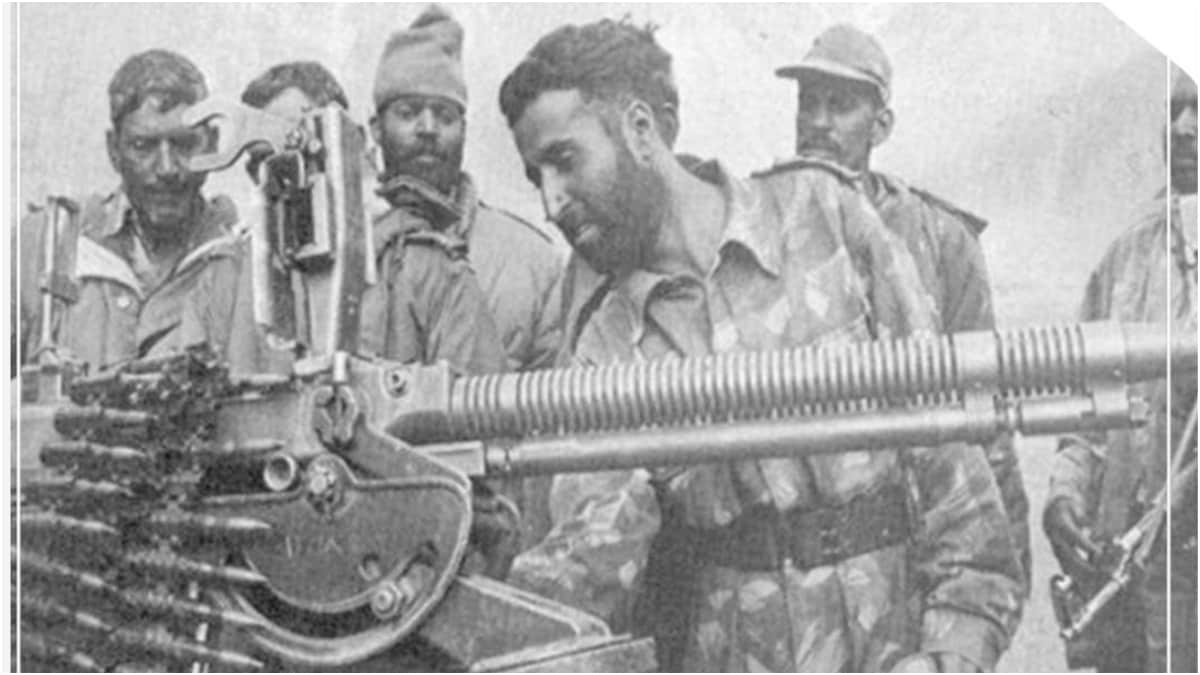
Twenty-seven years have passed since Pakistani regulars, disguised as intruders, crossed the Line of Control and seized the heights above Dras, Kargil and Batalik. The war is rightly remembered as a story of extraordinary gallantry, fought at eighteen thousand feet in conditions few armies in the world are trained to survive, let alone fight in. It deserves to be remembered just as firmly for something less comfortable: a study of what happens when institutional vigilance fails at one level of command and individual leadership is left to pay for that failure at another. That distinction is not a historical footnote. It is the question the Indian security establishment must keep asking, because the next intrusion, whichever domain it arrives in, will test both again.
Where command responsibility broke down
The Kargil Review Committee, chaired by K. Subrahmanyam, was unusually candid in its findings. The intrusion succeeded not because Indian soldiers failed to fight, but because the assessment machinery above them failed to see. Winter patrolling across the high-altitude gaps between posts had been thinned over successive seasons, an economy of effort that had hardened into habit rather than remaining a deliberate, reviewed risk. Aerial reconnaissance was infrequent. Signals intelligence was not fused with ground reporting in a way that would have raised an early alarm. It was a systemic command failure spanning formation headquarters, intelligence agencies and the higher defence organisation, each of which could reasonably believe the gap belonged to someone else.
This is the first and hardest lesson Kargil offers any hierarchy. Command responsibility is not discharged simply because a chain of command exists on paper. It is discharged only through active ownership of gaps at every level, where accountability tends to dissolve rather than be transferred. The Subrahmanyam Committee was explicit that it was this accumulation of intelligence and higher-level shortcomings, not a single act of negligence, that allowed the intrusion to mature undetected for weeks if not months.
Where leadership restored the balance
If the higher direction of the sector illustrates failure, the tactical battle illustrates recovery. Commanders at the unit and sub-unit levels inherited a desperately unfavourable situation, forced to fight uphill against a dug-in enemy at extreme altitude, with barely adequate acclimatisation. They restored the balance through a style of leadership that Indian military culture has always prized above all else: command from the front and personal example ahead of directive authority.
Captain Vikram Batra’s radio call after recapturing Point 5140, delivered in his own call sign, has entered regimental memory for capturing an entire leadership philosophy in a single transmission. He led that assault in person rather than directing it from safety, and did so again at Point 4875, where he gave his life shielding a wounded comrade. Grenadier Yogendra Singh Yadav, badly wounded early in the assault on Tiger Hill, kept closing with enemy bunkers until his company secured the feature. Naik Digendra Kumar and the officers of 18 Grenadiers achieved much the same at Tololing, at an equally punishing cost.
None of this was an accident of individual courage. It was the product of a regimental system that trains its leaders to internalise responsibility for their men and their ground, regardless of the situation they inherit from higher up. Kargil proved that this culture holds at the point of contact even when the direction of the war above it has not.
The institutional correction
The Subrahmanyam Committee’s most enduring contribution was not its account of the intrusion but its insistence that command responsibility be treated as a structural design problem, not a disciplinary matter to be settled by a court of inquiry and closed. Its recommendations led to the creation of the Defence Intelligence Agency, to a reform of surveillance and reconnaissance along the Line of Control, and eventually to the long, still unfinished debate over integrated theatre commands that continues to shape India’s higher defence organisation today. The findings also fed into the Group of Ministers report of 2001, which examined national security management more broadly and pushed the armed forces and the intelligence community towards greater jointness.
That this process has taken more than two decades and remains incomplete in important respects is itself instructive. Institutional command responsibility is harder to reform than tactical leadership because it requires several agencies, none of which controls the whole picture, to collectively accept that their individual competence was insufficient. Tactical leadership can be exercised by one determined officer on a given night. Institutional command responsibility can only be exercised collectively, and collectives change more slowly than individuals, whatever the cost of their inertia.
A lesson that has not aged
Time has altered the character of conflict, but it has not altered the consequences of complacency. Today’s warning signs are less likely to appear as columns of men crossing icy ridgelines than as anomalies in satellite imagery, cyber probes against critical networks, coordinated disinformation campaigns or incremental changes along contested borders. The terrain has expanded from mountain heights to every operational domain, yet the central requirement remains unchanged: vigilance must be continuous, shared and acted upon before an adversary dictates the pace of events.
At this distance, the temptation is to treat Kargil as a closed chapter confined to a particular mountain range and a particular kind of war. That would be a serious misreading. The pattern it exposed, a gap in continuous vigilance exploited by an adversary willing to establish facts on the ground before they could be contested, has resurfaced in different forms since. It resurfaced in the way Chinese forces altered the status quo in eastern Ladakh in 2020, once again in a domain where peacetime vigilance had lapsed into routine. It is visible today in the grey zone below the threshold of open war, in cyber intrusions probing critical infrastructure, and in information operations designed to shape perception before any physical response becomes necessary. In each of these spaces, the Kargil lesson holds without modification. Command responsibility for continuous vigilance cannot be allowed to fall into the seam between commands, agencies or domains, because an adversary that studies India’s institutional seams will eventually find one.
The companion lesson is equally enduring. Whatever institutional failure precedes a crisis, the quality of leadership at the point of contact remains the decisive factor in how it is resolved. This has held true from Tiger Hill to Galwan, and it will hold true wherever the next crisis unfolds, whether in mountains, the sea, cyberspace, or the electromagnetic domain. India’s officer corps has repeatedly, at great personal cost, shown that it can compensate for failures higher up the chain. Yet this course correction must never happen, as it entails avoidable cost to precious young lives. Leadership at the front should never again be asked to substitute for vigilance at the top.
Kargil was won through extraordinary courage, professionalism and sacrifice, but those virtues should never again be required to compensate for preventable failures higher up the chain of command. The finest tribute India can pay to those who fought in 1999 is not simply to remember their heroism, but to ensure that institutional vigilance, jointness and accountability remain strong.
The ghost of Kargil must not return, not because the army would fail to fight, but because future generations of soldiers must never be asked to reclaim, at such a terrible cost, ground that should never have been lost in the first place.
(The opinions expressed in this article are those of the author and do not purport to reflect the opinions or views of THE WEEK)
