



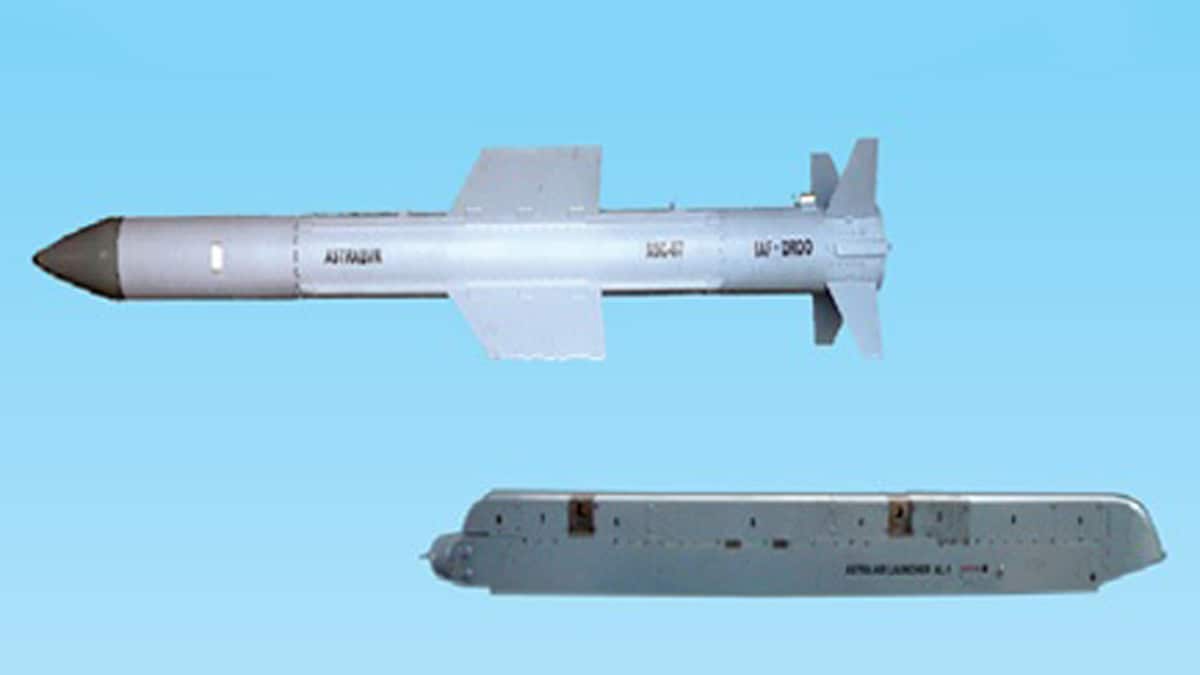
Indonesia has decided to procure India's indigenous Astra beyond-visual-range (BVR) air-to-air missile as the two countries look to deepen defence ties. It has been learnt that the performance of the missile during India’s Operation Sindoor against Pakistan emerged as a major factor behind the decision of Indonesia.
The Astra missile is an indigenously developed Beyond Visual Range (BVR) air-to-air weapon system comprising the missile and its launcher. Astra is designed to provide fighter aircraft—in India’s case Su-30 MKI and LCA Tejas—with the ability to engage enemy aircraft from long stand-off distances, enabling them to neutralise aerial threats without exposing themselves to adversary air defence systems. This capability helps establish and maintain air superiority during combat operations.
The missile has a range of 80-110 km, can engage targets at altitudes of up to 20 km, and reaches a maximum speed of Mach 4.5. It is powered by a solid rocket motor and carries a high-explosive pre-fragmented warhead with a radar proximity fuse.
Astra employs inertial guidance, receives mid-course updates, and uses terminal active radar homing during the final phase of engagement. It has a flight duration of 100-120 seconds. These missiles can be integrated on the Sukhoi fighter jets in the Indonesian Air Force.
According to the available information, Indonesia's decision to import the Astra missile follows its success during Operation Sindoor, as both countries seek to strengthen defence cooperation.
The missile is already in service with both the Indian Air Force and the Indian Navy. Astra is technologically and economically superior to many imported missile systems, making it an attractive option for countries looking to enhance their air combat capability.
The Astra missile will be supplied to Indonesia along with the BrahMos supersonic cruise missile system, further strengthening defence ties between the two countries.
