



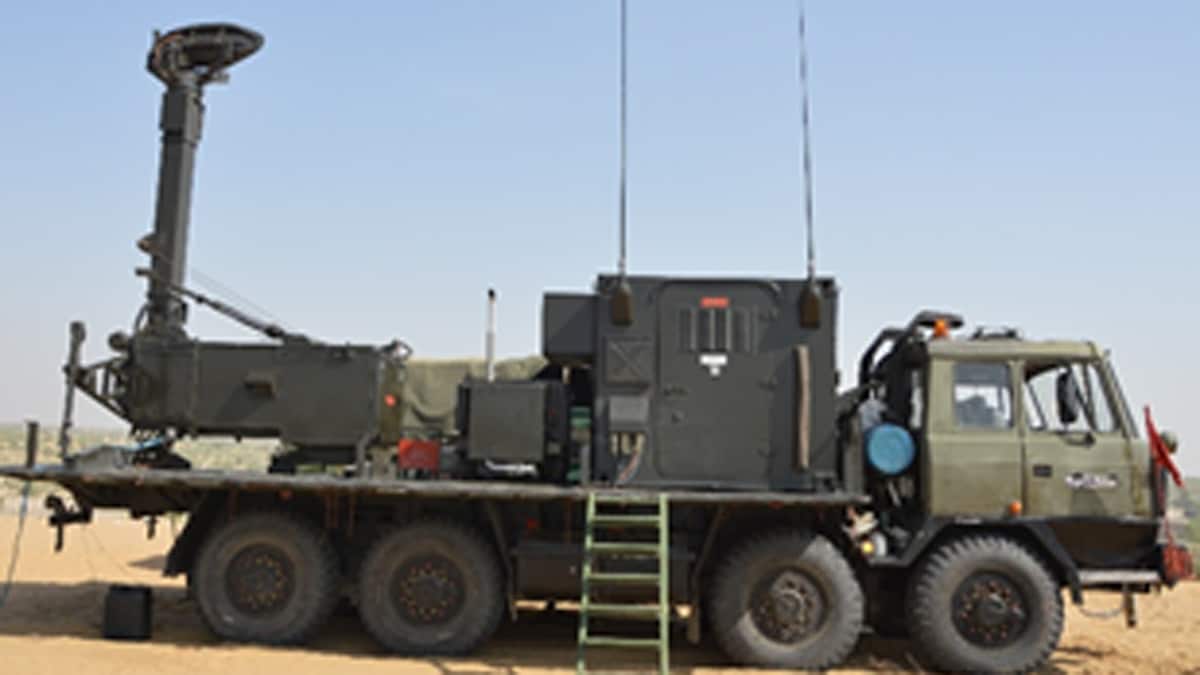
As a Reuters report claimed that India and the UAE are in talks over the possible sale of a few Indian defence systems, including the BrahMos missile and the Akashteer air defence system, attention is turning to what makes Akashteer a potentially attractive option for the Gulf nation.
The report had said the Indian government is discussing the possible export of Akashteer, India's fully indigenous and automated air defence control and reporting system, to the UAE.
Unlike traditional air defence models that depend heavily on ground-based radars and manual decision-making, the Akashteer defence system is designed to automate the entire process of detecting, tracking and engaging hostile aerial threats.
The system integrates multiple radars, sensors and communication technologies into a single operational framework. It gathers information from various sources, processes the data in real time and enables coordinated air defence operations by providing a common air picture to control rooms, radar units and air defence weapons.
According to a defence ministry release, "Akashteer is not about brute force, it is about intelligent warfare."
One of Akashteer's key strengths is its ability to enable autonomous monitoring of low-level airspace in battle zones while efficiently controlling ground-based air defence weapon systems. The system forms part of a broader C4ISR (Command, Control, Communications, Computers, Intelligence, Surveillance and Reconnaissance) framework, allowing it to work in coordination with other command, control, intelligence and surveillance assets.
The system provides a common, real-time air picture to all involved parties (control room, radars and defence gun), enabling coordinated air defense operations. It is a system designed to automate detection, tracking and engagement of enemy aircraft, drones and missiles.
Another feature that adds to its operational appeal is mobility. Akashteer is vehicle-based, making it easier to deploy and operate in hostile environments.
The system is also designed for modern threats, including enemy aircraft, drones and missiles. By automating engagement decisions and reducing reliance on manual intervention, it enables faster responses on the battlefield.
Defence experts have described Akashteer as a "seismic shift in warfare strategy". According to the defence ministry, the system represents a move from passive defence to proactive retaliation by enabling faster detection, decision-making and engagement.
Its operational credentials were further highlighted during Operation Sindoor, where the system was successfully used to neutralise Pakistan's offensive actions.
With its combination of automation, mobility, integrated command-and-control capabilities and proven operational performance, Akashteer is emerging as one of India's most significant indigenous defence technologies and a system that could hold considerable appeal for potential overseas buyers such as the UAE.
