



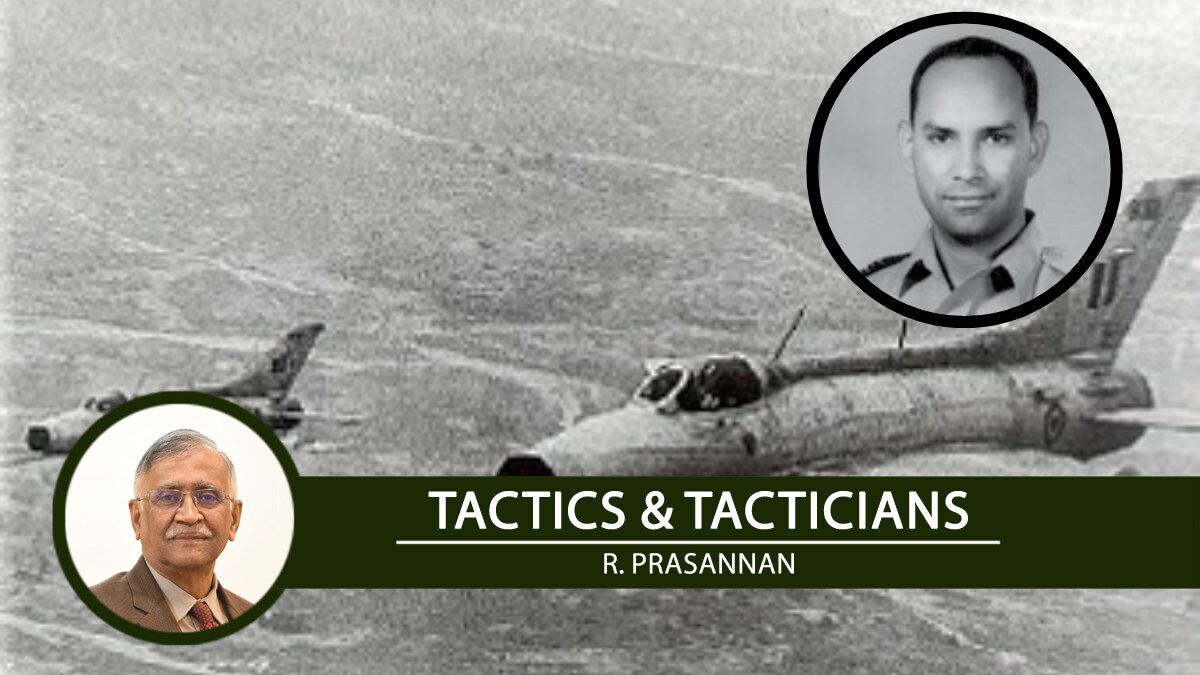
Much is made of how an American war-jet shot a missile through the window of an enemy television station in Kabul during the post-9/11 Afghan war. A small squadron of IAF MiG-21s did even better with old-fashioned free-fire rockets in 1971. That forced the hand of Pakistani commander Lt.-Gen. A.A.K. Niazi to surrender.
By the night of December 14-15, the Indian Army had virtually surrounded Dacca. Indian Army chief Gen. Sam Manekshaw ordered them to hold fire and asked the Pakistan army in the east to surrender, but there was no response. The enemy was counting on the US fleet, which was sailing up the Bay of Bengal, to come to their rescue. Signals intercepted by air intelligence revealed that East Pakistan governor A.M. Malik had called a meeting to which he had invited the UN representative John Kelly too, and would appeal for help from the US or UN. The meeting had to be stopped, but without spilling civilian or foreign blood.
IAF squadrons in Guwahati and Hashimara got the orders less than an hour before the meeting was to start. Four MiG-21 and two Hunter pilots were briefed, and their planes fuelled and armed in no time. Dacca was about 20 minutes flight away.
A new problem arose. They had no military maps of Dacca. Someone got a few tourist maps of the city. As they were revving up the engine, the lead pilot Wg Cdr B.K. Bishnoi was told the meeting would be at the governor's house, and not the circuit house as earlier thought.
ALSO READ: When media played a Yudhishthira trick in the Bangladesh war
From the sky Bishnoi informed his buddies about the new target. They located the governor's house from the limousines parked outside. Spotting a dome atop the building they concluded that the conference room would be directly below. Four MiG-21s fired rockets straight through the dome and the roof, followed by the two Hunters which had only guns.
The precision attack unnerved the enemy. Governor Malik got a piece of paper on which he scribbled his resignation and fled to the UN refugee office at Hotel Intercontinental. Indian diplomat J.N. Dixit who saw the room after the surrender recorded: “The rockets hit and extensively damaged only this room and its conference table. My Bangladeshi friends told me later that this air operation specially unnerved the East Paksitani rulers and perhaps hastened a quick response to the call for unconditional surrender.”
