



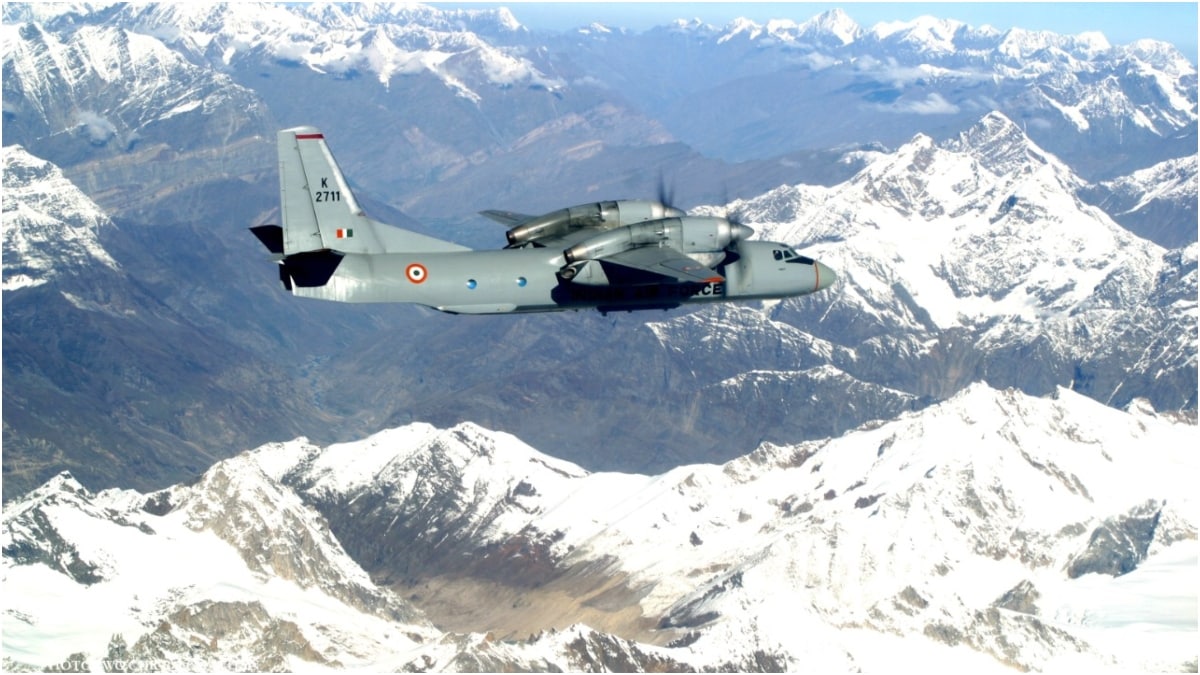
Pakistani Air Force fighter patrol aircraft were alerted after an Indian Air Force (IAF) aircraft reportedly came within two to three miles of Pakistan's international border on April 6, a report said.
It was an Antonov An-32 transport aircraft of the IAF that alerted the Pakistani air-defence system, which quickly relayed the message to a rapid combat patrol response team.
According to international media, the incident occurred at around 5:25 pm Indian time on Monday, April 6. The Antonov An-32 was reportedly flying at an altitude of 16,025 feet close to Pakistani airspace before making a sharp turn back towards Indian skies, they said. Islamabad's tracking controllers initially thought the platform was a "fighter jet". It was only when flight-tracking data was later verified that it was discovered that the aircraft involved was an Antonov An-32 twin-turboprop.
Malaysia-based Defence Security Asia, citing Pakistani sources, reported that Islamabad's air-defence controllers immediately warned the Indian aircraft not to enter Pakistani airspace. At the same time, Pakistani Air Force fighter patrol aircraft were diverted to the sector, it added.
The report did not mention exactly where the incident happened.
Interestingly, the IAF's KA2732 Antonov An-32 planes have reportedly been modified for active GNSS and ADS-B jamming operations. Thus, the incident has made Pakistan suspicious as to whether the occurrence was a low-profile airborne electronic warfare test to understand if the platform is capable of probing Pakistan's surveillance networks without having to cross over.
"The timing of the incident also heightened Pakistan's concerns, as it occurred just days before India announced additional tests of navigation signal resilience in its growing electronic warfare network. Indian military planners may increasingly see low-profile electronic testing missions as a cost-effective way to map Pakistan's radar coverage without exposing frontline fighter aircraft to operational risk," Defence Security Asia said in a report.
Pakistan's suspicions were reportedly further fuelled by the fact that the plane made a sharp tactical turn rather than a normal course change. This suggests that the approach may have been planned in advance—expecting a warning from their side.
