



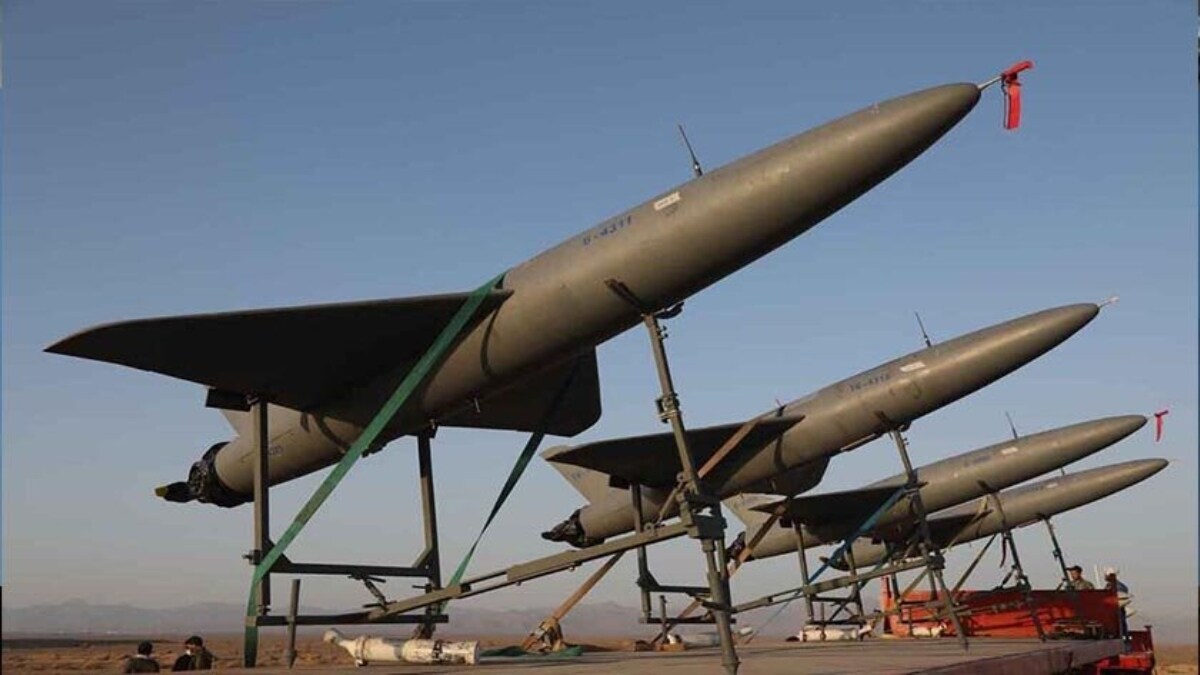
With suicide or kamikaze drones changing the way modern wars are fought, and with Iranian explosive-laden combat drones wreaking havoc across West Asia, there is no clear and definitive answer as to where the countermeasure lies.
In this regard, Ukraine has taken the lead by fielding cheap drone interceptors against a much more powerful adversary—one of the first signs that an effective answer has been found.
Ukraine, long pummelled by the Geran-2 (a Russian clone of the Iranian Shahed-136), may have found a solution in the form of interceptor drones; or to put it simply, using a drone to take out a drone, but at a much lower cost.
ALSO READ | Why Iranian missiles destroying THAAD radars are a blow to Donald Trump
While a Shahed drone clone, the American LUCAS, costs between $20,000 and $50,000 in the US and the Geran-2 costs about $35,000 in Russia, a Ukrainian interceptor costs between $3,000 and $5,000.
These interceptor drones are small, agile, and fast, operating by ramming into incoming drones or by exploding mid-air near the target.
Equipped with thermal imaging, radar tracking, and AI-assisted guidance technology, they whizz at speeds between 310 km/h and 450 km/h, outrunning the incoming Shaheds that fly at about 185 km/h.
For this reason, some of the top Ukrainian counter-drone and interceptor experts will visit Washington for an event on 25 March to interact with policymakers and top military officials regarding the latest developments.
This is happening even as Ukrainian experts visit Qatar, the UAE, and Saudi Arabia to share their counter-drone experience.
President Volodymyr Zelenskyy recently told reporters: “The first three countries to which we sent them, according to our agreements, are Qatar, the Emirates, and Saudi Arabia.”
“When it comes to shooting down massive Shahed attacks, only Ukrainian experience can really help with this today.”
If Iran has been proficient in using the Shahed-136 drone, Russia’s Geran-2 has proved to be a scourge for its respective adversaries.
According to internal Ukrainian estimates that underline the rising importance of drones, 69 per cent of strikes on Russian troops and 75 per cent of strikes on vehicles and equipment in 2024 were by Ukrainian drones, compared to the artillery’s 18 per cent of strikes on Russian infantry and 15 per cent on vehicles and equipment.
In January 2026, Ukrainian President Volodymyr Zelenskyy, reeling off numbers for drone kills, said: “Currently, over 80 per cent of enemy targets are destroyed by drones. The vast majority are drones manufactured in Ukraine.”
The issue is complicated by the fact that these Shahed variants, costing much less than $50,000, are being brought down by expensive $3 million air-defence missiles, underlining the skewed economic cost of combating drone warfare.
