



Satellite photos revealed that Iranian missiles managed to take out an RTX Corp. AN/TPY-2 radar and support equipment—used by US THAAD missile defence systems—at Muwaffaq Salti Air Base in Jordan during the opening days of the war.
According to available information, AN/TPY-2 units and their infrastructure were possibly damaged in Iranian attacks at the UAE's Al Ruwais and Al Sader, as well as another near Prince Sultan Air Base in Saudi Arabia.
The US has eight THAAD systems globally, including in South Korea and Guam. The batteries cost about $1 billion each, with the radar comprising about $300 million of that total, according to the Center for Strategic and International Studies. In other words, Iran has destroyed a key $300 million US radar system that was entrusted with safeguarding allies in West Asia from ballistic strikes.
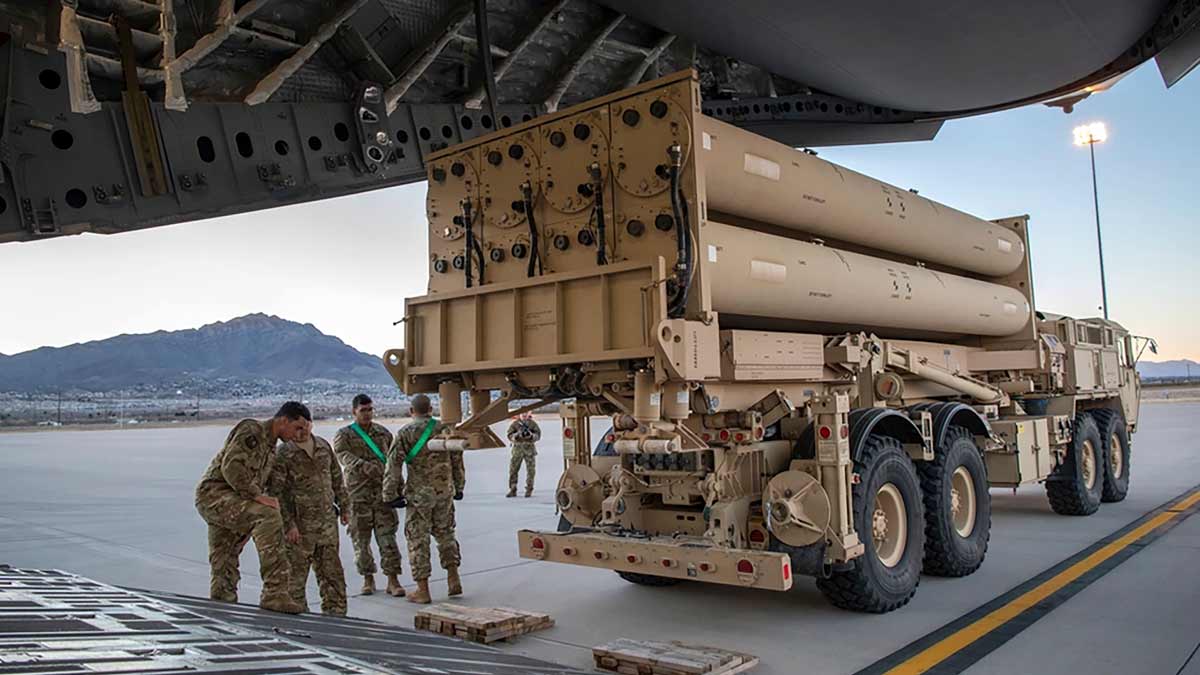
The name THAAD (Terminal High Altitude Area Defence) comes from the way the air defence system operates—intercepting incoming ballistic missiles during their final phase of flight, known as the "terminal phase". A THAAD battery consists of 90 soldiers, six truck-mounted launchers, forty-eight interceptors (eight per launcher), one TPY-2 radar, and a tactical fire control and communication unit. Each interceptor missile, manufactured by Lockheed Martin Corp., costs about $13 million.
THAAD incorporates four main components: the interceptor, launch vehicle, radar, and fire control system. Each launcher carries up to eight interceptors, and a typical THAAD battery includes six launchers; each launcher takes up to 30 minutes to reload.
It has the ability to intercept targets within (endoatmospheric) and outside (exoatmospheric) the atmosphere. THAAD can fend off short, medium, and intermediate-range ballistic missiles.
The standout feature of THAAD systems is that they do not carry warheads. Instead, the system relies on the kinetic energy of impact to destroy incoming rockets. THAAD radars are capable of detecting and tracking approaching missiles at ranges of 870 to 3,000 km. Apart from radar and radio facilities, each system consists of six truck-mounted launchers and 48 interceptors, and requires 95 soldiers to operate it.
Thus, the war against Iran, which is already a costly affair, is becoming more painful for the White House with the loss of such assets.
Meanwhile, the effort to bolster US anti-drone capabilities in the Middle East underscores concerns about the planning for an Iranian retaliatory response across the region to the American and Israeli strikes. Persian Gulf countries have complained they were not given adequate time to prepare for the torrent of Iranian drones and missiles bombarding their territory.
The system that is being sent, known as Merops, flies drones against drones. It is small enough to fit in the back of a midsize pickup truck, can identify drones and close in on them, using artificial intelligence to navigate when satellite and electronic communications are jammed.
