



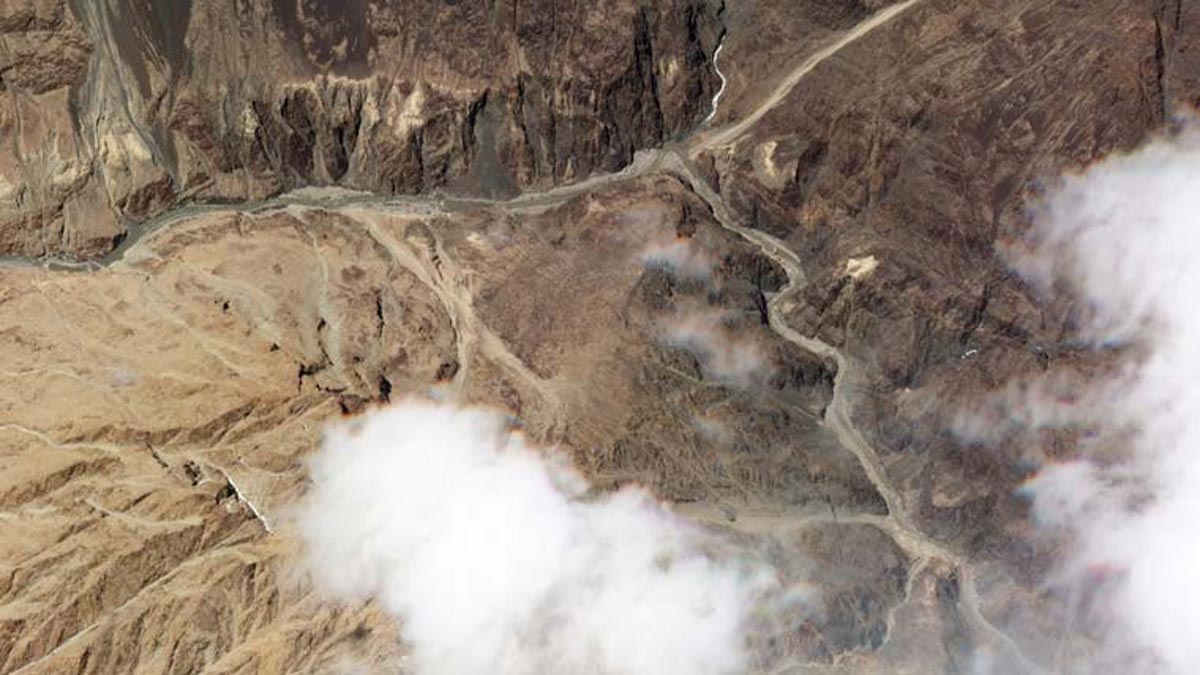
In a significant revelation, a senior US official claimed that China conducted a secret nuclear explosive test on June 22, 2020, just a week after the violent clash between Indian and Chinese troops in Galwan, Eastern Ladakh.
"China has conducted nuclear explosive tests, including preparing for tests with designated yields in the hundreds of tons," US Under Secretary of State Thomas G. DiNanno stated in a post on X.
He also revealed that China used a technique known as "decoupling" to reduce the effectiveness of seismic monitoring and hide its activities from the world. "China conducted one such yield producing nuclear test on June 22, 2020," DiNanno wrote.
The skirmish between Indian and Chinese troops in Galwan began on June 15, 2020, resulting in the deaths of 15 Indian soldiers, while intelligence reports suggested that around 30 Chinese soldiers were also killed.
The US official also highlighted the inadequacy of the Strategic Arms Reduction Treaty (New START), particularly in its current form. He noted that the treaty’s limits on warheads and launchers were becoming increasingly irrelevant by 2026.
Referring to both Russia and China, DiNanno said one nuclear power is expanding its arsenal at an unprecedented scale, while another continues to maintain and develop a vast range of nuclear systems, largely unconstrained by the terms of New START.
“Almost all of the U.S. deployed nuclear forces were subject to New START while only a fraction of Russia's much larger stockpile was…exactly zero Chinese nuclear weapons were covered by New START,” he said.
He argued that this convergence of factors—Russia’s serial violations, the global growth of nuclear stockpiles, and the inherent flaws in New START’s design—necessitates a new nuclear framework that addresses contemporary threats, not those of a bygone era.
